
INTRODUCTION
Camera technology is constantly evolving, and filmmakers likewise evolve and develop new trends with it. In my last breakdown of film industry camera data, the story was clear: the standard Arri Alexa Mini was the undisputed, long-reigning workhorse of modern cinema, while Large Format digital sensors were gaining ground.
However, looking at the data for 2026, the landscape has shifted and crowned a new undisputed camera as favourite…Spoiler alert, it’s still an Arri.
STUDY
To track the trends, I once again evaluated the cameras used to shoot films selected at three highly influential film awards and festivals around the world: Sundance, Cannes and the Academy Awards. I’ve gone with these three film ecosystems, as I feel they each represent a distinct tier of the market.

Sundance mainly captures lower-budget and independent fiction and documentaries. Cannes favors mid range auteur films with a few higher-budget exceptions. And, the Oscars mainly highlight high-budget studio filmmaking.
The data is compiled from IndieWire’s amazing annual camera surveys, where filmmakers reveal the gear used to shoot their festival films. Unlike our previous study, which strictly evaluated narrative fiction, I thought it’d be a good idea to also take a look at the documentary side of Sundance to see how the lower budget projects by indie filmmakers, like some of us, are equipping themselves in 2026.
MOST POPULAR CAMERA
The numbers reveal a dual-trend. At the lower end, accessibility and utility rule the day. But as the budget climbs, digital cinema takes a step back, making way for a massive, high-end revival of film cameras.

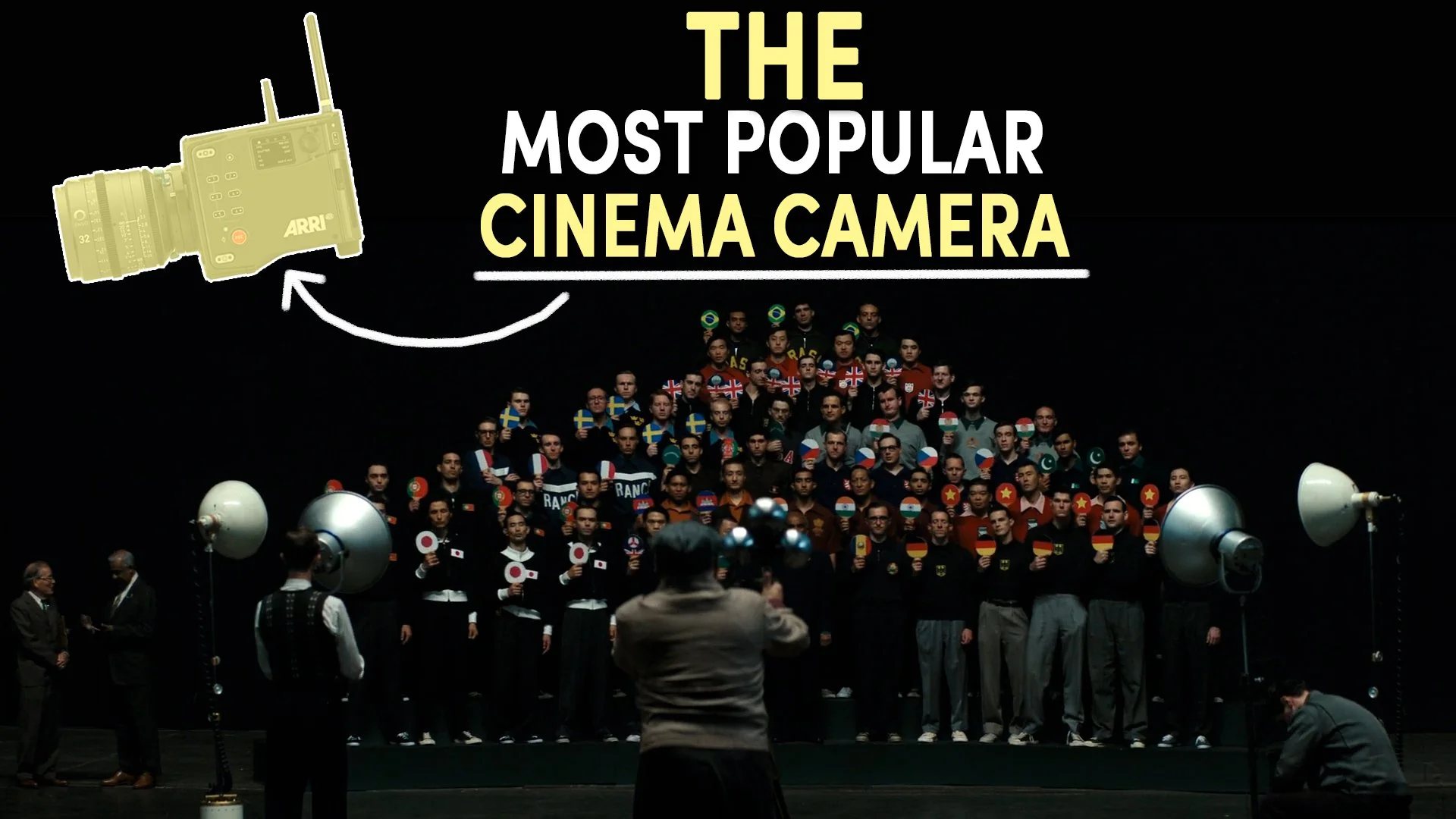
The legendary Alexa Mini, which was the default choice for industry DPs shooting films, series, commercials or any kind of high end content for about a decade, has finally been replaced by Arri’s new, updated Super35 digital cinema camera, the Alexa 35.
At Sundance, the narrative lineup was dominated by the Alexa 35, with 30% of productions using it as their A-Cam.
At Cannes, the same, with it being preferred on 31% of productions.
At both festivals the next non-Arri camera which followed was either the mark one or two versions of Sony’s high-end Venice, at 15% and 7% respectively.
While the Alexa 35 is the overwhelming favourite choice, its dominance did slightly drop off compared to the Alexa Mini in our previous study. And, just like in the previous study, the dominance of a single Arri model decreased (compared to Sundance and Cannes) when it came to the Academy Awards.
The Alexa Mini which previously sat at 16%, was replaced by the Alexa 35 as the top digital camera, being used to shoot 13% of the Best Picture nominees.

However, when we turn to Sundance documentaries, which usually have more reasonable budgets for gear, or use cameras owned by the filmmakers themselves, Alexa 35 dominance completely vanishes - and was replaced by a greater mix of different digital cameras from Blackmagic Pocket Cinema Cams to Sony A7s IIIs.
The Sony FX6 ended up being the most popular camera on the market. Followed up by the Canon C70. This Canon and Sony divide has controlled the doccie camera market for many years, and continues with 34% of the doccies using a Sony (either an FX model or a mirrorless A7 model) and 27% using a Canon (with the C70, C80 or the older C300 Mk II).
Because Sundance docs rely heavily on solo operators working in uncontrolled spaces, the FX6's combination of advanced autofocus, internal variable ND filters, data friendly but colour-malleable files and a lightweight body has made it the definitive tool for real-world shooting.

The main Arri model still present amongst the docs competition, especially for higher end interview work or cinematic re-enactments and impressionistic footage, is the older Alexa Mini. This is probably due to budget as well as the longer production timelines docs can have meaning the Alexa 35 may not have been accessible at the time of shooting.
The popularity shift to the newer Alexa 35, also now makes getting hold of these older Alexa Mini’s through rental houses a little bit easier for lower budget projects.
FILM VS. DIGITAL CAMERAS
Another interesting trend is the apparent uptick in productions shooting on film, rather than digital cinema cameras. This is anecdotally supported by a chat I had with a Panavision employee who said there’s been a recent uptick in rentals of film cameras.

Perhaps expectedly, this trend also neatly aligns with budget. At Sundance, almost all productions shot digitally, except for a few niche cases. At Cannes, digital acquisition dropped to 76%, while analog film usage leaped to 24%.

This trend explodes when we reach the mainly high budget Academy Award films. Although this is a smaller sample size, in the 2026 Oscar Best Picture nominee pool, digital cameras shrank to just 42%, while film surged to an incredible 58%.

The type of film also reflected this budget trend, ranging from 35mm to larger formats like Vista Vision and even Imax at the Oscars, compared to Cannes and Sundance which featured smaller gauge film more often like 8mm and 16mm, as well as 35mm.
THE MULTI-CAMERA MATRIX
I’ve also noticed a trend in using different cameras and even multi-format workflows for the same production. This can be done for practical reasons, like using an Alexa 35 as the main camera, but then pulling out a smaller, more budget friendly Red Komodo as a stunt camera.

Niche cameras, like the DJI Ronin 4D with its built-in gimbal system have also seen more use for their stabilising capability alongside another A-camera. Or, high-resolution Red V-Raptors have been deployed specifically to shoot clean, high-oversample miniatures and plates for VFX work.
With the capabilities of grading software - matching the colour and quality of A-cam film footage with B-cam footage captured on digital cameras is also possible. Making the jump between film and digital footage (treated to look like film) indistinguishable to 99% of audiences.


Productions are also deliberately using different formats, to signal different time periods, or looks, within the same movie. A production may deploy a 35mm camera as its primary A-camera to capture the core narrative. Then, drop down to a gritty, texture-heavy 16mm camera for flashbacks, dream sequences, or stylized montages.
SUPER35 VS LARGE FORMAT
For the last several years, you could argue camera manufacturers pushed the industry more toward Large Format or Full Frame digital capture - with cameras like the Venice, Mini LF, and more entry level cinema cameras like the FX6. But the 2026 numbers show that cinematographers are actively moving back to Super35.
At all three festivals, Super35 and smaller was the overwhelmingly dominant sensor format for narrative fiction. Choosing a Super35 sensor opens up a century's worth of vintage, anamorphic, and beautifully imperfect glass that can’t always cover a larger digital sensor.

With the release of the Super35 Alexa 35, it seems Arri gave the industry what it wanted, slowing down the large-format trend.Interestingly, full-frame and large-format got used the most at the extreme ends of the budget spectrum, but for entirely different reasons.
In Sundance documentaries, solo operators favor full-frame digital sensors like the Sony FX6 or FX3, for its low-light performance and wide field of view.

On the opposite end, Oscar picks like One Battle After Another and Bugonia both selected the full frame Vista Vision film format, while Sinners chose massive 65mm and 15-perf IMAX large format film for maximum fidelity spectacle.
CONCLUSION
Ultimately, the camera landscape demonstrates that the industry has split into two distinct philosophies based on the practical realities of production.
If you are navigating the fast-paced, unpredictable spaces of documentary filmmaking or tight independent budgets, digital user utility is the driving force.
But industry narrative sets with larger budgets allow filmmakers to focus on visual character and texture, an aesthetic shift that has solidified the Super35 Arri Alexa 35 as the definitive digital standard while paving the way for a major celluloid revival at the absolute highest levels of cinema.