How Guy Ritchie Shoots a Film at 3 Budget Levels
INTRODUCTION
Guy Ritchie has long been one of modern cinema’s most recognizable visual stylists. He’s a director who doesn't just tell a story, but actively uses the visual language of cinema to elevate larger-than-life characters, intricate criminal plots, and stylized worlds.
Across his filmography, Ritchie has developed a distinct toolkit of techniques: low and high camera angles that distort perspective, kinetic slow-motion and speed ramps, sprawling ensemble casts, and rapid-fire voiceover narration that ties complex, parallel storylines together.

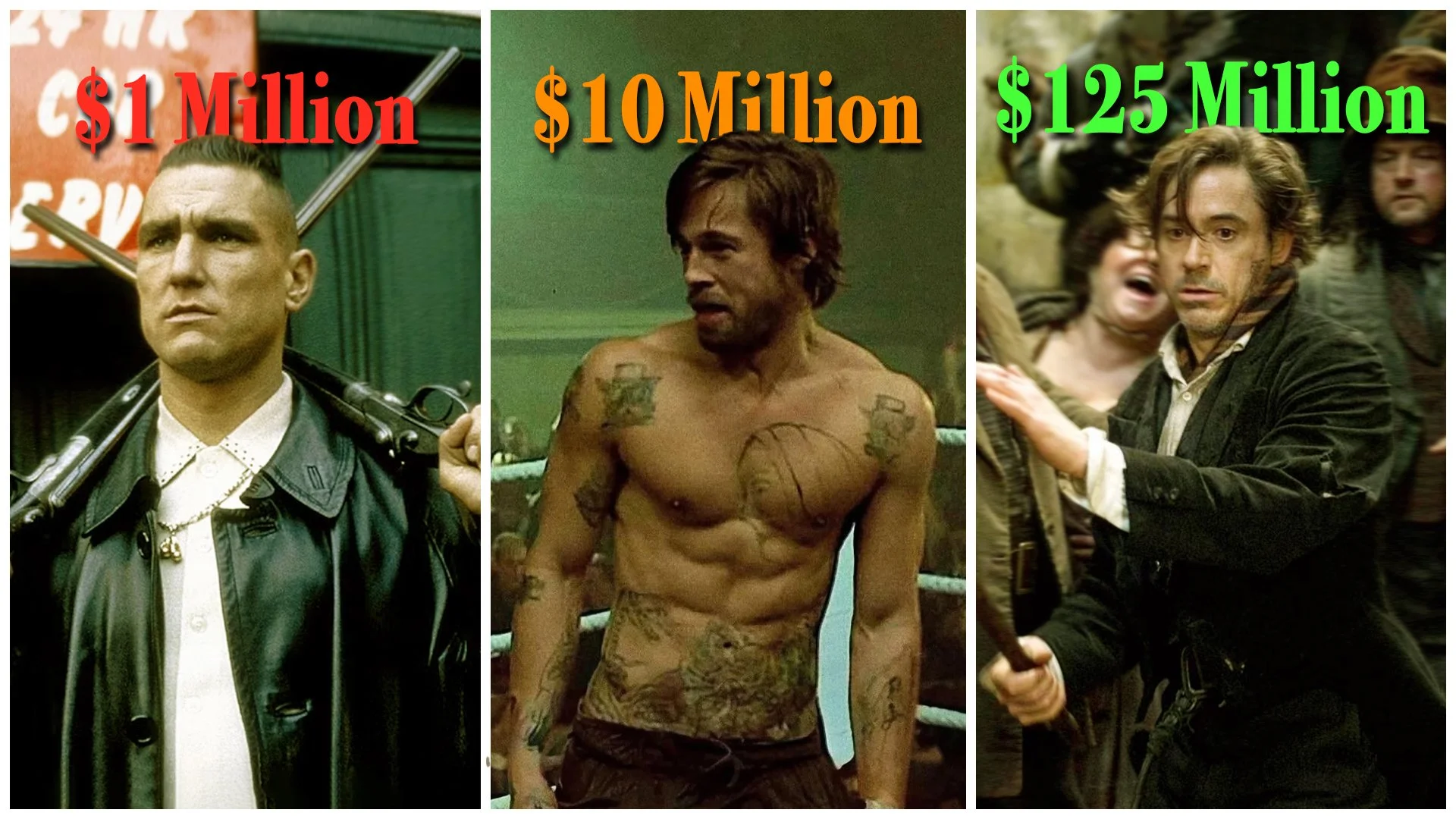
In this video, we’ll break down three films from Guy Ritchie’s career at three distinctly different budget levels: the low-budget breakout Lock, Stock and Two Smoking Barrels, the mid-budget follow-up Snatch, and the studio blockbuster Sherlock Holmes: A Game of Shadows - to analyze how his visual storytelling techniques evolved alongside his production scale.
LOCK, STOCK AND TWO SMOKING BARRELS - $1.4 Million
Long before he was handling massive studio budgets, Guy Ritchie had to forge his signature style under different financial constraints. His feature debut, Lock, Stock and Two Smoking Barrels, which expanded on his early short films, was originally planned with a larger budget, but production reality hit early.
“We were all set to shoot on 35mm - it was obviously a separate million - and people lost confidence. Bankers pulled out. We ended up with a budget of £800,000. It left money for nothing. Lucky enough it was contemporary so we didn’t have period costumes and there wasn’t a single set build. It was all locations.” Tim Maurice-Jones, Director of Photography, Source: Landmark Theatres
This $1.4 million budget would be approximately $2.9 million today when adjusted for inflation. To survive the budget cut, Ritchie and his Director of Photography, Tim Maurice-Jones, pivoted to shooting on the more cost effective 16mm film, utilizing the Arriflex 16 SR1 paired with Zeiss Super Speed lenses.

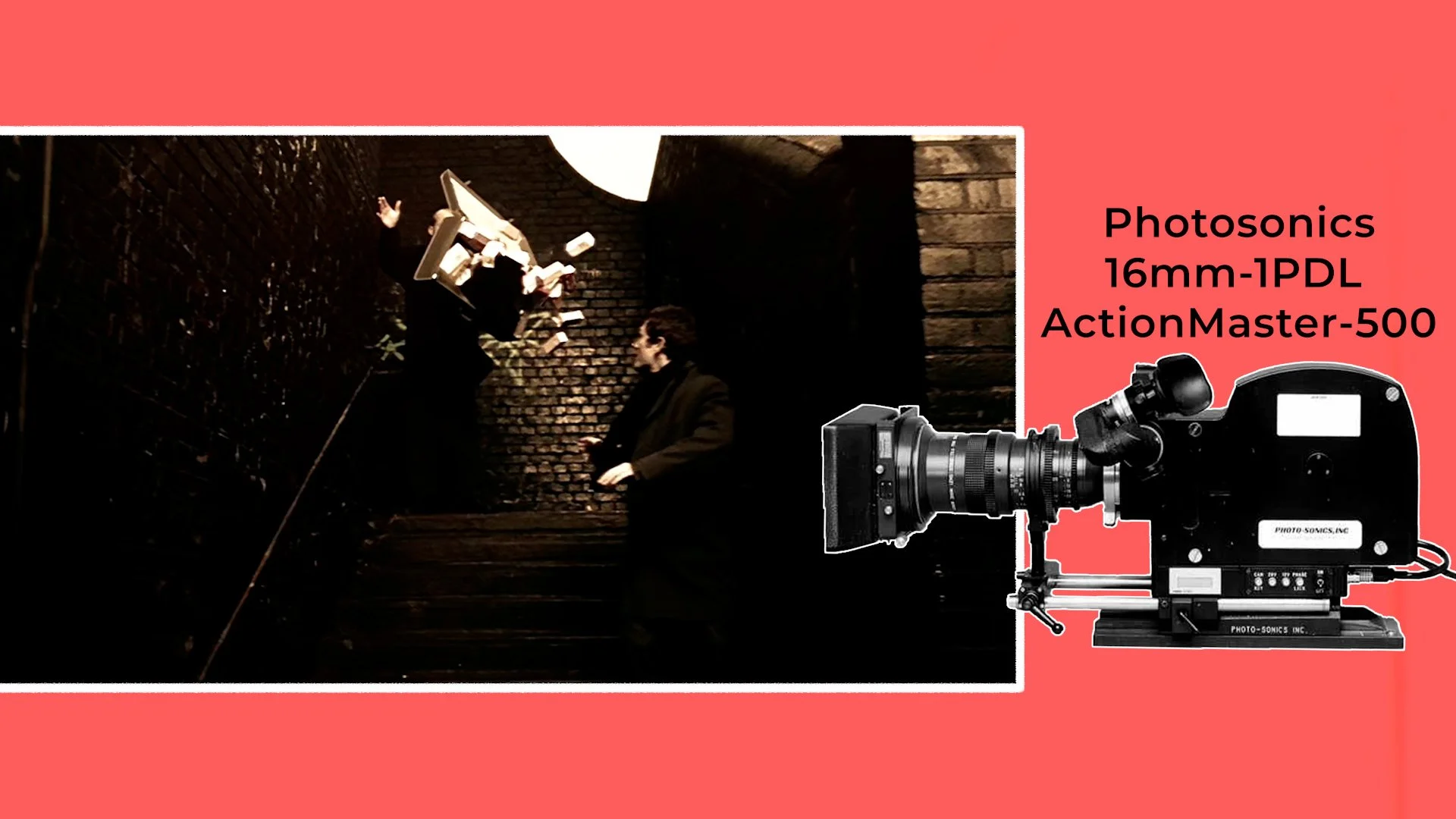
For slow-motion sequences, they brought in a 16mm Photosonics camera which could shoot at high frame rates all the way up to 500FPS. Because buying, developing, and processing film stock was immensely expensive relative to their total funds, the production was operating on a razor-thin margin, often only shooting two to three takes per shot of precious film.
“It was shooting a movie for about as cheap as you could’ve done back then - because you were on film. We were guarding every short end of film. You know, nothing was thrown away. ‘We’ve got 25 foot’, well, we’ll use that somewhere.” Tim Maurice-Jones, Director of Photography, Source: Landmark Theatres
A ‘short end’ is a partial roll of unexposed film stock left over after shooting a scene and saved for later use. To put that in perspective, 25 feet of 16mm film translates to roughly 40 seconds of rolling time. That’s nowhere near enough to run a full take of a scene with actors from beginning to end. However, those short ends were perfect for shooting details like quick insert shots and extreme close-ups without wasting fresh film rolls.

The budget limitations dictated the entire physical pipeline. Every scene was filmed on real locations with zero set builds, and without the funds to secure official road lock-offs for street exteriors. The sound team had to battle traffic noise to capture clean dialogue.
In early meetings with DP Maurice-Jones, Ritchie told him how he didn’t want to film conservatively and wanted to use a stylised visual language that supported the story.
The entire film was meticulously storyboarded by the DP under the direction of Ritchie, laying the groundwork for a direct, high-energy camera language. Many of these visual techniques would be used again as permanent fixtures throughout his filmography.

One major staple introduced here was the slow-motion speed ramp. By capturing footage at a high frame rate on the Photosonics camera, Ritchie could manipulate time in the edit - speeding the footage back up to play at standard 24 frames per second playback, or abruptly slowing it down to emphasize a dramatic or chaotic beat and suspend time.

He also favored extreme camera placements. The camera was frequently positioned at a high angle, above the room, at the top of tall legs or a dolly with a riser, or dropped down to a low angle, ground level shot on something like a hi-hat or an underslung F7 head on a dolly.
He sometimes combined these low-angle shots with what I’d call a “container shot,” where the camera is rigged inside a tight space, like an oven or a pot. Art and prop departments usually construct these by cutting out the bottom of the object and replacing it with a sheet of Perspex.

The camera and grips team will then position the camera as low as possible to the ground with the lens right up against the perspex using a hi-hat or an underslung dolly head.
Ritchie also leaned into close-ups paired with wide-angle lenses. Placing a face or object inches away from a wide angle lens, like an 18mm, stretches and distorts physical proportions, exaggerating foreground elements so they appear far larger than in reality.
This stylistic distortion can heighten the comedy of a moment by exaggerating faces or be used to pull the viewer's eye directly to a specific detail without needing a separate insert shot.
To add physical momentum, Ritchie utilized fast push-ins on sliders or dollies during beats of high emotional intensity.
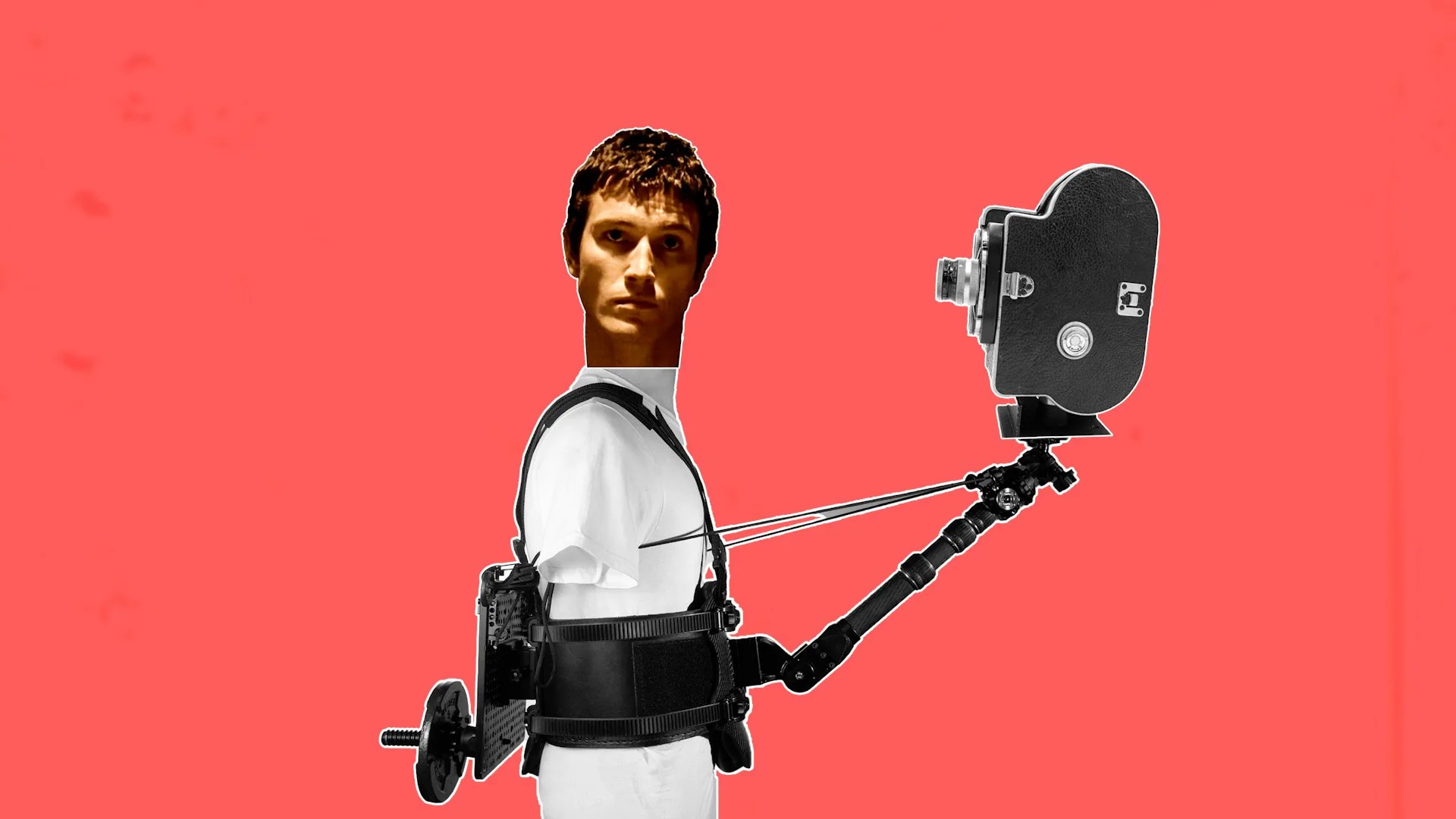
For another moment where a character undergoes a feeling of shocked detachment, he employed a Snorricam - a camera rig strapped directly onto the actor’s body. As the actor moves, the background shifts around them while their face stays locked in frame, creating a feeling of dissociation.
Visually, Ritchie also built comedic tension by controlling when and how information is revealed. He routinely withholds context from the audience before delivering a subtle punchline. This can be done by cutting from an uncontextualized extreme close-up, like a tight shot of a golf ball, and then cutting wide to reveal the wider absurd setting, or by using a dolly-jib to rise up from behind an obstacle to unveil the full scene. Basically starting on a tighter shot A, which transitions into a wider shot B - which gives shot A context.

While Lock, Stock is known for moments of quick cutting editing, Ritchie also proved adept at varying his pacing. He contrast his hyper-edited montages with a convenience store sequence, which introduced characters entirely in a single, continuous Steadicam shot.
SNATCH - $10 Million
Following the critical and commercial triumph of Lock, Stock, Ritchie was immediately back in the director's chair, this time with a larger canvas.
“These films are about fast paced, move it quick and try not to have any fat on it whatsoever. There was so much stuff that I wanted to put in Lock, Stock that I couldn’t get in there, that I moved it onto this one. Hopefully it’s not Lock, Stock and Three Smoking Barrels, which I’ve tried to avoid, but, you know, it’s in the same vein.” - Guy Ritchie, Source: Making Of Snatch

Snatch inhabited the same chaotic criminal underground, featuring an ensemble cast tied together by converging plotlines. But with a $10 million, or approximately $19 million inflation adjusted budget, Ritchie had the financial bandwidth to upgrade every technical aspect of the production. Brad Pitt, who had seen Lock, Stock, personally reached out to Ritchie looking for a role, which ultimately led to his casting as the Irish bareknuckle boxer Mickey O'Neil.
While casting an A-list star added visibility, Snatch was still far from a massive studio movie, with the budget funnelled directly into onscreen production value.
The budget jump allowed for a few larger action set pieces, which involved complex vehicle stunts and crashes, a wider variety of locations, a larger roster of cast members and extras - particularly for the crowded boxing match sequences - alongside some moderate visual effects work and technically demanding setups .
The additional budget meant they could move away from 16mm, and shoot on 35mm using the studio mode Moviecam Compact camera. This was paired with the lighter Moviecam SL for fluid Steadicam moves.
Rather than dialing back his aesthetic, the extra resources allowed Ritchie and DP Tim Maurice-Jones to double down on stylistic visual choices that externalized the characters' physical and emotional states, such as dropping the camera beneath the surface of the water the moment Brad Pitt’s character gets knocked out in the ring. This was filmed with an underwater housing in a pool.
“Making a movie is a risky thing from day one. So either embrace the fact that it’s a risk and go for it, or become like everybody else and it all becomes compromising and hedging your bets and you end up with a dull movie.” - Matthew Vaughn, Producer, Source: Making Of Snatch

In Snatch, Ritchie refined several editing and camera concepts introduced in his debut. He expanded his use of split-screen sequences - previously experimented with in Lock, Stock. Using them for phone call scenes to dynamically track concurrent narrative threads and multiple characters simultaneously without losing kinetic momentum.
For the iconic knockout punch delivered to Brad Pitt, the production brought in ultra-high-speed cinema cameras that could shoot at 800 frames per second to capture the impact in a surreal, hyper-detailed slow motion.

Alongside slowing down time, Ritchie frequently employed the freeze-frame to halt action entirely. By freezing the frame while maintaining voiceover narration or stylized sound design over the static image, he could hold the audience’s focus on a detail while filling in key narrative exposition.
His contextual reveals from Lock, Stock also grew more sophisticated. The intro sequence is a great example of this. The edit frequently starts on a tight detail, like a close-up of a diamond, before cutting or crash-zooming wider to reveal that it’s currently being stolen.
By constantly withholding the full picture of B for a split second by starting on shot A, Ritchie forces the audience to actively engage with the frame to figure out where they are. This whimsical misdirection and delaying of information creates a subtle extra layer of comedy, intrigue and suspense.
In other instances he starts on a broad action, like two men boxing, and uses a tracking Steadicam movement to drift through the room and reveal a central character. Either way, using the concept of limiting presenting the audience with the full picture of a scene straight away.
SHERLOCK HOLMES: A GAME OF SHADOWS - $125 Million
A decade after his indie debut, Guy Ritchie stepped into the realm of mega-budget studio filmmaking with the $125 million Sherlock Holmes franchise. Adjusted for inflation this would be about $185 million today.
At this tier, the shift in budget is immediately visible on screen. Producing a period piece set in the 1890s requires vast soundstage builds, full-scale vintage production design, and extensive costuming for wide shots with hundreds of extras, demanding a larger logistical footprint and crew size.
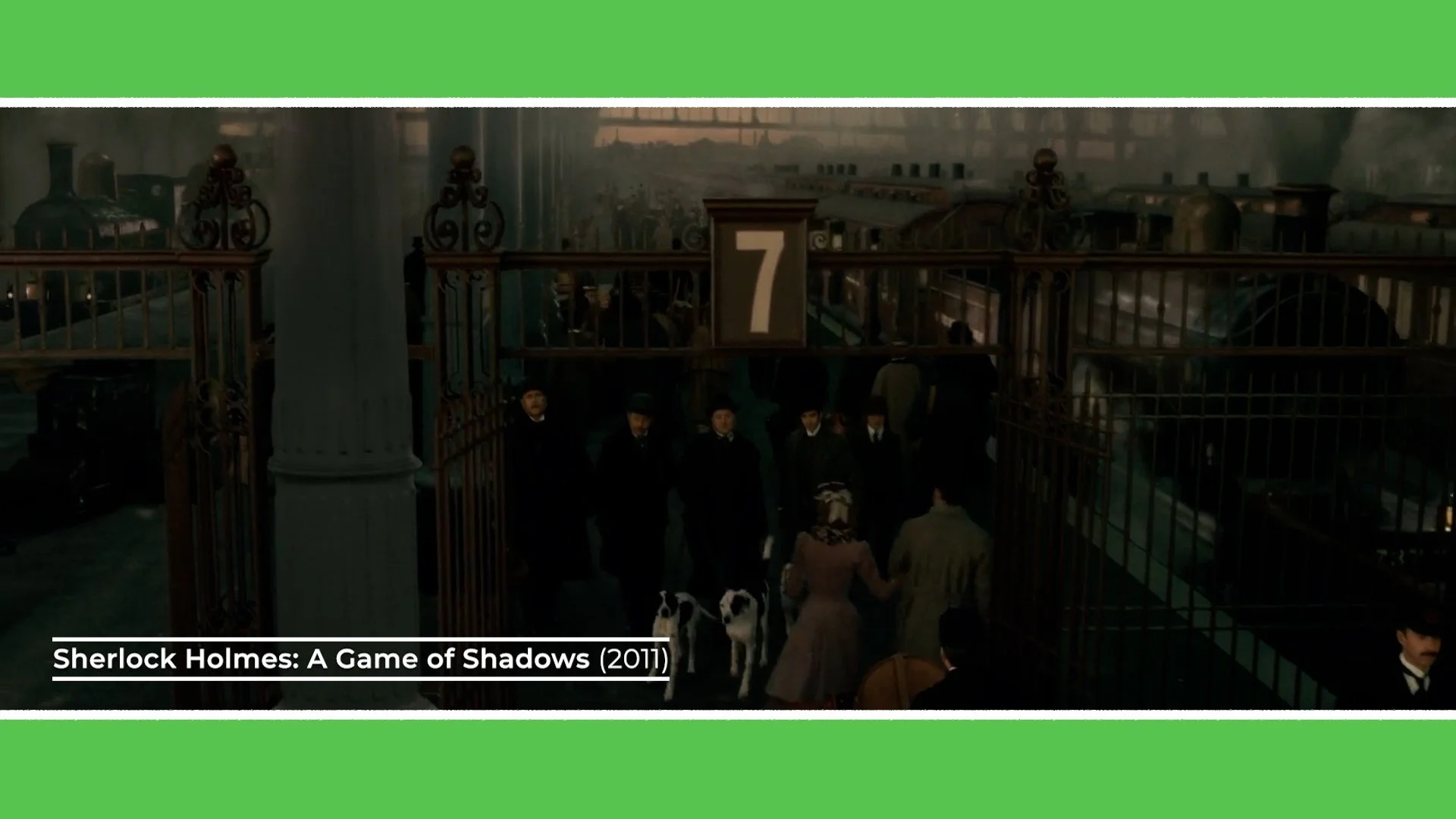
Furthermore, large-scale action set pieces featuring multi-camera setups, run by multiple camera teams, A-list actors, pyrotechnics, and extensive visual effects work consumed a large portion of the budget.
It’s a much more visual effects heavy film than any of his early work. For example, all the chroma key backdrops for the final Alpine castle sequences were entirely replaced with 3D digital background by VFX and matte artists using Nuke.


On A Game of Shadows, Ritchie continued to shoot mainly on 35mm film, using the Panavision Panaflex Millennium XL2 with Panavision Primo lenses. Instead of relying solely on dollies and Steadicam rigs, the production frequently utilized expensive Technocranes for sweeping, elevated camera moves.
The core visual DNA of Ritchie’s early work is still present, like the use of slow mo, close up inserts, high angle wides and the occasional context reveal shot - such as where a shot starts on a news article, shifts to a package only to later reveal the identity of a character.

But the way information is presented in most scenes shifts a little bit away from experimentation to accommodate a more traditional blockbuster visual language. A good example is the fake jungle gag, which is similar in both Lock, Stock and A Game of Shadows.
In Lock, Stock, this scene opens abruptly on a shot of a character seemingly walking through a tropical jungle, only to cut to reveal they’re actually standing inside a greenhouse in an apartment - a visual misdirection which initially intrigues audiences and is comedic in its payoff.
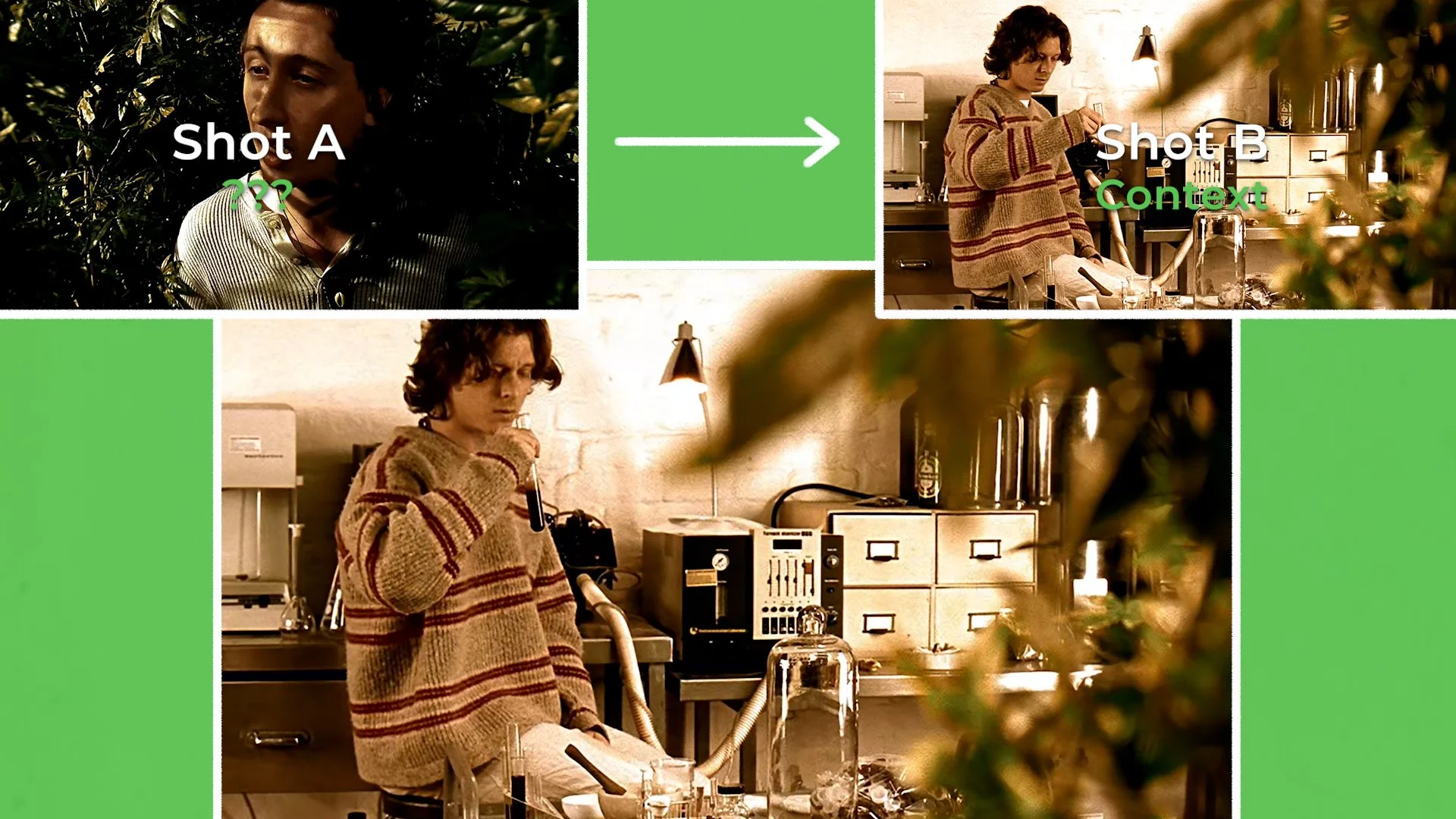
Like we mentioned this works by shot A withholding context and shot B revealing context.
In Sherlock Holmes, this flips in favour of a more traditional cinematic approach. The scene instead starts with a wide shot of Watson entering a home, cuts to him opening a separate door, which then reveals the tropical environment inside. It achieves a similar goal, but in a different way. It no longer withholds context from the audience, but instead prioritizes clear geographical orientation from the get go, forgoing suspense and jarring visual punchlines.

“Since we introduced a certain amount of technical ‘toyery’ on the first one, and I think to a degree that’s what the audience are expecting on the next one. So, we had to throw quite a lot of technical toys at it. Had to come up with some new sensational ideas for the action. Had to up the stakes in general. So, in that respect, I had my work cut out for me.” - Guy Ritchie, Source: Screenslam
To execute the franchise's signature action sequences, Ritchie revolutionized his speed-ramping technique using cutting-edge digital technology. The production deployed the digital Phantom HD camera - capable of capturing thousands of frames per second.
This high-speed digital camera setup was used to construct non-linear action montages. Rather than cutting action continuously, he dismantled fights into stylized close-ups and slow-motion fragments - perhaps evoking classical Soviet montage techniques - where mood, impact, and metaphor take precedence.
Unlike his earlier films where slow mo shots were static, this time he was also able to combine this slow motion movement with camera movement, by using a Bolt Motion Control rig.

The Bolt is a high-speed robotic arm mounted on a track, programmed via software to execute complex, precise camera moves at rapid speeds. Because the robotic arm moves so quickly and repeatably, it allowed the crew to shoot ultra-slow-motion Phantom footage while maintaining dynamic, sweeping camera motion around the actors.
When this is combined with chroma key backdrops, stunt choreography, and digital environment replacements these shots provide a different type of visual spectacle - at a much higher financial cost.
CONCLUSION
From a £800,000 16mm cult classic to a $125 million studio blockbuster, Guy Ritchie’s core philosophy as a director has remained fairly consistent.
Whether turning short ends into stylized insert shots, or using high budget motion control robots to move around as time slows down to a crawl, Ritchie treats the camera not as a passive observer, but as an active, expressive tool.
Budget simply gave him bigger, more precise instruments to execute his stylised cinematic look.