The Myth Of 'Natural Light' In Movies
INTRODUCTION
Films are often praised for their natural lighting, images that feel honest, unforced, as if the camera simply happened to be there when life unfolded. But that doesn’t mean that what you’re seeing is actually 100% reality.
What we call ‘natural’ is often carefully designed realism. Light that’s been shaped, planned, controlled, removed, and rebuilt to feel believable. Sunlight softened to suggest overcast weather. Shadows deepened to add shape. Exposure carefully managed so highlights never clip and faces never disappear.

In this video, we’re going to break down the myth of natural lighting in movies, by looking at some examples of how filmmakers create this look, and why images that may feel ‘real’, ‘in the moment’ or ‘natural’ are actually often carefully constructed.
WHAT IS NATURAL LIGHTING?
In cinema, natural lighting is less a technical approach than an emotional contract with the audience. It refers to lighting that appears to come from believable, everyday sources, like windows, overcast skies, table lamps or candles. This category of lighting avoids obvious stylisation or theatrical contrast and colour and is motivated by its real world setting.

It stands in contrast to more historically stylised lighting techniques like moody, low key, chiaroscuro, film noir hard light, or studio style three-point lighting, where actors are always perfectly and brightly illuminated by a key, fill and backlight.
Natural lighting on the other hand is informed by how the light would really look in a location. This kind of naturalism is often used in dramas or documentaries to signal authenticity and moral seriousness, inviting the viewer to feel like an observer rather than a spectator.
FILMMAKERS WHO USE NATURAL LIGHTING
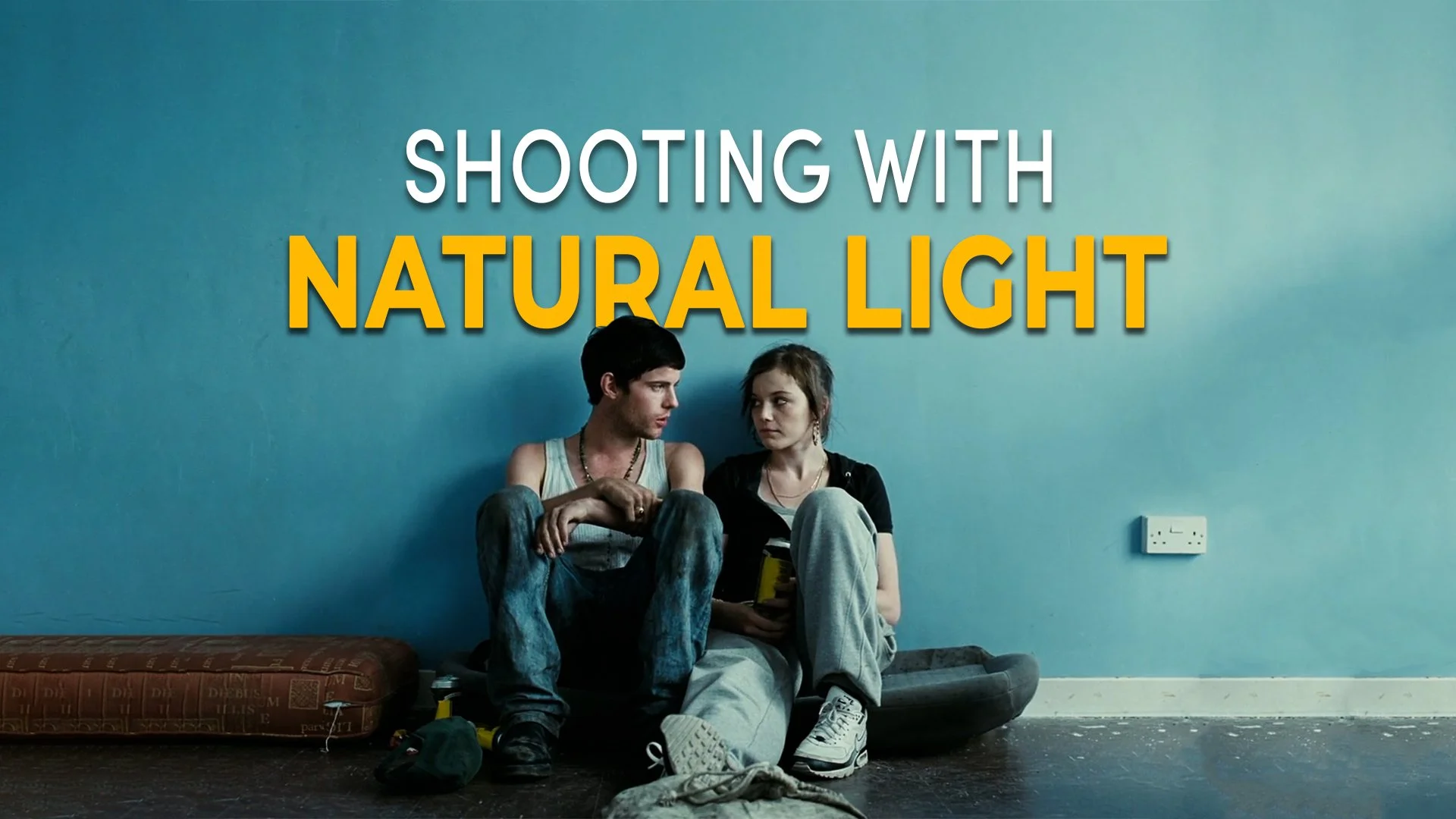
Filmmakers like Ken Loach use restrained, unobtrusive lighting to ground their stories in social reality, creating images that feel real.
Jean-Marc Vallée often pairs naturalistic light with handheld camerawork to produce a sense of intimacy and emotional immediacy, while Andrea Arnold uses available light to place us uncomfortably close to her characters’ inner lives.

Even Michael Haneke, whose framing is rigorously controlled, employs neutral, subtle lighting which is actually meticulously artificially designed to strip scenes of aesthetic comfort, forcing the audience to confront events without emotional cushioning.
In most of these cases, natural lighting isn’t only about realism for its own sake - it’s a stylistic and practical tool, designed to suspend audience disbelief, build closeness and relatability to characters and their world, and create the illusion that what we’re watching isn’t a movie, but reality unfolding.
Let’s break down a few examples from these filmmakers, to show how and why they use natural light.
KEN LOACH
One of the most acclaimed directors who is known for his social realist stories is Ken Loach. Robbie Ryan, who has often worked as his cinematographer, described how Loach gets a fear as soon as he sees a light stand placed on the set.
This is partly due to his love for a naturalistic lighting look, with softly lit bouncing backlight, and partly for an important practical reason. Because many, if not most, of his cast is often made up of non-professional actors, he likes to remove as many of the technical barriers as he can by minimising film equipment, to put his actors at ease and extract truthful performances.
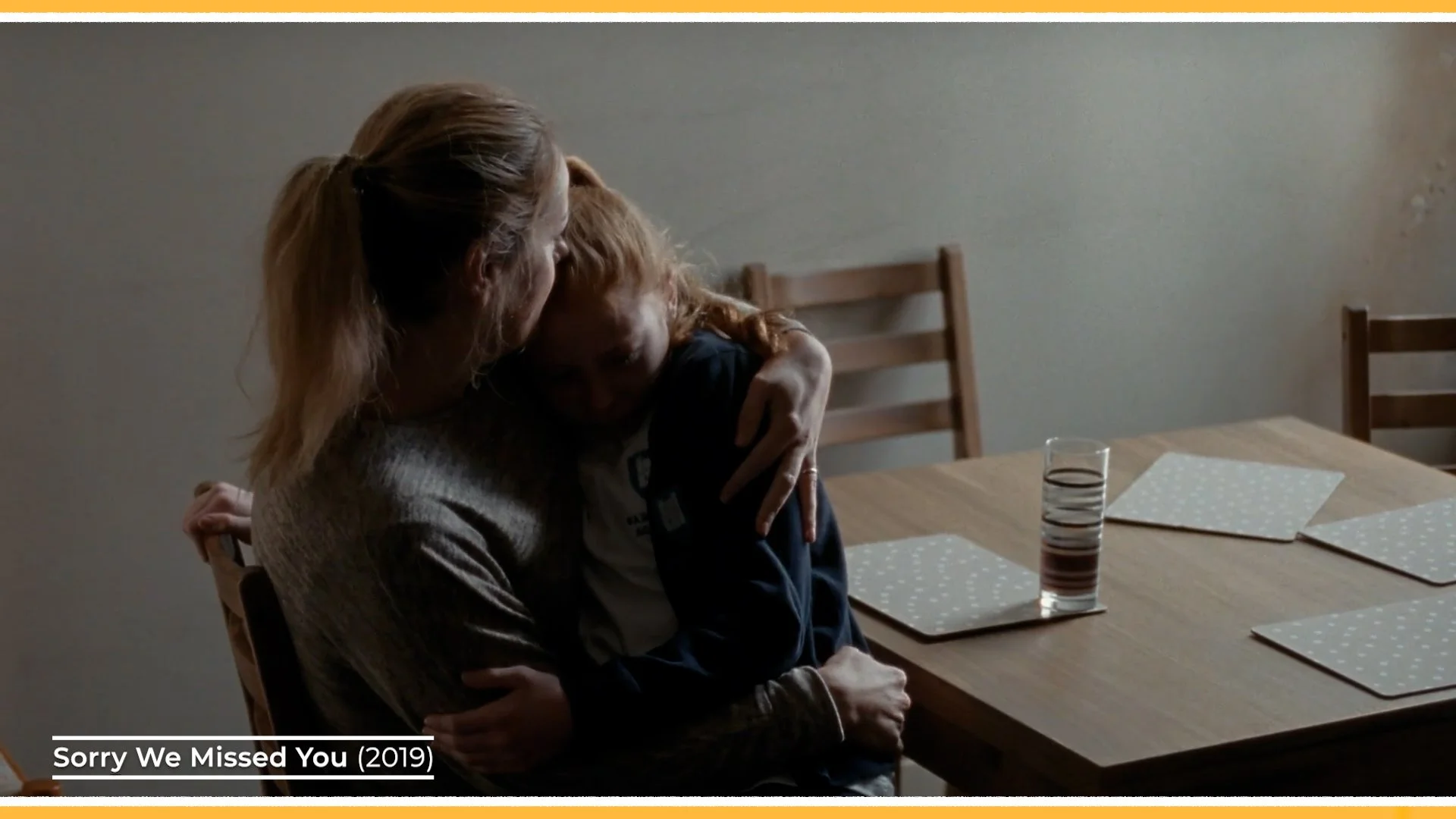
In fact, he and Robbie Ryan even like to shoot on longer focal lengths, from around 50mm to 135mm, with the camera further away - so it isn’t right in the face of the actors.
However, don’t let the lack of light stands or gear on the floor let you think that these beautifully lit films are entirely illuminated by natural sun.
For interiors, Ryan usually rigs lights out of shot on the ceiling - such as this scene in which a bank of DMG SL1 LEDs were rigged above the actors to give them more exposure. And then pushing light from the outside through the location’s windows with HMIs to give shape and direction to the light.

Positioning characters to be side-on or with their backs facing the windows, to give them an edge or backlight, rather than a flatter front light.
This gave them a natural light look, the ability to turn the camera in any direction without seeing lights or stands, and removed lighting gear from the set which may impede the actors eyeline, distract, or place more pressure on the non-professional cast.
If you look at most of the day exterior scenes, you’ll notice that although these truly use available natural light from the sun, the actors are carefully positioned, in the same way that they are in the interiors, so that the sun gives them a more visually flattering sidelight or backlight.
ANDREA ARNOLD
Andrea Arnold is another director whose films view the world through a naturalistic lens. Interestingly, like with Ken Loach, the person behind this lens is also Robbie Ryan.
Arnold’s films often feel raw and immediate, but that sense of realism is carefully engineered, especially in the way daylight is used. In her mid-day exterior scenes, characters are almost always positioned with the sun either behind them or hitting them from the side, allowing the camera to face into the light rather than away from it.

Backlight creates a soft edge around faces and bodies, and side light creates more contrast on one side of the face, avoiding the harsh flatness that direct frontal light would produce. So although characters aren’t explicitly lit by film lights, the natural lighting is still controlled by the way in which the characters are positioned in the shot.
The same idea applies to interiors, by placing characters either side on, or in front of natural sources like windows - giving them a back or a side light.

She also strongly prioritises shooting at dusk, which is referred to as shooting in the blue. To do this, they will orient the camera toward the part of the sky where the sun has just set. This direction holds ambient light in the sky for longer, bathing the scene in a cool, diffused glow that feels both natural and emotionally charged.
If the sun sets in the west, the camera looks west; turning east, away from the residual light, would cause the sky to collapse into darkness far more quickly.

The result is a lighting approach that feels spontaneous and observational, yet is built on precise timing, orientation, and restraint. Like Loach’s work, Arnold’s naturalism isn’t about accepting whatever light happens to be there - it’s about positioning characters, camera, and schedule so that reality appears natural, even as it’s being quietly sculpted.
JEAN-MARC VALLÉE
Jean-Marc Vallée is another filmmaker closely associated with naturalistic realism, and like Andrea Arnold, he also embraces shooting in the blue. But Vallée’s approach pushes the idea of natural lighting even further, most notably in Dallas Buyers Club, a film shot with almost no traditional supplemental film lighting.

A key part of making this possible was technological. Vallée and his team shot on the original Arri Alexa, a camera with enough dynamic range to hold detail in deep shadows while still preserving bright highlights. This allowed scenes to exist closer to the actual light levels of real environments without collapsing into underexposure or clipped highlights.
But the absence of lighting gear on set didn’t mean the lighting was left to chance. Dallas Buyers Club relied heavily on extensive location scouting and meticulous scheduling in preproduction. Rather than finding locations and then lighting them to look cinematic, Vallée chose locations that already contained expressive, motivated light - such as night-time alleyways illuminated by practical street lamps - and designed scenes around those existing conditions.
Lens choice also played a crucial role. The film was shot on Zeiss Super Speeds, with their extremely fast T/1.3 aperture, allowing the camera to gather far more light in low-level environments. This made it possible to expose night interiors and exteriors using only practical sources, maintaining a raw, unpolished look while avoiding underexposure.
Inside interiors, Vallée and his DP often relied on practicals, light sources that are part of the set environment and that can be seen in the shot, such as table lamps, overhead fluorescents, neon signage or festoon bulbs.
This light was sometimes subtly shaped and manipulated, such as by pointing lamps downward and bouncing light off tables, which then reflected soft fill back onto actors’ faces. It’s a simple technique, but one that quietly softens light, making it more flattering.

Like Loach and Arnold, Vallée also frequently staged scenes near windows, carefully timed to the sun’s position so characters would receive gentle side light rather than flat frontal illumination.
And even in a production famous for using almost no film lighting, some tools were still employed when needed - such as bounces that reflected sunlight back in through windows - to lift exposure inside.
MICHAEL HANEKE
Michael Haneke’s approach to naturalism is perhaps the most controlled of all - so much so that Amour wasn’t even shot in a real apartment, but almost entirely on a soundstage, without a single ray of natural sunlight.
Working with cinematographer Darius Khondji, Haneke recreated the illusion of natural light through meticulous design rather than real locations, bouncing massive 20K film lights through windows to mimic soft, natural sunlight and carefully placed practicals inside the apartment that could illuminate characters or parts of the set.
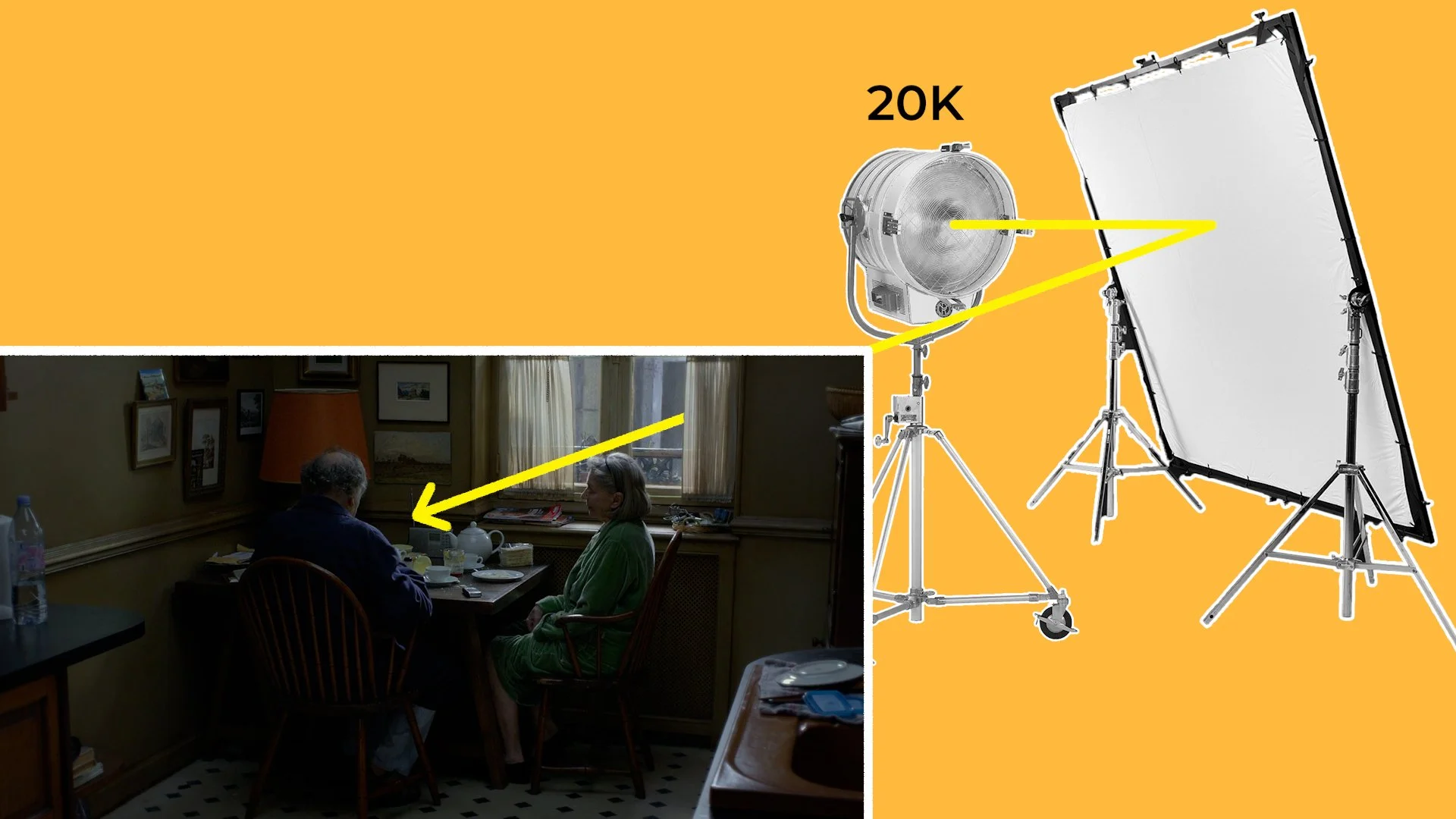
While spacelights and bounced Lekos were used inside the apartment to maintain a believable, soft ambient level without calling attention to the lighting itself.
Haneke was obsessive about continuity - not just of exposure, but of time, season, and emotional rhythm. The film was shot largely in chronological order, with sunlight carefully adjusted to reflect the passing days and months - and greenscreens outside each window which could later be digitally replaced with whatever background and weather was desired.
Sometimes this was softer, dimmer, cooler, overcast winter light. Other times it was harder, warmer, brighter summer rays.

Shooting in a studio with artificial lighting meant that they could carefully control and shift the light as needed - without needing to work around what the real sunlight or weather was doing outside which would be the case if they shot on a real location.
Showing that once again, although the light may look natural it is in fact highly controlled and actually completely artificial. Serving a feeling of realism that is less about spontaneity and more about precision.
CONCLUSION
In the end, natural lighting in cinema isn’t about refusing control - it’s about disguising it. What feels spontaneous or observational on screen is often the result of careful planning, precise timing, and deliberate manipulation of light, all in service of creating images that feel truthful and emotionally grounded.
These films remind us that realism in cinema isn’t found in simply pointing a camera at reality, but in shaping light just enough that it disappears, allowing the story and the characters to feel real.