
5 Filmmaking Rules That Can Be Broken
INTRODUCTION
If you’ve ever taken a filmmaking course, you’ve likely been taught a set of rules, guidelines presented as things to follow, or mistakes to avoid. While these can be helpful for beginners, offering a foundation to build on, they often become a problem when they’re treated as fixed laws rather than flexible tools. Especially when many of the most innovative and influential filmmakers have built their work by deliberately breaking them.
Today, we’ll look at 5 of these commonly taught filmmaking rules, why they aren’t as absolute as they’re often presented, and when and why it can make sense to break them.
1 - DON’T MIX COLOUR TEMPERATURES
White balance is the setting that determines how a camera interprets colour by calibrating itself to a light’s colour temperature, ensuring that white tones appear neutral under different lighting conditions.
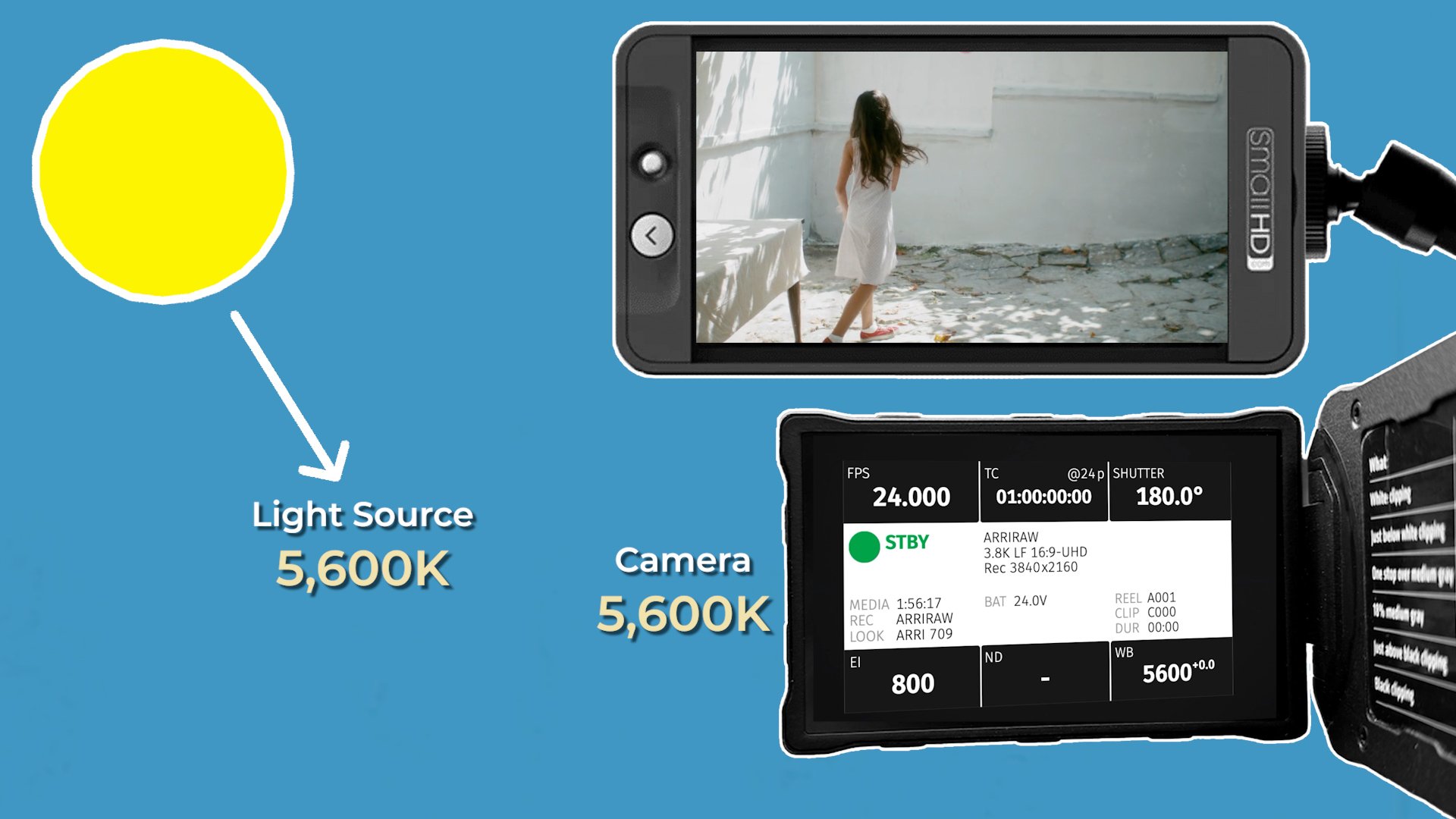
The conventional rule is to set your camera’s white balance to match your primary light source, and to avoid mixing lights with different colour temperatures within the same scene.
While this approach can produce a clean and technically accurate image, it can also lead to lighting that feels a bit too neutral and emotionally flat.
Many filmmakers intentionally break this rule by introducing contrast between warm and cool sources. A common approach is to key a subject with a light that matches the camera’s white balance, say 3,200K, while allowing other sources in the frame to skew cooler, around 5,600K.

This creates a subtle warm-cool colour contrast interplay where the subject has neutral skin tone, but the background light feels cooler. It can be used to make characters stand out from their environment or create more dimensionality by placing different colour sources in the foreground and background.
Another technique is to shift the entire colour balance of the scene to be either cool or warm, such as by lighting with warm sources like tungsten or sodium vapour while setting the camera’s white balance warmer, such as at 5,600K. This more monochromatic lighting style pushes the image toward a specific emotional tone - like a cool sadness.

Another popular technique is to use many different mixed light sources, these may skew green, cool, warm, or to an RGB colour value.
Always matching white balances to the light source can feel realistic, but realism isn’t always the goal. By mixing colour temperatures, filmmakers can suggest heat or cold, comfort or unease, or shape the emotional atmosphere of a scene in a way that neutral lighting simply can’t.
2 - TELEPHOTO LENSES FOR CLOSE UPS
Another commonly taught rule is that wide shots should be captured on wide-angle lenses, while close-ups should always be filmed with telephoto lenses.

This guideline overlooks the fact that focal length isn’t just about magnification - it fundamentally changes how space is represented.

Filmmakers often break this rule for expressive reasons. Telephoto lenses can be used for wider shots, with the camera placed farther from the subject, compressing space and isolating characters from busy or distracting environments, such as a crowded street. This draws the viewer’s attention directly to the subject in a way a wide-angle lens, where everything is in focus, might not.
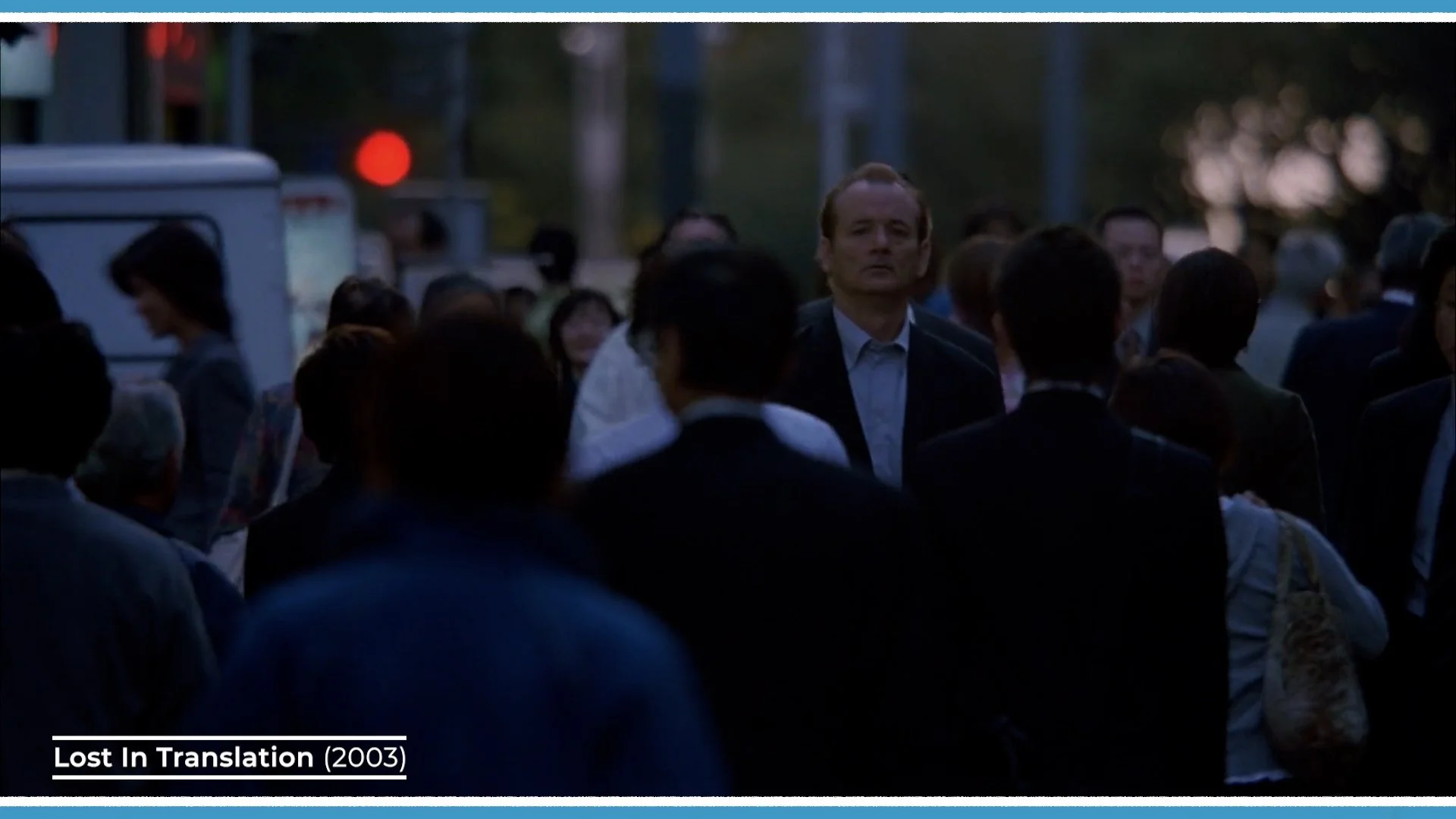
Or, filmmakers may want to alter the reality of wides by using a telephoto lens to make the background seem closer to the subjects than it is in real life. Such as making landscapes like mountains, or cityscapes appear looming and every present in the story.

Conversely, wide-angle lenses are sometimes used for close-ups by moving the camera closer to the actor.
These lenses expand the background, revealing more of the surrounding environment and grounding the character within it. Or distort the face to create a warped sense of reality, or represent a character’s contorted state of consciousness.

A wide angle lens close-up can also feel more immersive, placing the viewer physically closer to the subject and creating a sense of intimacy or subjectivity that a longer lens may not achieve.
The rules about focal lengths may be suited to practicality or representing reality more realistically from a technical standpoint, but, again, that doesn’t mean that realism in filmmaking is always the goal.
3 - THREE-POINT LIGHTING
Three-point lighting is often taught as the ‘correct way’ to light a scene, built around a key light, a fill light, and a backlight to ensure subjects are clearly visible and evenly modelled.
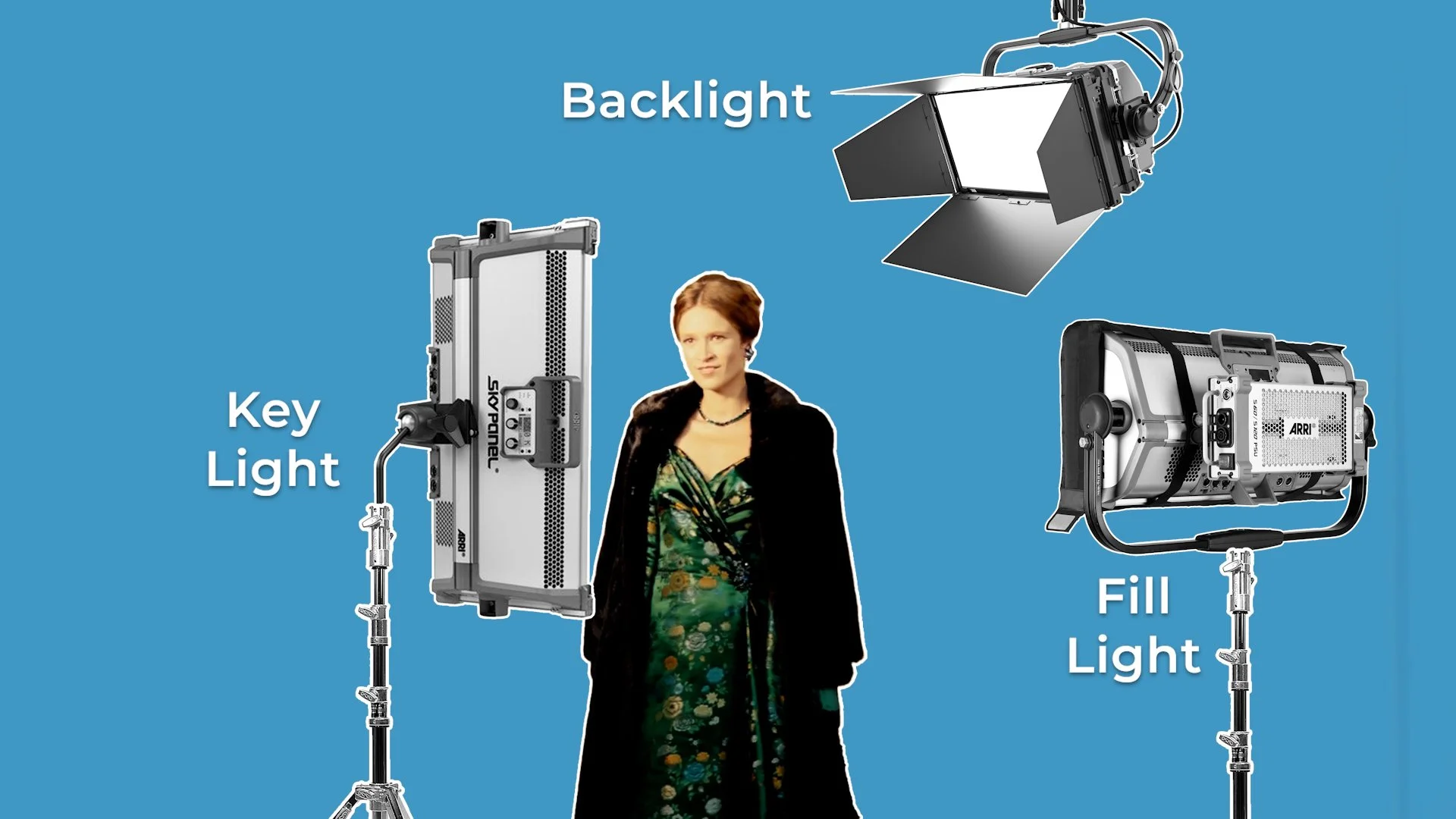
While this setup is a useful teaching tool, it can become limiting when it’s treated as a requirement rather than an option. Not every shot needs to be perfectly illuminated from all sides, and many cinematographers intentionally avoid three-point lighting altogether.
A common alternative is to light a scene with a single dominant source, embracing contrast rather than correcting it. A DP might place that source behind the subject, turning the key light into a backlight and allowing the face to fall into partial shadow or even silhouette.

By choosing not to introduce a fill light, the image gains shape, mystery, and a stronger sense of mood that would be softened by more ‘correct’ illumination.
I’d argue a more useful concept than rigid three-point lighting is what could be called motivated lighting. Instead of starting with a formula, this approach begins with the environment of the scene and asks where light would realistically come from - sunlight shining through a window, a practical lamp on a table, or rays of moonlight.

Film lights are then placed and shaped to support those sources, reinforcing the logic of the space while still allowing for creative control.
In some cases, lighting doesn’t even need to be strictly motivated at all. Certain stories call for heightened, expressive, or even abstract lighting that prioritises emotion over realism.
The key idea is that three-point lighting is just one tool among many. Sometimes one light is all you need. Not every story benefits from having its characters always evenly and perfectly lit.
4 – ALWAYS SHOOT COVERAGE
Another widely taught rule is to always shoot plenty of coverage: multiple angles, wide, medium and close up shot sizes, and safety options, just in case something doesn’t work in the edit.

And in many situations, this approach makes sense. Cutting quickly between angles can clearly communicate action, geography, and information to the audience.
But coverage can also become a default rather than a decision.
Placing limitations on how much coverage you shoot can force clarity. When you know you won’t have endless angles to fall back on, you’re pushed to think more carefully about which shots actually matter, and what perspective best serves the story. Instead of asking “What else should we cover?”, the question becomes “How should we cover this?”
Some very successful movies push boundaries by trying out inventive filmmaking forms that are custom tailored to their story. A film might play out largely in a handful of carefully composed wide shots, creating a detached, objective point of view that observes rather than guides emotion.

Or a sequence might be designed as a single, uninterrupted take, allowing events to unfold in real time and immersing the audience as the camera explores the space alongside the characters.
There’s also a practical reality to consider. Shooting time on set is almost always limited. Fewer setups often means more time to refine performance, blocking, and camera movement within each shot, rather than racing through angles with only one or two takes.
In those cases, the quality of a small number of considered shots can be far more valuable than an abundance of coverage that never quite reaches its full potential, or that gets chopped out in the edit.
5 - 180° DEGREE RULE
The 180-degree rule is a guideline designed to maintain spatial clarity by keeping the camera on one side of an imaginary line that is drawn between characters. By staying on the same side of this axis, screen direction remains consistent, helping the audience understand where characters are positioned in relation to one another.

That said, professional filmmakers can sometimes break this rule by deliberately “jumping the line.” A scene might begin with coverage from one side of the axis, only to cross it later in the dialogue, subtly changing how the space feels. This shift can signal a turning point in the conversation, a change in power dynamics, or an emotional rupture between characters.

Jumping the line can also be used to make the audience feel that something is off. By disrupting spatial continuity, the image introduces a sense of discomfort or unease that mirrors what’s happening beneath the surface of the scene.
Another camera continuity rule that can be broken in an extreme way is called a ‘jump cut’. This is where an edit in time is made while keeping the shot exactly the same - or at a very similar angle and shot size.
These could be used to mirror a character’s mental instability or disassociation, to compress time, or break up the very form of cinema in a disjointed and fractured way.
While the 180-degree rule can be broken, it works best when done sparingly and with intention. Crossing the line without motivation can feel confusing, but when it’s driven by the story, it becomes a powerful expressive tool rather than a mistake.
CONCLUSION
Filmmaking rules exist to solve problems and provide structure, especially when you’re starting out. But they aren’t laws, and they were never meant to replace creative decision-making. Understanding why a rule exists is far more important than following it blindly. When those rules no longer serve the story, the emotion, or the moment, breaking them isn’t a mistake - it may be where the most interesting filmmaking begins.