Cinematography Style: Łukasz Żal
INTRODUCTION
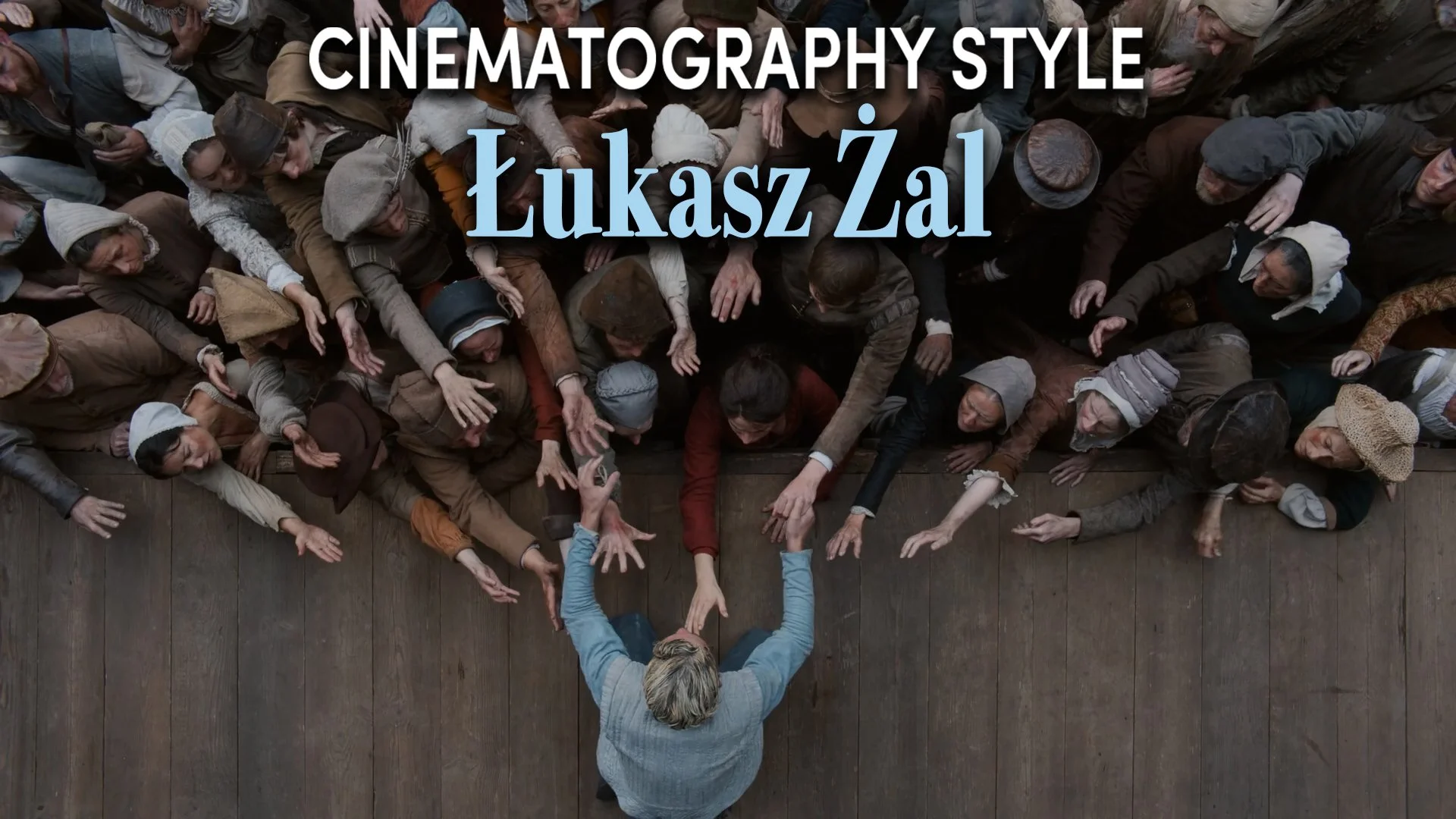
Each of his beautifully composed tableau frames is like a photographic still - which in and of itself can tell a story through the image alone. Łukasz Żal is the go-to cinematographer for crafting critically acclaimed, highly awarded historical period films.
From Paweł Pawlikowski’s black and white trio of films, to Jonathon Glazer’s The Zone of Interest and Chloe Zhao’s Hamnet, he is a visual collaborator of some of the highest regarded auteur directors working today.
In this episode of Cinematography Style I’ll look at Żal's work through a philosophical lens, as well as breaking down some of the gear and techniques he uses to practically create each frame.
PHILOSOPHY
It’s often said that simplicity in visual art is one of the most difficult things to do well. It requires stripping away everything that is not essential and preserving only the most truthful elements which, by themselves, can tell a story.
What stands out to me when watching Żal's photography is a profound use of these, often static, often minimal, simplistic, yet visually powerful compositions - which he calls tablaeus.
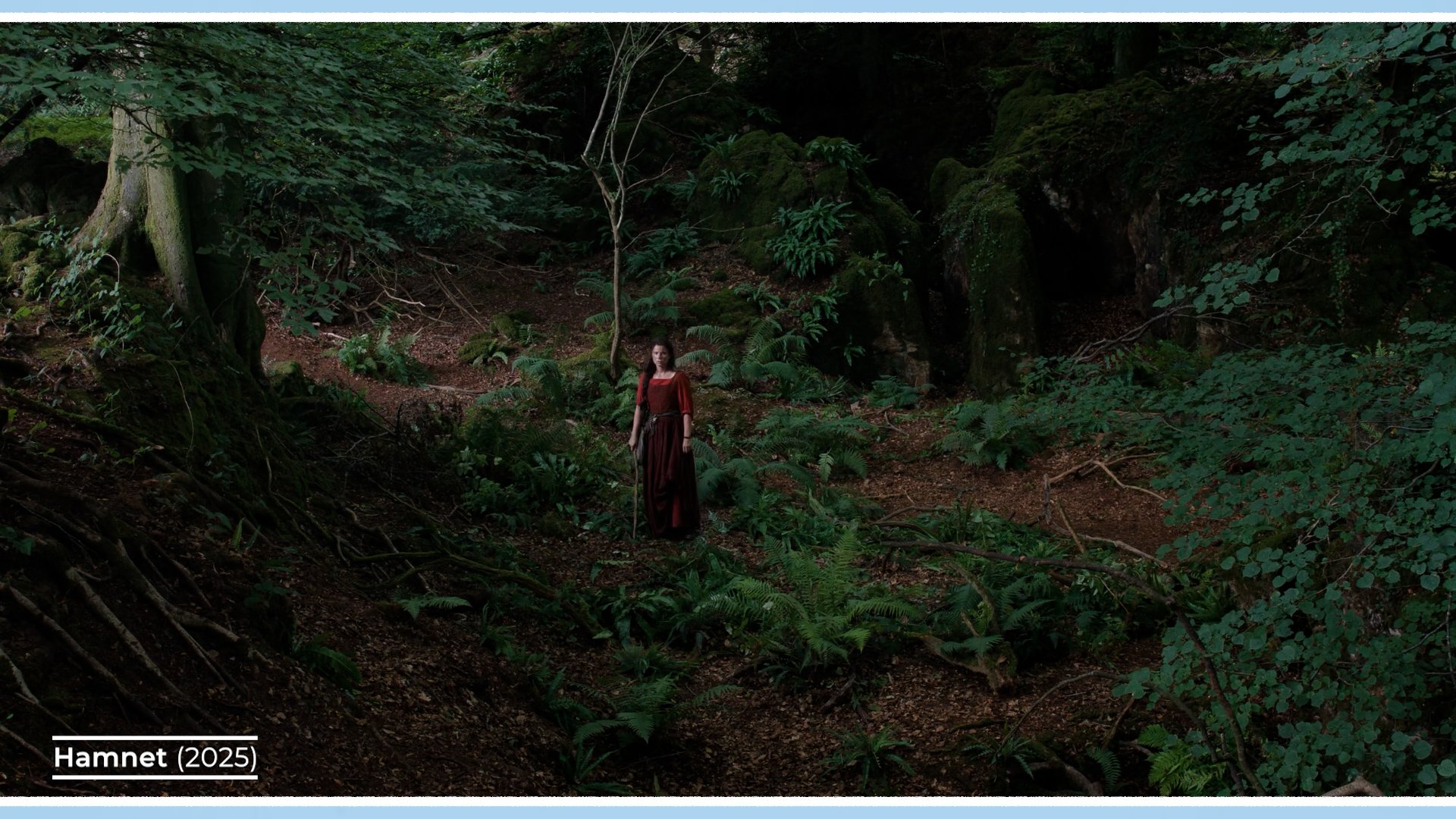
“Not to just have a complicated crane movement, but just to, very simply, create a reality where we’ll be building this world from fragments. This space, you know, beyond the camera, the offscreen space, will be as important as that which is in the frame. And those tableaus will be speaking about that which is beyond the frame.” - Łukasz Żal, Source: American Cinematographer
Like paintings, it’s possible to analyse many of these compositions in isolation, and extract a meaning or narrative from each still image.
How do we interpret the emotional state of this character and how is that influenced by the juxtaposed jovial dancers who live outside of the frame?
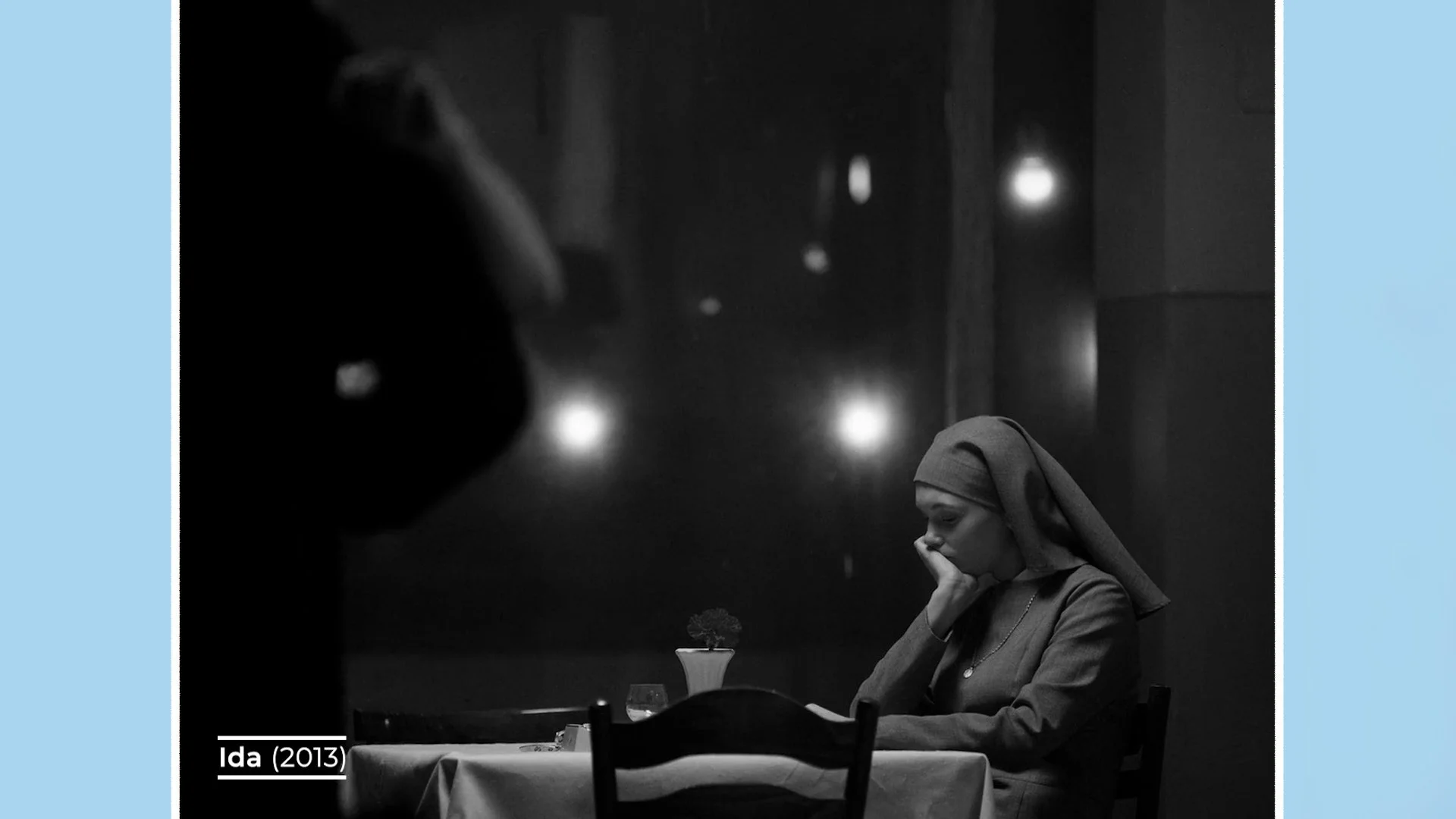
Does our physical distance from these characters affect how much we can empathise with them?
Each compositional choice and the way that the subjects are arranged or even excluded from a frame, affects the way that audience’s subconsciously experience each on screen moment.
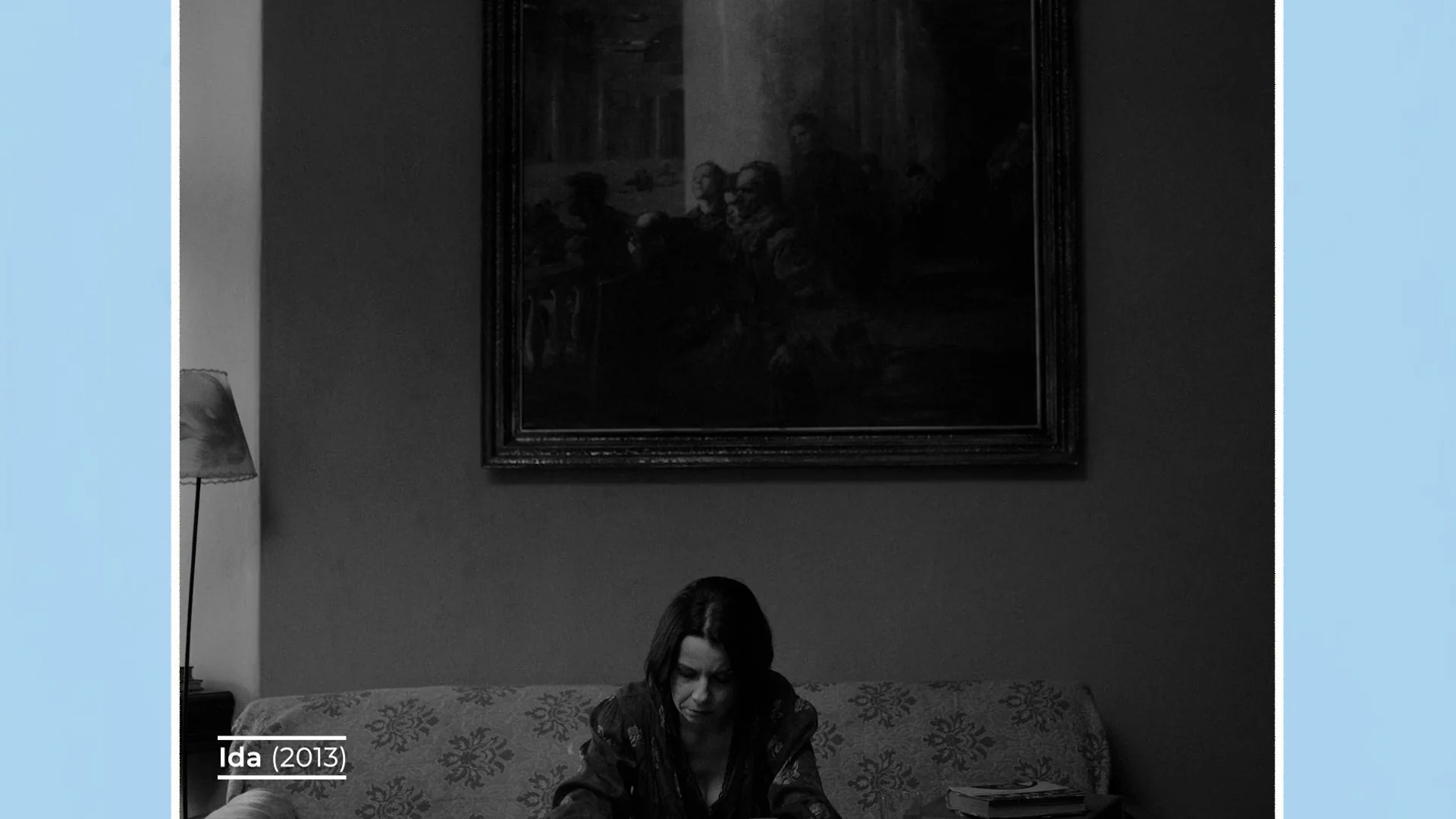
A trademark in many of his compositions, from his first film Ida where he stepped up from camera operator to DP, is using negative space. Negative space is the unoccupied area surrounding the main subject. It reduces visual clutter and draws the viewer’s attention straight to the subject. Lots of negative space can also make a subject feel smaller in a frame, therefore evoking feelings like loneliness or isolation.
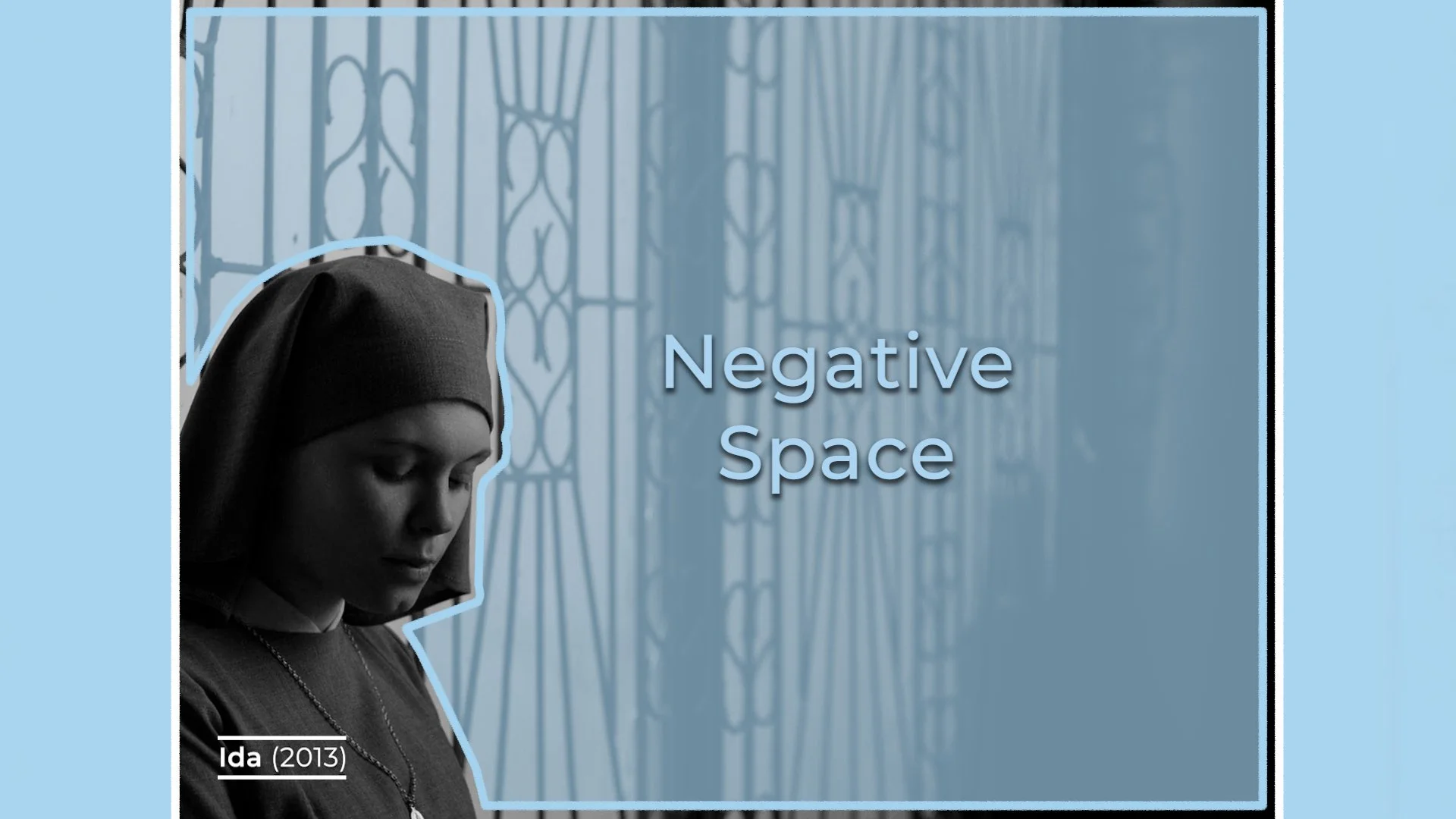
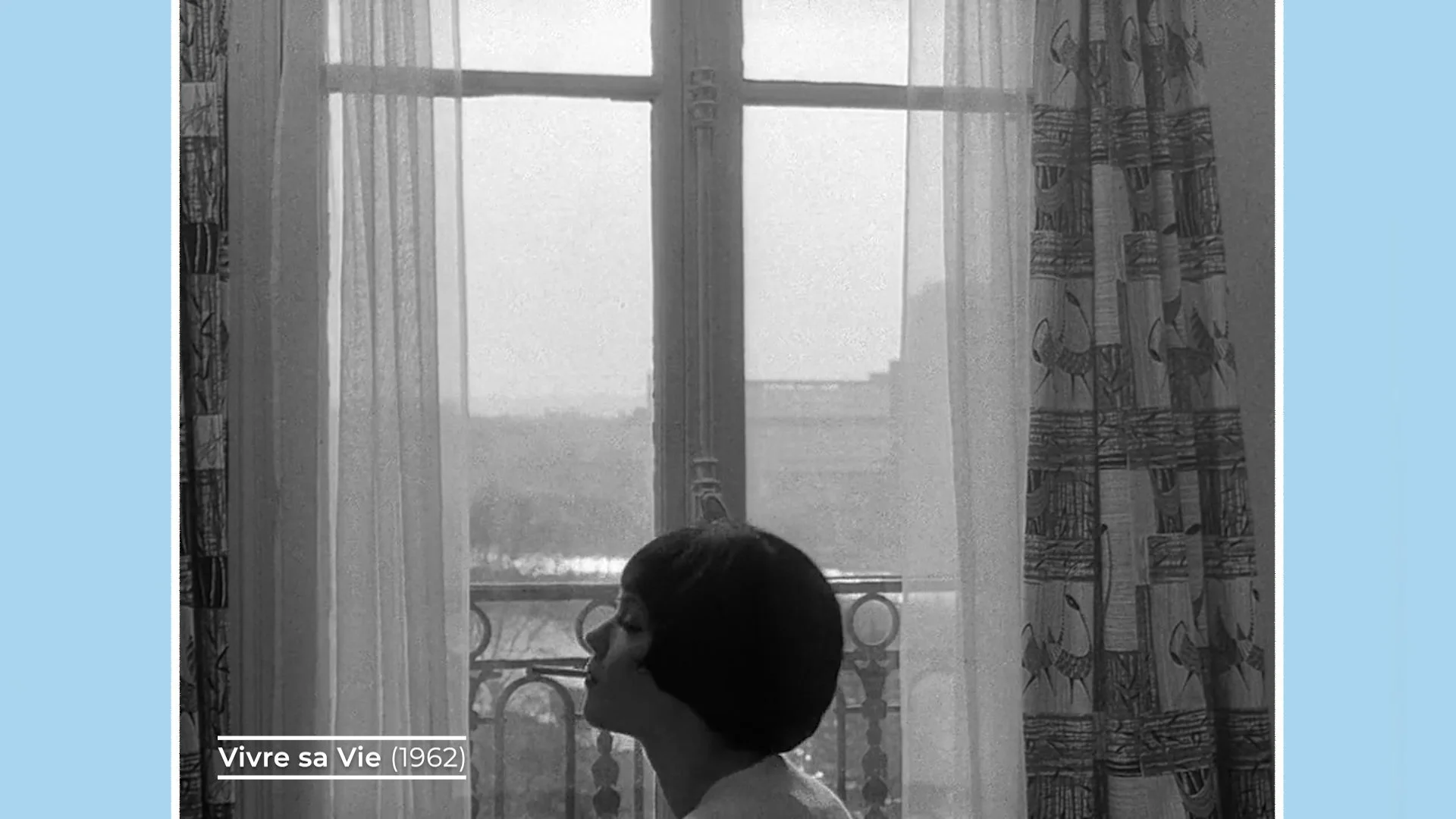
He often creates excessive negative space by composing the characters lower in the frame and leaving lots of space above them, called headroom.
This style of framing is reminiscent of one of his favourite films by director Jean-Luc Godard called Vivre Sa Vie which features flat, frontal compositions with characters placed at the bottom of the frame with loads of headroom.
“I hate when a film looks like a film. You know I come from documentary, I always try to create the reality, but try to move in a documentary manner, where things are kind of intertwined and sometimes it’s not perfect. Sometimes it’s just a bit late, staging is not perfect, you know, extras are not perfect.” - Łukasz Żal, Source: American Cinematographer
His work combines these minimally simple, non-traditional compositions with a subtly imperfect way of capturing reality. He’s referenced Tarkovsky as an influence, and the way he moves the camera in a way which is sometimes out of sync with characters. The camera doesn’t always have to perfectly track the motion of an actor. Sometimes the pacing can be misaligned so that perhaps the camera flows over the foreground first before eventually catching up to a subject.
Or gradually flow downwards, through an environment to reveal a person enveloped in nature.
Another aspect of his photography, and most of the directors he works with, is shooting very economic coverage of scenes. Unlike some filmmakers, who like to grab as many angles as possible and use up-tempo pacing in the edit as a device for shaping tone, the films that Żal shoots typically cover scenes with only a couple of different angles - if not in one single shot.
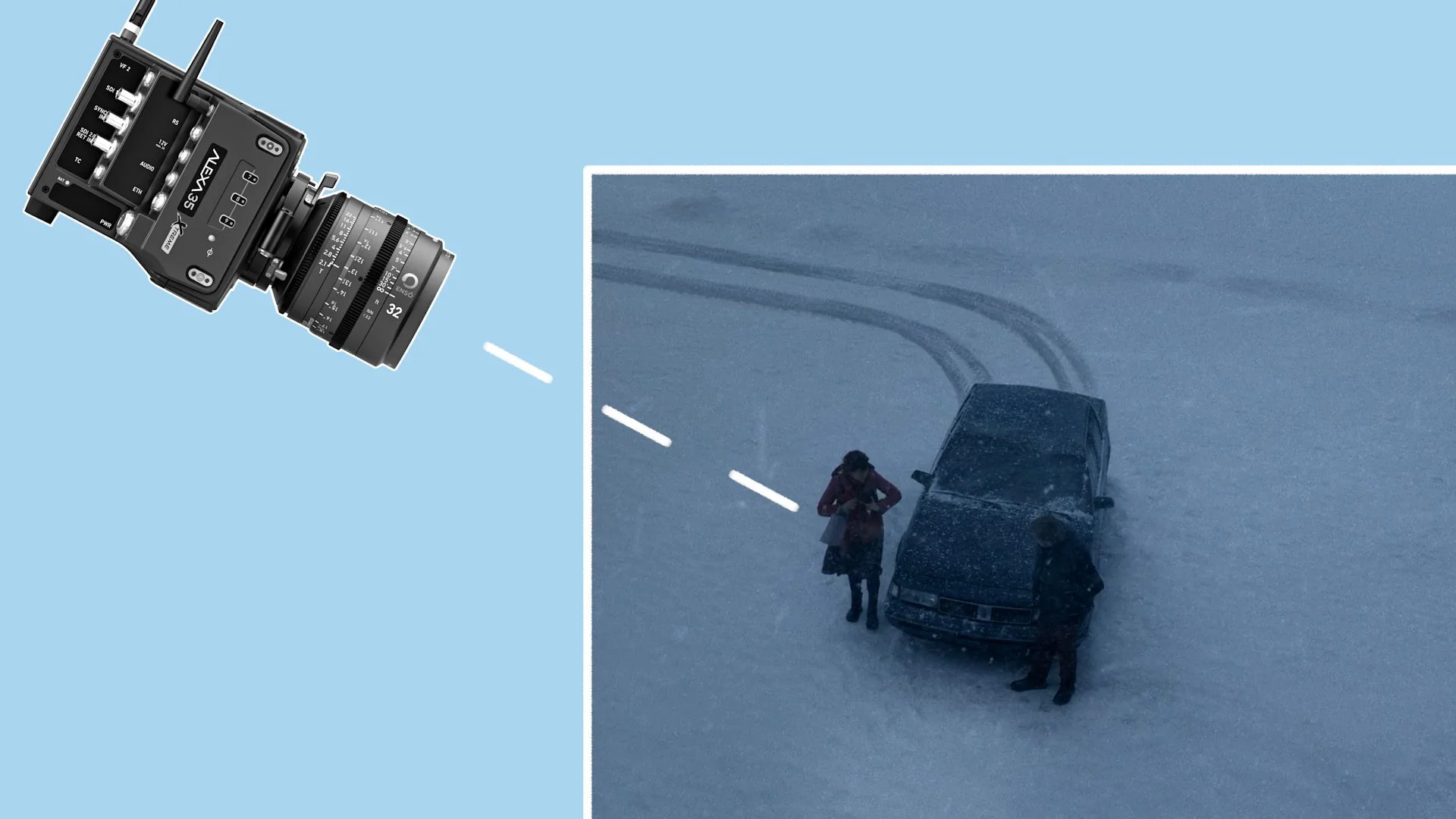
He’ll usually frame these shots either at a neutral angle level to eye line, or often, use a high angle, where the camera is elevated above the subject. These frames are often static compositions done with a tripod, dolly or high angles with something like a ladderpod, although he does also use handheld - especially when he wants to shift away from observing action into a more intimate, close, immersive perspective.
GEAR
A common trend when photographing period dramas is to give it a vintage visual flare which reflects its place in history by shooting on textural film, with imperfect vintage lenses, or diffusion filters which bloom highlights.
Interestingly, Łukasz Żal usually deviates from this, by typically shooting digitally and with more modern, sharper, cleaner, clinical glass that doesn’t have funky vintage character, texture and aberrations.
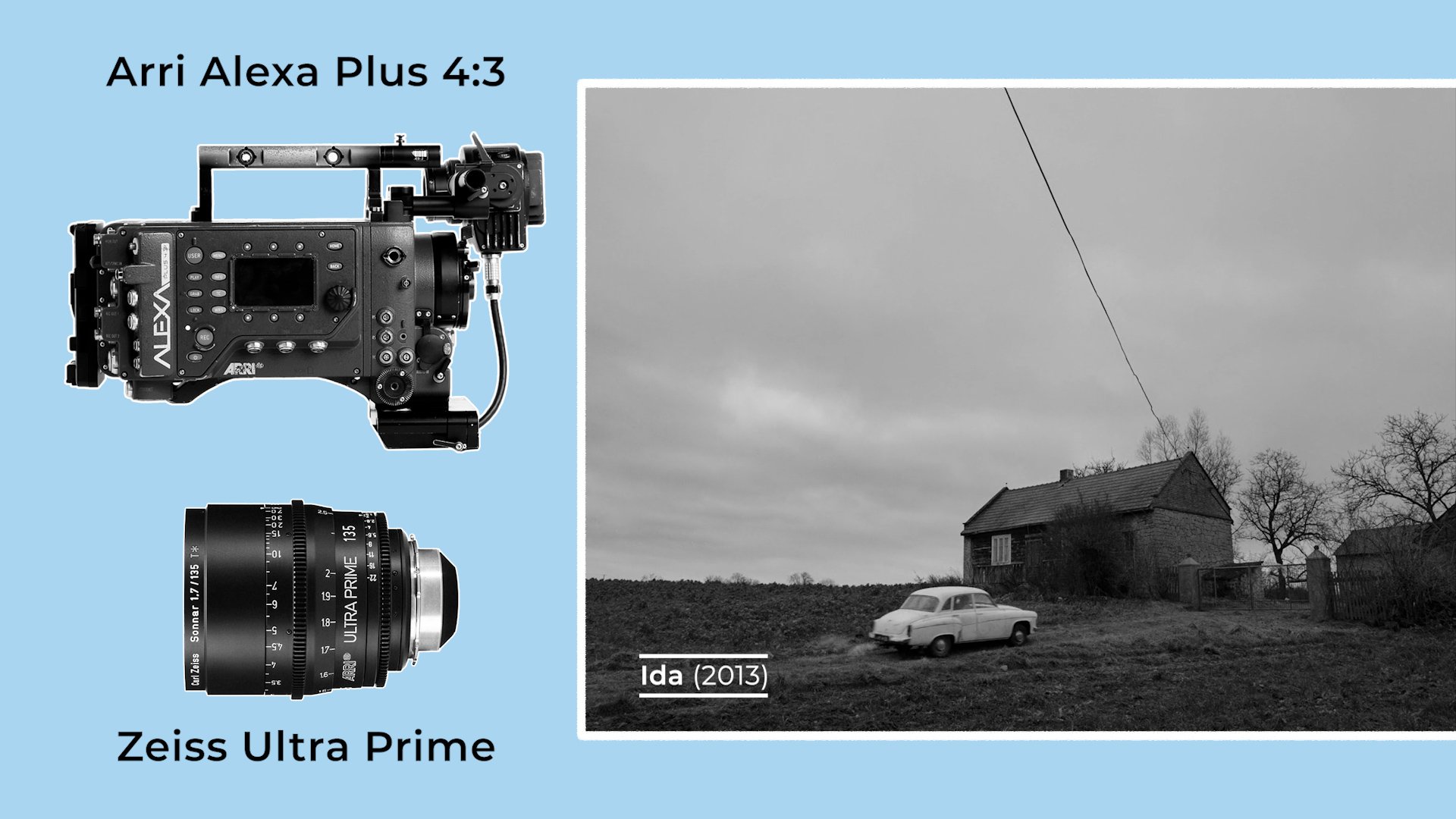
His most common combination of camera and lens brands is Arri and Zeiss. He’s used different variants of these, from the original Arri Alexa Plus 4:3 with Zeiss Ultra Primes on Ida, the XT and Ultra Primes on Cold War, to the Alexa 35 and Zeiss Superspeed and Master Primes on Hamnet.
“We both love, Chloe, Zeiss Superspeed lenses. And also we decided to use them because they are very modest. They don’t impose a specific look. They are a bit vintage but still very sharp. They are kind of normal.” - Łukasz Żal, Source: American Cinematographer
These Superspeeds were swapped out in night scenes for Master Primes, which are sharper and resolve detail a lot clearer when shot wide open at T/1.3 - which was needed to have enough light to expose the low luminance candlelit scenes.
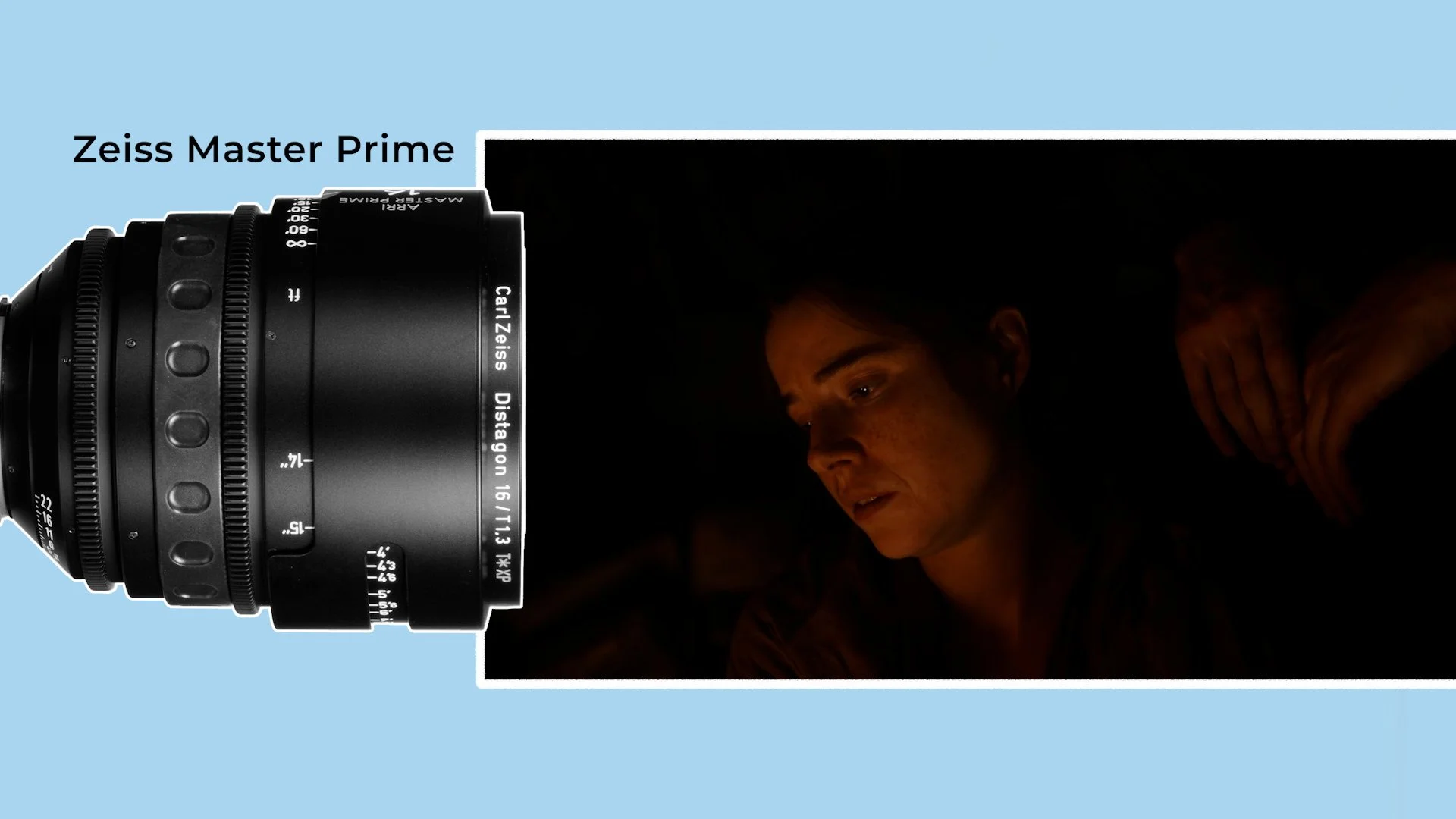
This idea of capturing cleanly resolved images pushed the films away from being sentimental or looking at history through a different, softened lens. Instead he captured these period films with a contemporary sharpness - like The Zone of Interest - which was captured digitally on the Sony Venice with sharp little Leitz M 0.8 lenses that resolved images cleanly, didn’t do too much, didn’t impose a look and gave them the objective viewpoint they were after.
An exception to this realist, clinical look, are the experimental night sequences in The Zone of Interest.
“We didn’t use lights because we wanted to be as close to the truth as possible. When she was operating mostly at night, because she was carrying food and just helping, there was no available light. There was no ambient light. We didn’t want to do a moonlight, so we used thermal imaging camera for that.” - Łukasz Żal, Source: American Cinematographer
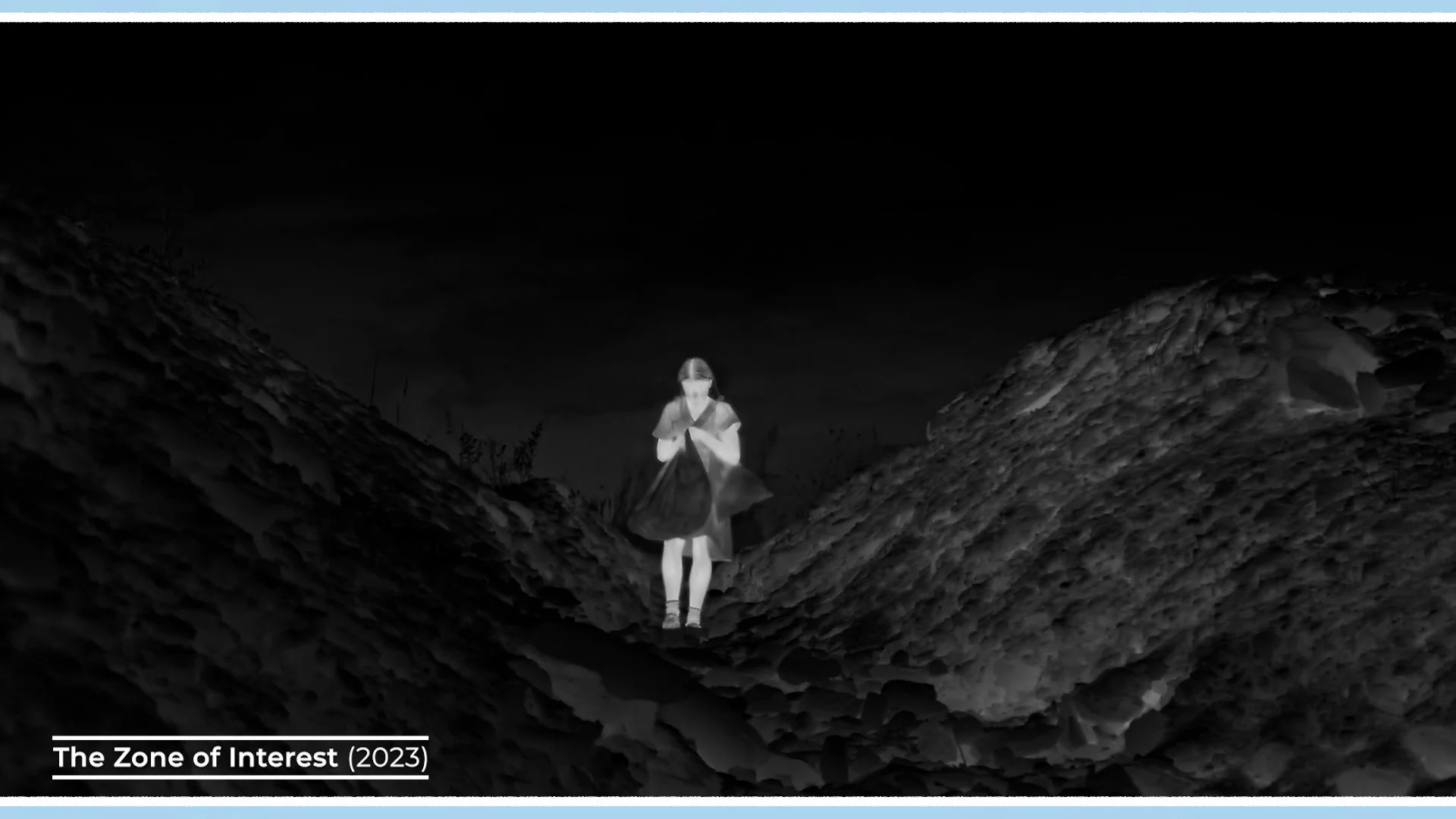
This FLIR X8500 infrared camera gathers information about each pixel based on the temperature of an area. As this camera is not designed for filmmaking it had a very low resolution of around 1K, however the post production team were later able to upscale this to 4K by using AI tools.
With some exceptions, such as the Russian film Dovlatov, he usually veers away from widescreen photography and anamorphic lenses. He almost always opts for squarer frames, over wide ones, shooting either in a 1.33:1 or 4:3 aspect ratio, or 1.78:1 or 16:9.
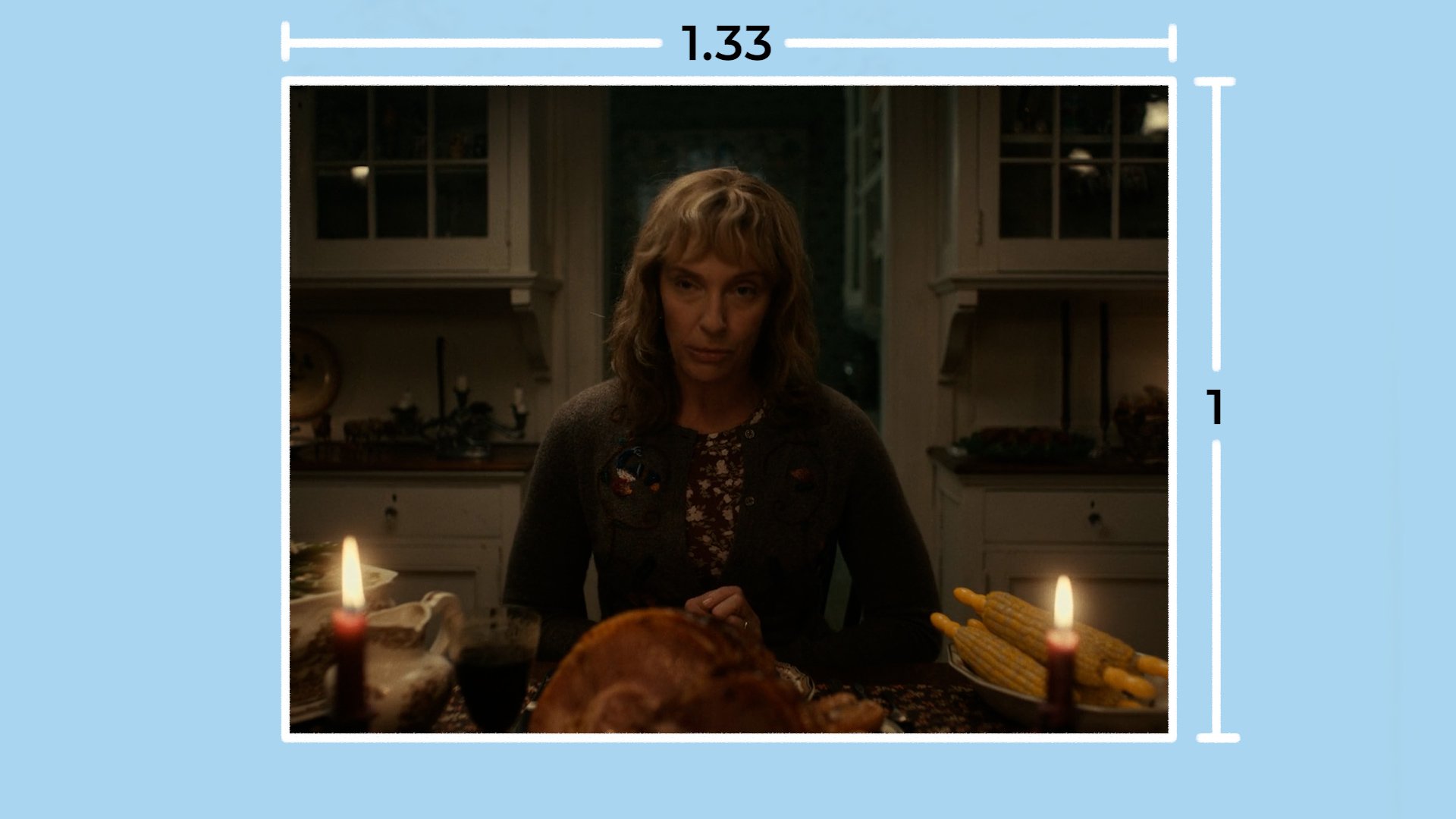
Taller aspect ratios naturally avail themselves to composing subjects with more headroom and are suited to his style of using vertical negative space. Unlike widescreen ratios, which provide more horizontal negative space.
His preference for simple, yet at times intentional visual imperfection is also reflected in his approach to lighting. He usually lights by elevating the motivated light sources in a location.
Take this example from Ida, in this scene, characters are placed next to a window. These windows justify the direction of his key source, which he intensifies by using a 6K light source outside each window, softened by a half white gel, and a blackout textile to create a negative fill shadow on the opposite side.
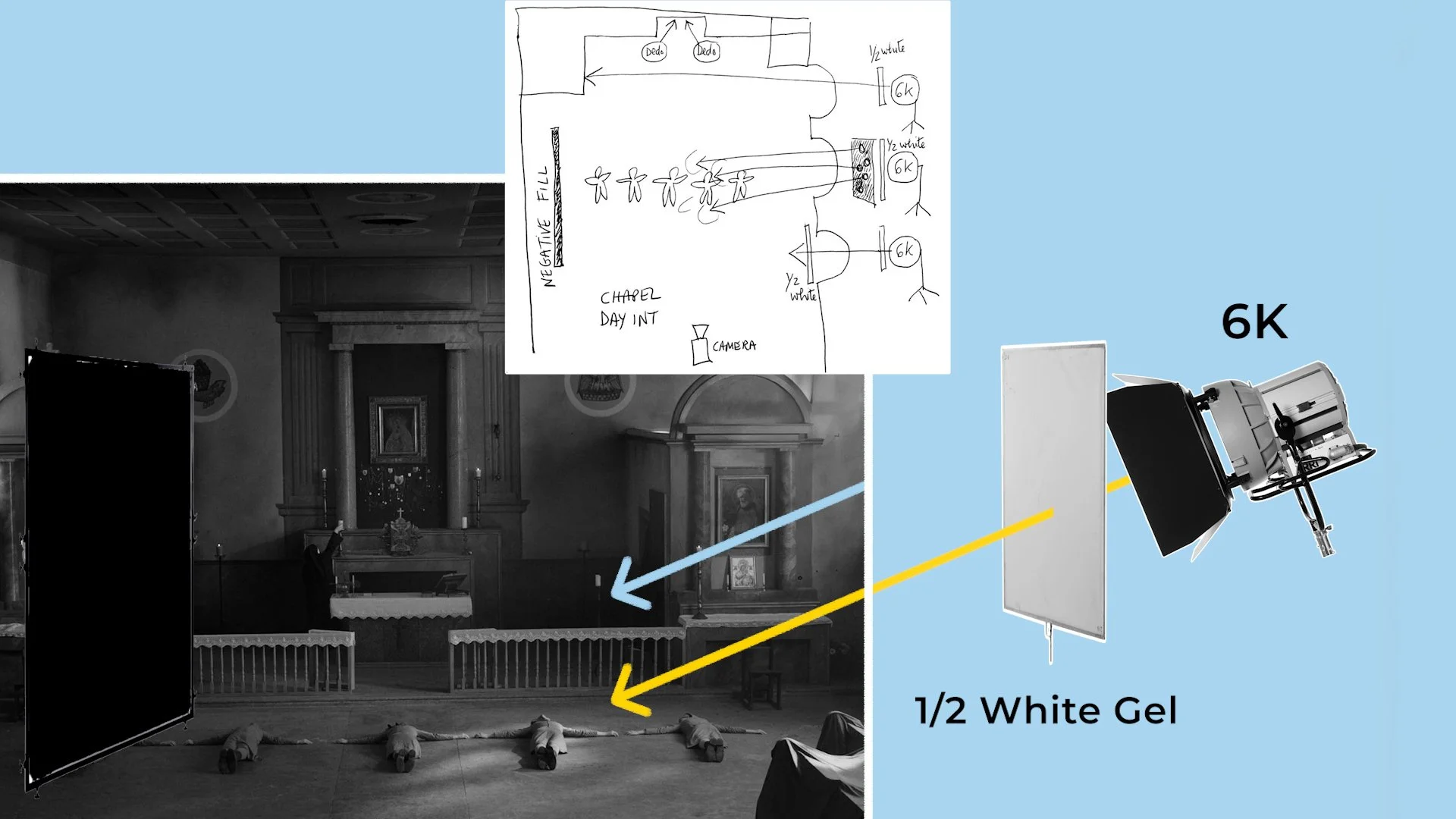
This naturally motivated direction of the source is subtly shaped by shining the light in the central window through a duvetine fabric with holes cut in it. This creates little dappled pockets of light on the ground, which perfectly illuminate and single out Ida in the frame.
He often uses this technique of shaping light by shining it through various foreground textures - like hallway doors, or windows - to create interesting patterns of luminance and shade on walls or flooring. Or he even finds natural reflections at exteriors from the sun bouncing off glass.
CONCLUSION
Ultimately, Łukasz Żal’s work proves that you don't need hyper-stylized frantic camera movement or funky, distorted vintage glass to tell a powerful story.
By stripping away visual clutter, leaning into negative space, and trusting the restraint of a single, flawless composition, with light which accentuates a key part of the image, he pushes us to look deeper into the frame - and beyond it.