
Kodak Released A New Film Stock: Kodak Verita 200D
INTRODUCTION
In 2007, Kodak released what was, without a doubt, their most technically proficient 35mm negative cinema film stock ever created. They called it Kodak Vision 3.
This formulation wasn’t just a minor tweak; it was a massive upgrade over their older Vision 2 stock, offering unprecedented dynamic range and incredibly fine grain. For almost two decades, if you wanted to shoot a major Hollywood production on color negative film, Vision 3 wasn't just your best option - it was essentially your only option.
When the third season of Euphoria dropped, it brought a completely new visual language - inspired by a classically cinematic look from years gone by. The season was shot entirely on a brand-new, custom-engineered, classically cinematic color negative film stock developed specifically for the show.
They’ve named it Verita.

Today, we are going to dive deep into how Kodak collaborated with DP Marcell Rév to build this film stock from scratch, explore its different aesthetic, and break down the technical limitations that come from working with it.
KODAK VISION 3
To understand why Verita is such a big deal, we first have to understand the perfection it was trying to break away from. Modern Kodak Vision 3 is a triumph of chemical engineering.
“If you’re a chemist or an engineer you want to create the best - technically best - possible stock. And I think they kind of did it with Vision 3. The 500T is an amazing stock.” Marcell Rév
When Rév says it's the "technically best" stock, he’s primarily talking about its staggering dynamic range - which sits at around 14 stops.Dynamic range is the total exposure spectrum a film or sensor can capture simultaneously, stretching from the absolute darkest shadows to the absolute brightest, crispest white highlights.
Think of different film stocks and digital cameras like containers of varying sizes. High dynamic range images give you a massive container. They hold on to vast amounts of light information without letting your shadows turn into muddy black ink or your highlights clip into blown-out white nothingness. Low dynamic range images have a much smaller container, losing that detail on the brightest and darkest ends of the image far more easily.

When cinematographers light a scene, whether they are calculating it mathematically or doing it purely by instinct, they are utilizing a lighting ratio or contrast ratio.
The lighting ratio is the mathematical relationship between the brightest lit part of your subject (by the key light) and the shadow side (by the fill light). It dictates the fundamental mood of your image, scaling from flat and even - at 1:1 where the intensity of the key light and fill light are the same, to highly dramatic and moody at 8:1 where the key is three times brighter.
Because Vision 3 has such high dynamic range, it can easily hold detail at 5 stops overexposed and 4 stops underexposed.
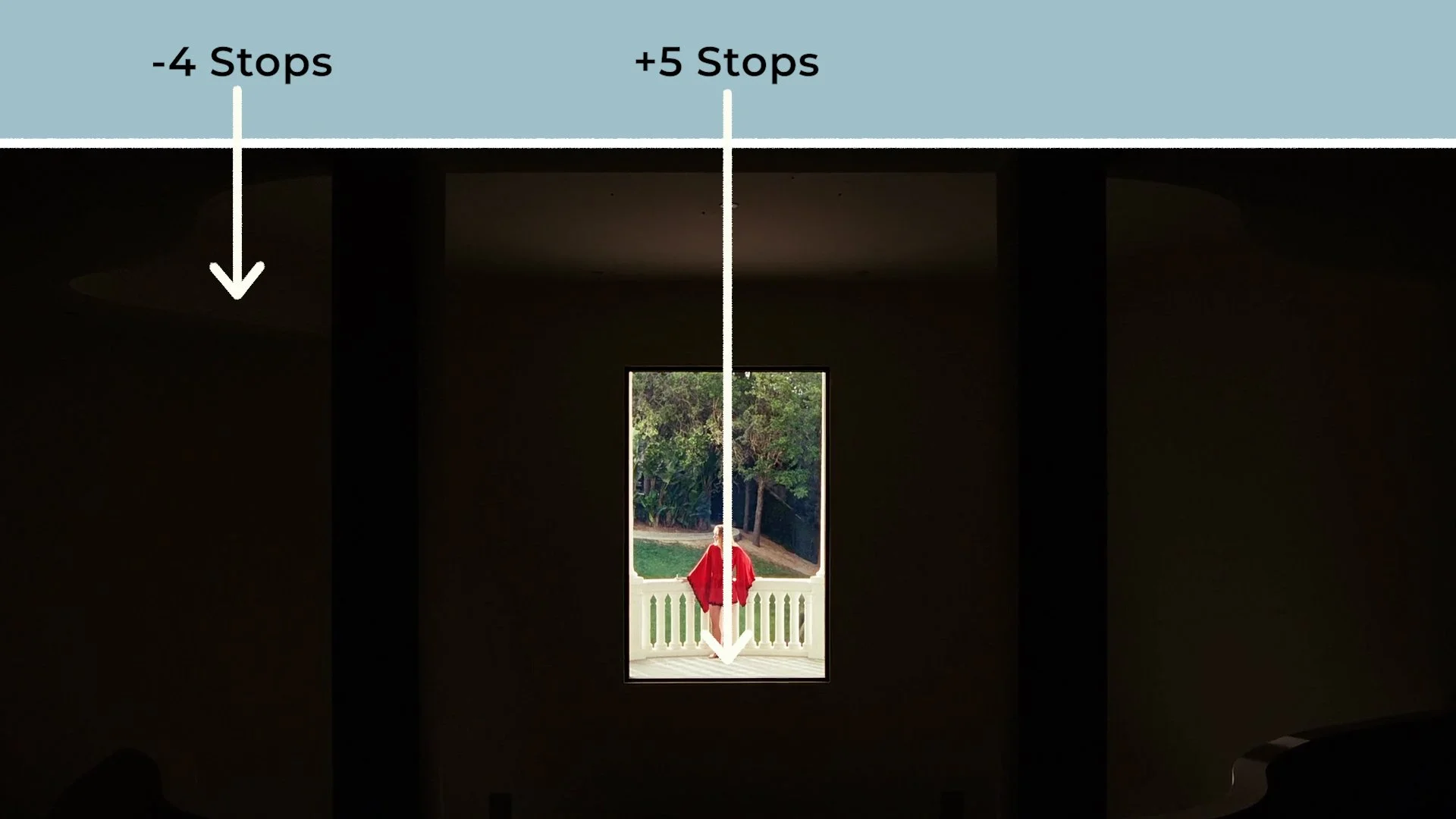
This massive latitude means you can push your contrast ratios to the absolute limit. You can expose for a blazing bright exterior window while keeping an actor in a dark interior scene, and the film will elegantly preserve detail in both areas. It gives colorists an incredibly flexible digital canvas to mold into almost any look during post-production. But that brings us to the catch.
“It’s a scan stock. So it was made to capture as much detail, as much latitude, as possible. So it lacks a little bit of flavour - at least when you’re looking at a print stock from the 90s.” - Marcell Rév
Vision 3 film was designed to be scanned into digital files, manipulated inside a color-grading suite, and projected digitally in theaters as a DCP (Digital Cinema Package).

Compare that to the 1990s. Back then, film negatives were designed to be photochemically copied directly onto a physical print stock for mechanical theater projectors. Those vintage print stocks inherently injected heavy contrast and rich, dripping color saturation right into the emulsion. Modern stock captures everything perfectly, but it can feel a bit tamer in contrast and sat depending on how it’s handled in the grade.
KODAK VERITA 200D
The birth of Kodak Verita 200D was driven by a desire to bring back that classic, high-saturation, high-contrast look with deeply rich, warm skin tones. Marcell Rév wanted the chemical emulsion to do the heavy lifting right inside the camera.But you can’t just look up the recipe for a 1990s film stock and hit print.

Many of the raw chemical components used to manufacture older film stocks in these old Kodak recipes simply do not exist anymore. Kodak couldn't just recreate an old formulation; they had to start from scratch and invent an entirely new chemical pathway to simulate those vintage traits.
The result: Verita achieves its punchy look by deliberately sacrificing dynamic range. Although highlights could still be overexposed and maintain detail, Vertita contains much less latitude when underexposing - which turns shadows to a muddy mess.
If you’re familiar with colour software, you’ll know that these curves show how film reacts to light. The bottom line, called the toe, shows where detail crushes to black. The top line, called the shoulder, indicates the highlights clipping to pure white. While the straight line shows the mid tones which sit in between.
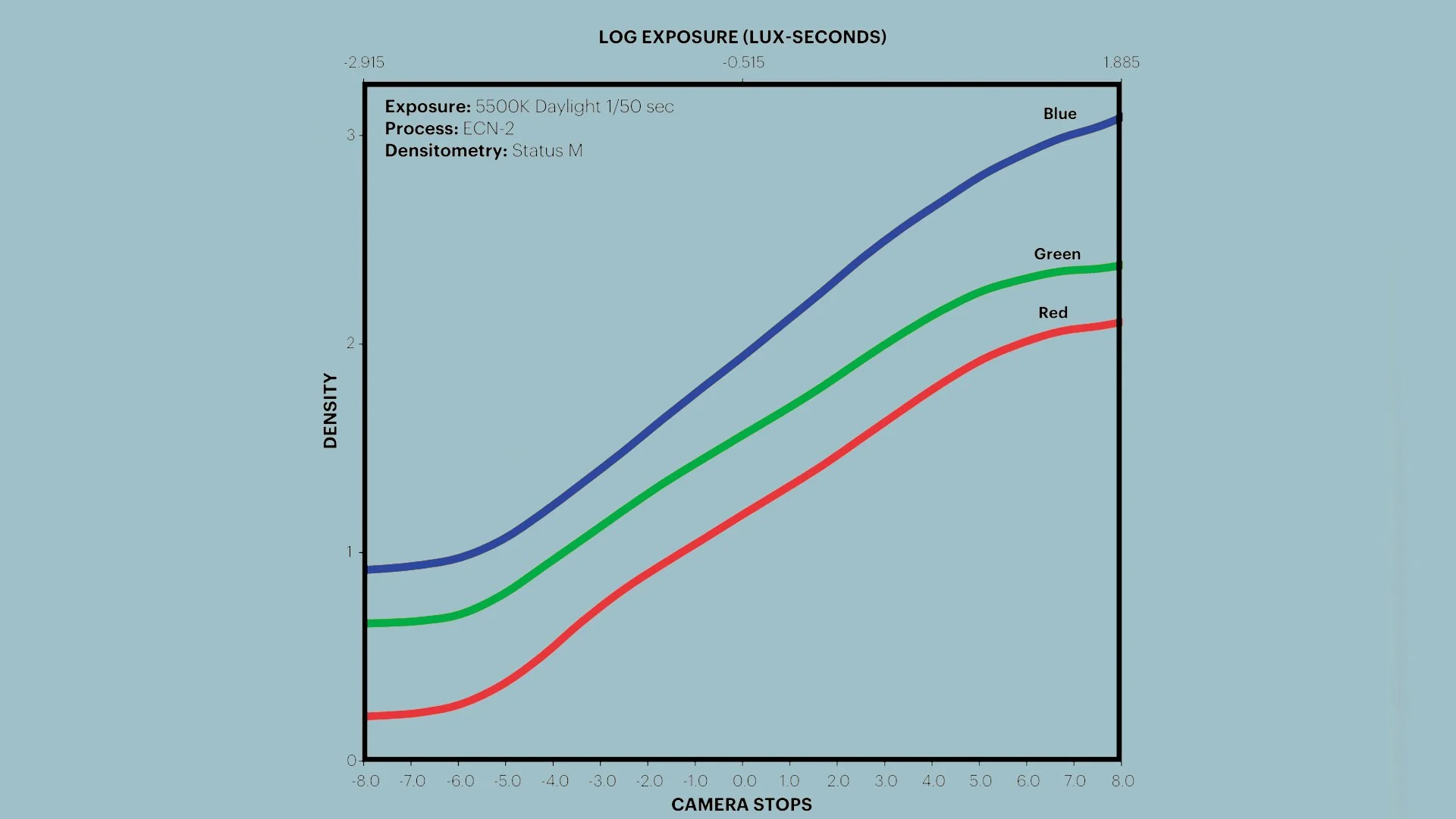
Verita has a much steeper density curve.
This means that even tiny, minor variations in light exposure trigger massive jumps in the image's physical density. The exposure latitude becomes much narrower. Shadows don't gently roll off; they crash directly into heavy, dense, ink-like blacks. The colors don't sit flat; they pop with vibrant, heavy saturation.But remember what this means for our lighting ratios.
Because Verita has a much tighter container for dynamic range, Marcell Rév had to completely change how he lit the show. He had to introduce significantly more fill light to narrow the gap between his brightest highlights and his darkest shadows.He lit to create what is called a thick negative. This is where the film is given lots of light - especially in the highlights - which borders on overexposure. This means the midtones and highlights are well exposed, while the shadows, become crisp, dense and black.

This makes Verita a great stock for day exteriors with lots of light, where shadows become deep and dense, and colour is highly saturated and pops with vibrancy. Producing great, dynamic, rich images, even under the usually taboo midday sun.
He avoided creating a thin negative - where the film was underexposed or given insufficient light - which creates more grainy, lighter, muddy shadows. If he encountered a bright background, like a daylight window, he couldn't rely on the film to save both sides of the exposure - like Vision 3 might. He had to stop down the camera to protect the exterior window from blowing out, and then pump massive amounts of artificial fill light into the room just to balance out the actor's face and keep the details alive. It forced a style of lighting that was less about realism, and closer to classic Hollywood.

“I wanted to make it very rich. Like, if you look at that shot looking out of the window, you’re exposing for the outside, so that kind of richness I knew that we needed. Which is a little more of a ‘stage look’.I was thinking of these Hitchcock movies like Vertigo or North By Northwest or those movies where there is something artificial about it, but there is beauty.” - Marcell Rév

VERITA LIMITATIONS
Creating a custom film stock for an iconic aesthetic sounds like a dream, but operating with a specialized emulsion comes with some technical limitations.First, it is a slow speed stock. Verita is a 200 ISO, daylight-balanced film. In digital cinema terms, 200 speed is incredibly slow, meaning the chemical emulsion requires an immense volume of light just to register a clean exposure.Second, it is daylight balanced only - unlike Vision 3 which has daylight and tungsten stocks.
Because it is chemically tuned for the blue spectrum of daylight, getting an even colour balance under tungsten studio lighting requires using a cooling 80A filter which colour corrects it, but which also eats up 2 stops of precious light.Although a common solution to this is to either use daylight balanced light sources, or lean into the warmer, orange look that tungsten lights will give.

This lack of sensitivity makes Verita very difficult to use for low-light night scenes. For Season 3’s moody night sequences, Rév had to abandon Verita and revert back to standard Kodak Vision 3 500T - which had greater sensitivity and was balanced for warmer tungsten lighting.
Finally, there was a much smaller margin for error. With a reduced dynamic range, your exposure must be on point. If you underexpose an actor's face, you cannot simply pull the data back up in a digital grading suite - which may be possible with Vision 3’s better dynamic range. Underexposed information won’t be hiding in the digital file, it is permanently crushed into the chemical grain, leaving you with deep, black shadows.
CONCLUSION
Verita proves that cinema doesn't always advance by becoming more technically perfect. Sometimes, it takes looking back at the beautiful, punchier looks of the past, and imposing technical limitations on yourself - which in turn forces you to be deliberate about exactly how you want to light each frame.