How Cinematographers Choose Their Grip Packages
INTRODUCTION
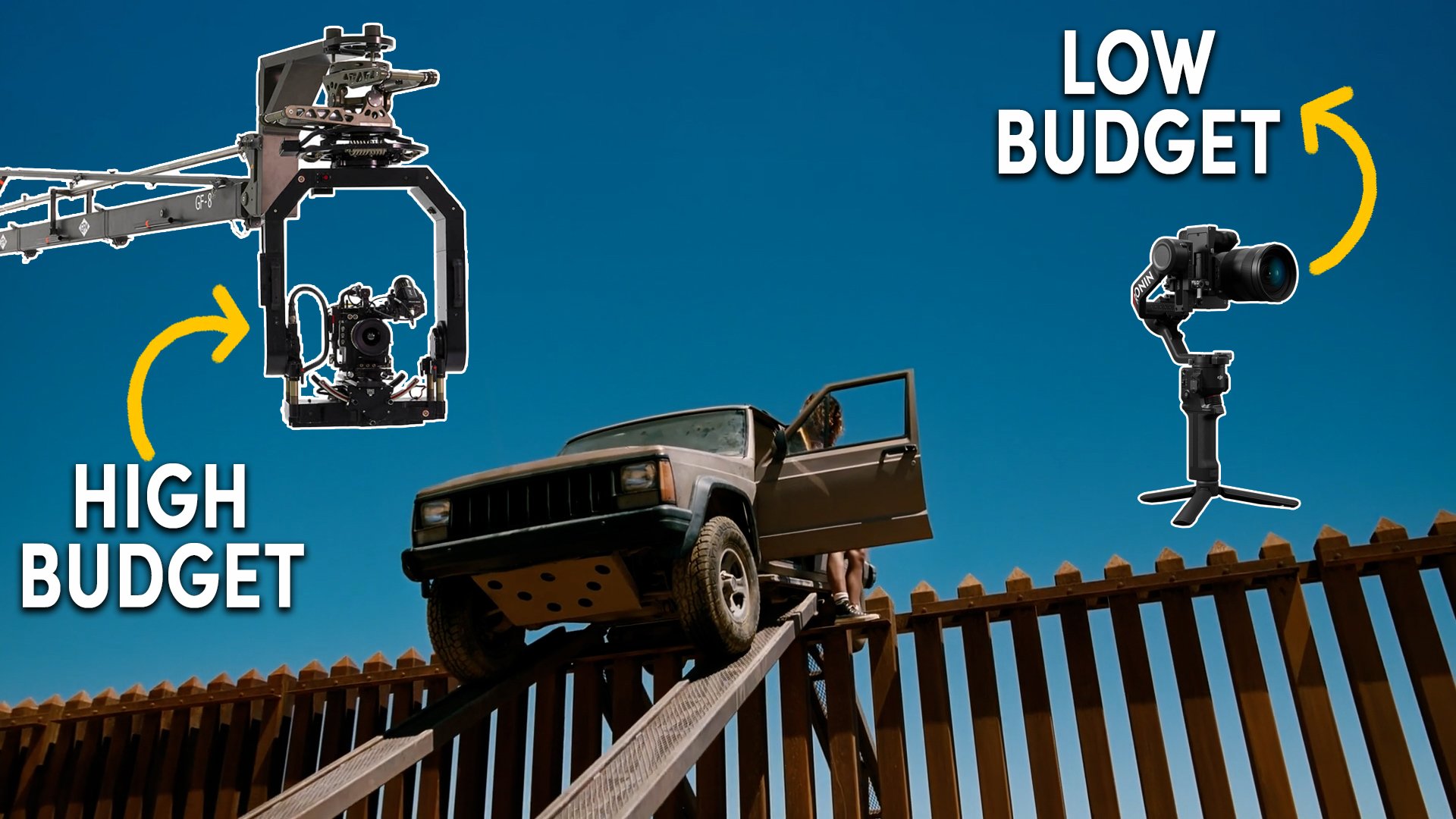
From the largest swopping crane movements to the subtlest tracking shot, or even a shot mounted directly onto a vehicle, grips are responsible. Grip gear is the backbone of executing any safe and efficient camera motion or rigging a complex lighting setup.

As a cinematographer who has worked on both small content shoots or indie productions, as well as industry sized feature film or series shoots, I’ll take you through a typical grips gear package often selected by DPs for both of these different scales of production.
From head and legs, to dollies, gimbals and even grips gear for special occasions, let's get started.
HEAD & LEGS
The one piece of gear that pretty much any production needs is a tripod. But not all tripods are the same. They come in different shapes and sizes and are mainly selected for the payload they can take. In other words, how big is the camera.
For our indie shoot, which I’ve assumed will use something like a Sony FX6 or smaller, there are many different options but the tripod kit I’ve listed is the Cartoni Focus 12 with a payload of 12kg. This kit comes with a 100mm bowl tripod head which can be detached and legs that can adjust the tripod height or spread to get lower.

To cover any low angles, where the camera needs to get very low to the ground, I’ve included a hi hat, a miniature tripod base which the 100mm tripod head can fit into.
Because industry cinema cameras and lenses are larger and heavier, they need a tripod with a larger payload. The industry standard is the O’Connor 2575 fluid head designed for cameras up to 40.8kg - which supports basically any camera and heavy cinema zoom lens.

This industry head is paired with heavy duty aluminium legs, which come in a short size, for a lower height, or tall legs for a higher angle shot. Unlike our indie tripod, which can be levelled by adjusting the round bowl, these heavy production tripods are bubbled by adjusting the individual height of each leg until the horizon is level.
With a hit-hat, I’ve also included a steadybag, which is like a beanbag that gets the camera even lower by sitting it directly on the ground.
Although these production tripods support a heavier payload, they are much slower and more cumbersome to move around. For this reason, there’s another popular grip tool designed to make moving the camera around faster and easier - the dolly.
DOLLY & SLIDER
Before we get to the classic cinema dolly, a more budget friendly option is the Dana Dolly. The kit includes holders which clamp down on two poles, upon which a wheeled platform sits which a head can be placed on. This setup can be used with different pipe lengths which will determine the length of your track. These clamps can either be placed on appleboxes at either end for a lower angle track, or on lowboy stands for a higher track.
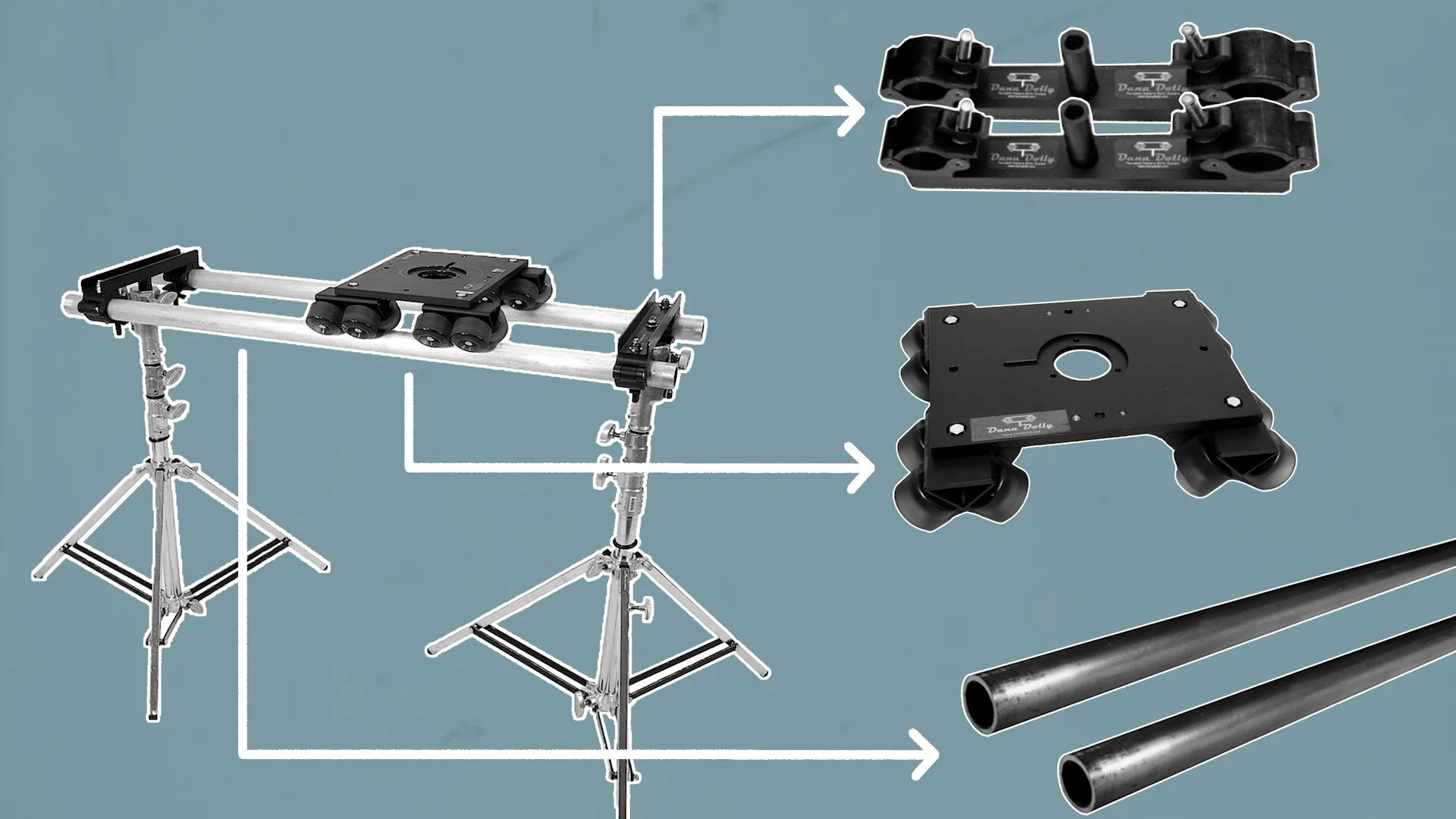
The Dana Dolly gives fairly smooth tracking motion, however, it is much more sensitive to operate if you want to combine a sliding motion with a move on the head, such as panning and tilting. Another downside, if you are doing a forwards or backwards push or pull track, is that it’s easy to see the track itself. Which may mean using shorter poles, such as 3 feet long, or using a longer telephoto lens that cuts out the poles.
Not only is the gear itself budget friendly, but it’s also less labour intensive and easier to set up. Unlike a production dolly, which is incredibly heavy to lift and requires a team of experienced grips to set up and operate.
There are a few different production dollies, but the two common brands are either J.L. Fisher or Chapman / Leonard. These cannot be purchased by regular filmmakers and are exclusively rented out by gear houses such as Panavision or Arri Media.

There are a few reasons to use a dolly. Firstly, it gives beautifully smooth tracking movement in high, low or medium angle positions and allows the operator to comfortably sit and control panning and tilting the head with more precision. Secondly it can be used as a tool to steer around and more quickly position and level the heavy production camera on the bowl adapter when shooting on a location with a stable floor. Thirdly, the dolly grip can turn a knob at the back of the dolly which can smoothly boom the hydraulic dolly arm up or down - giving a smooth vertical motion.
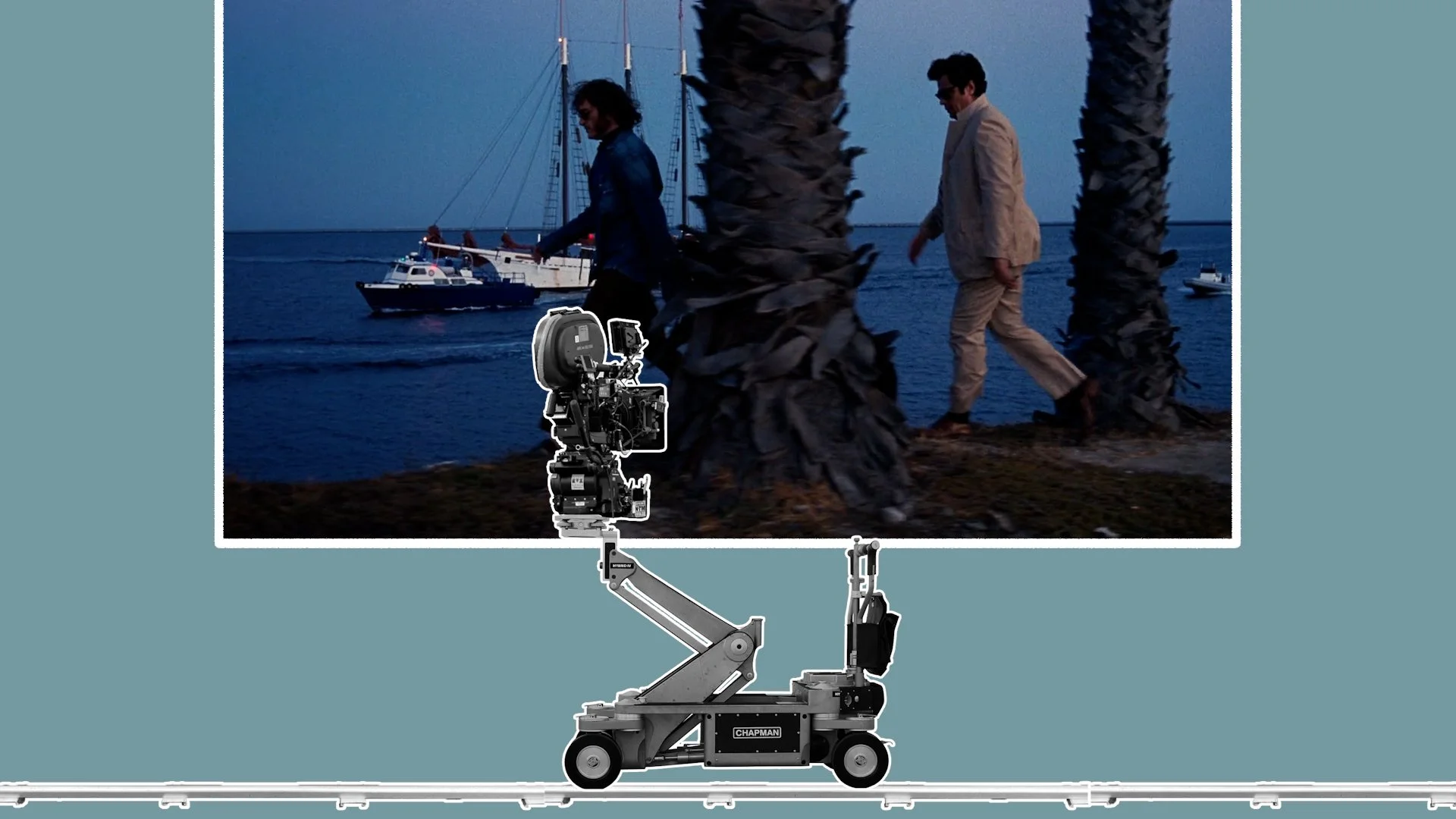
In this list I’ve included a Chapman Super Pee Wee IV Kit. This kit will usually come with accessories such as extension brackets if you want to offset the position of the head by moving it to a side, or extend the head further forward.
I’ve also included some 6” and 12” risers, which can be placed to create a higher column which lifts the tripod head, which is needed if you want higher angle shots. As well as full and half tracks, which need to be laid on the floor and leveled with wooden wedges and packing to give the dolly a smooth track to push along.

I’ve also included a 3 foot and a 6 foot slider. The 3 foot slider can live on the dolly to more easily do small sliding moves, without needing to lay track, or can be used to help more precisely adjust the frame without needing to move the dolly. While the longer slider can be used for narrow spaces where a track won’t fit, for sliding moves along the ground, or for quicker setups where time limits being able to build a track.
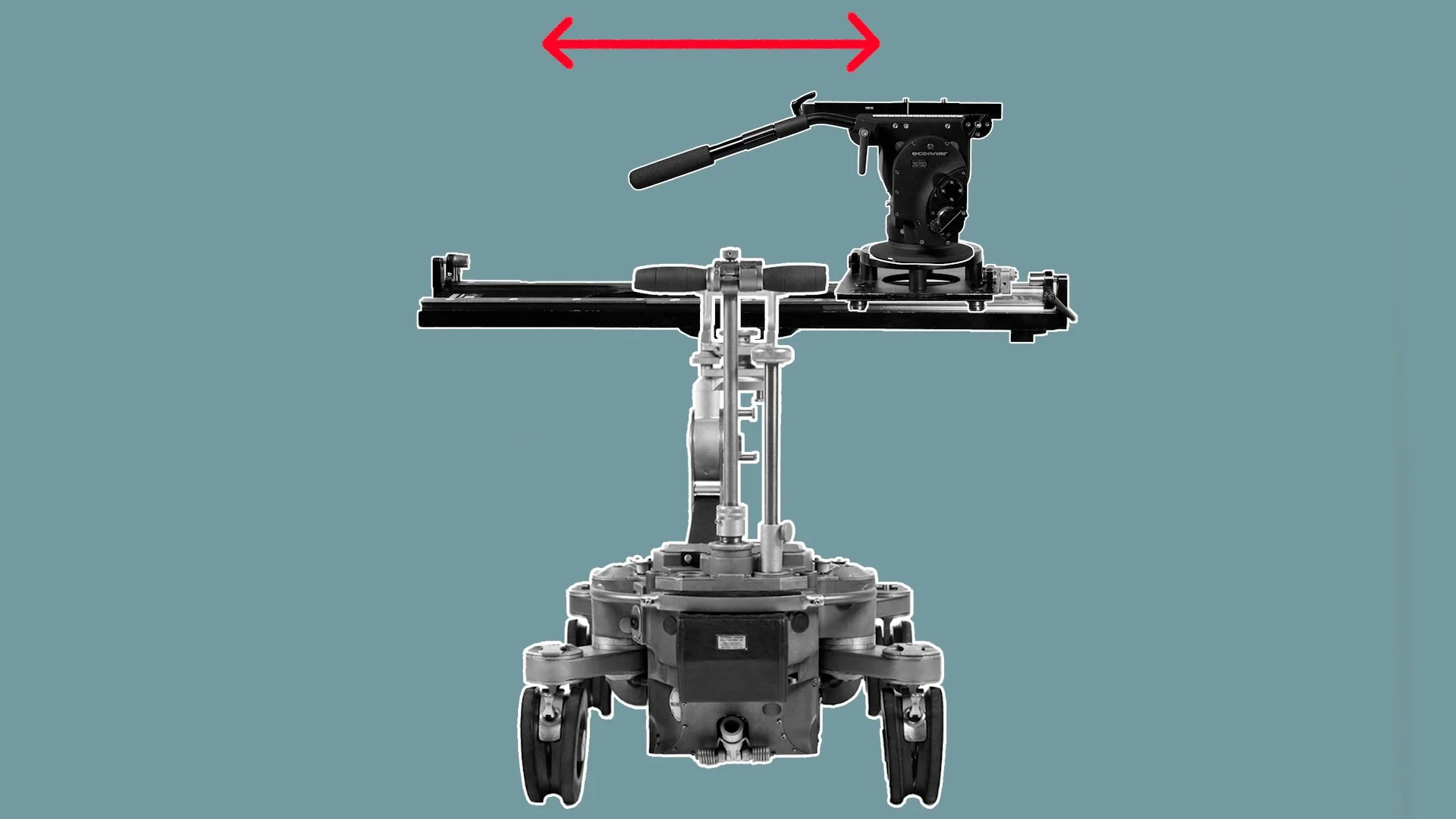
I’ve also included a paddle mount, which is similar to the Dana Dolly pole clamp system. This can be used to extend an underslung head, in order to achieve a very low camera position, where the camera is inches above the ground. The underslung head I’ve included is the most popular Ronford Baker F7.
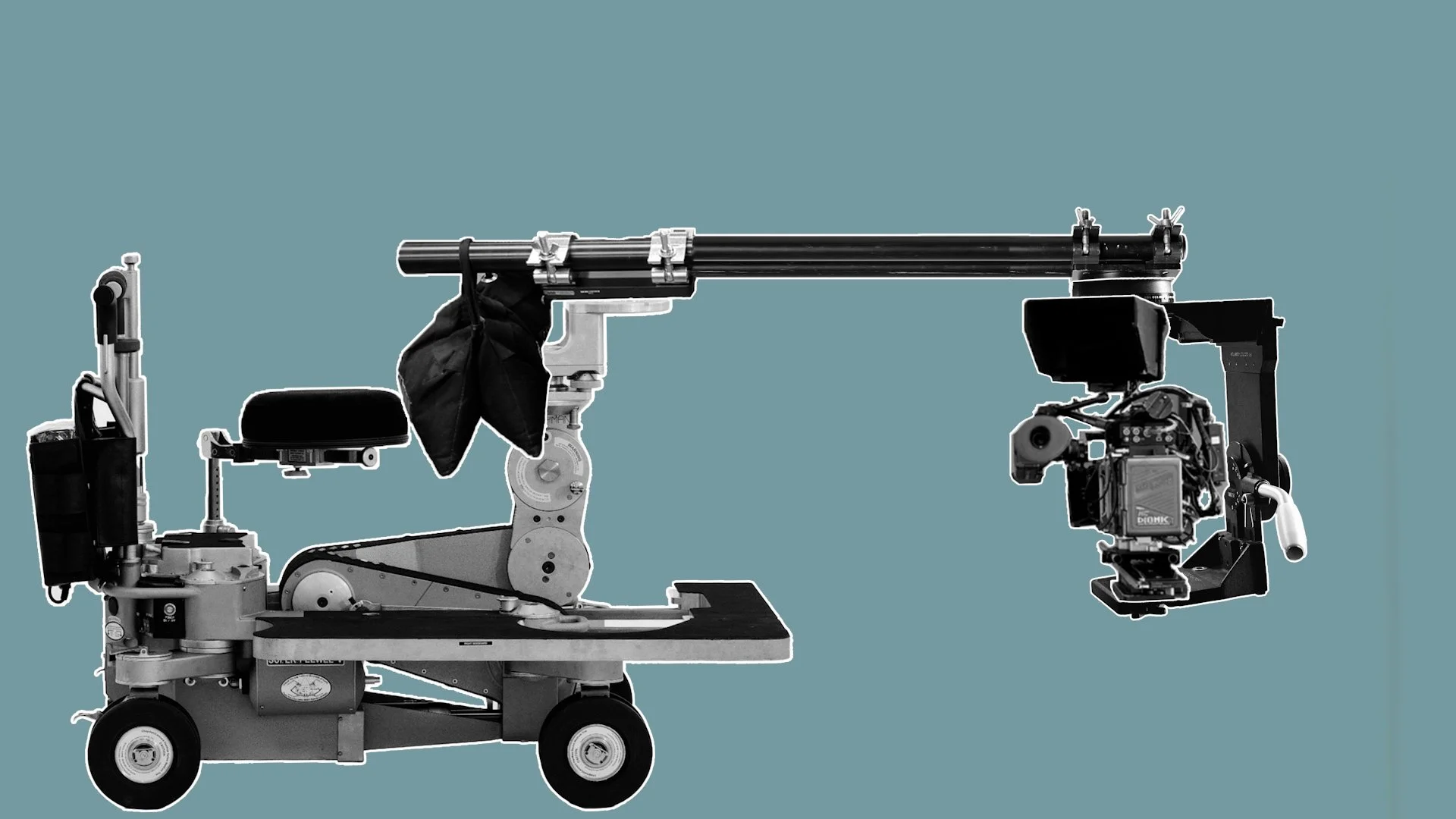
This can position the camera upside down, at a tilted Dutch angle, or in an undersung position very close to surfaces of the ground, by extending it away from the dolly with either the paddle mount or a regular offset extension bracket that comes with the dolly kit.
GIMBAL
One of the most popular and useful grip tools, in the world of content, documentary or lower budget filmmaking is the gimbal. Again, there are a few brands and models to pick from, but I’ve gone with the Ronin RS4 - which easily supports any mirrorless style camera body, such as an FX3.
When it comes to larger industry gimbals, suited for bigger payload cinema cameras, there are two popular options. The Ronin 2 or Movi Pro, which balance most cinema cameras paired with a prime lens or lightweight zoom lens.

For even higher payloads, such as when using a larger zoom lens, this could be upgraded to the Movi XL, or another remote head solution.
They come with 2 options to operate the gimbal, either a remote, which can be toggled to pan, tilt, or roll the camera, or with master wheels - where each wheel can be rotated to adjust the 3-axes of camera motion.
These gimbals can function as an ordinary handheld gimbal, or as a stabilised remote head on arm cars, cranes or even occasionally on a dolly - to stabilise dolly movement on smooth surfaces without tracks.
GRIP ACCESSORIES
When it comes to all the different accessories and rigging tools which grips use, some of these are locally manufactured or even hand made by the grips themselves. As such some of these products will differ slightly depending on the grip and what they have in their truck.
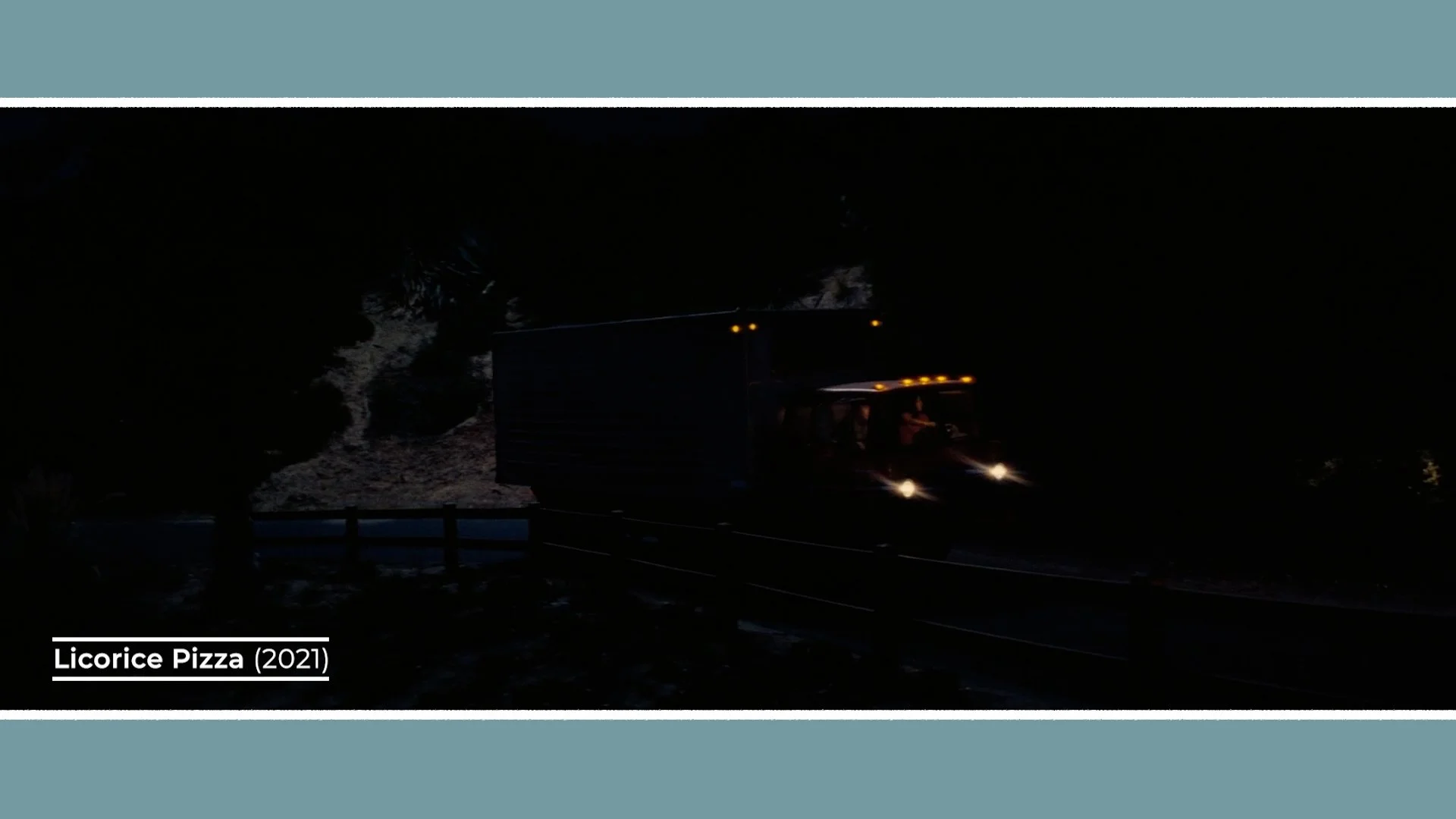
A professional grips truck will come with a host of different clamps, ropes, tennis balls, ratchet straps, tools and different sized poles designed to securely rig things. Such as safely securing a highly raised light stand in windy conditions. Using landgrabbers to dig into the sand to tie down a 12x12 frame on the beach. Creating the frame of a box using poles that can be placed with blackout cloth outside a window to shoot night scenes during the day. Or using suction mounts and poles to secure a car mount on a vehicle.
One tool, which almost every set needs though is an apple box kit - with sizes ranging from a full, to a half and a quarter size. These wooden boxes are used for various applications, from raising the height of objects or actors, acting as a base for a slider, to giving the camera operator a surface to sit on.

Along with this you’ll need an action crate with paganinis and wedges - bits of wood that can be used for leveling - especially leveling dolly tracks.
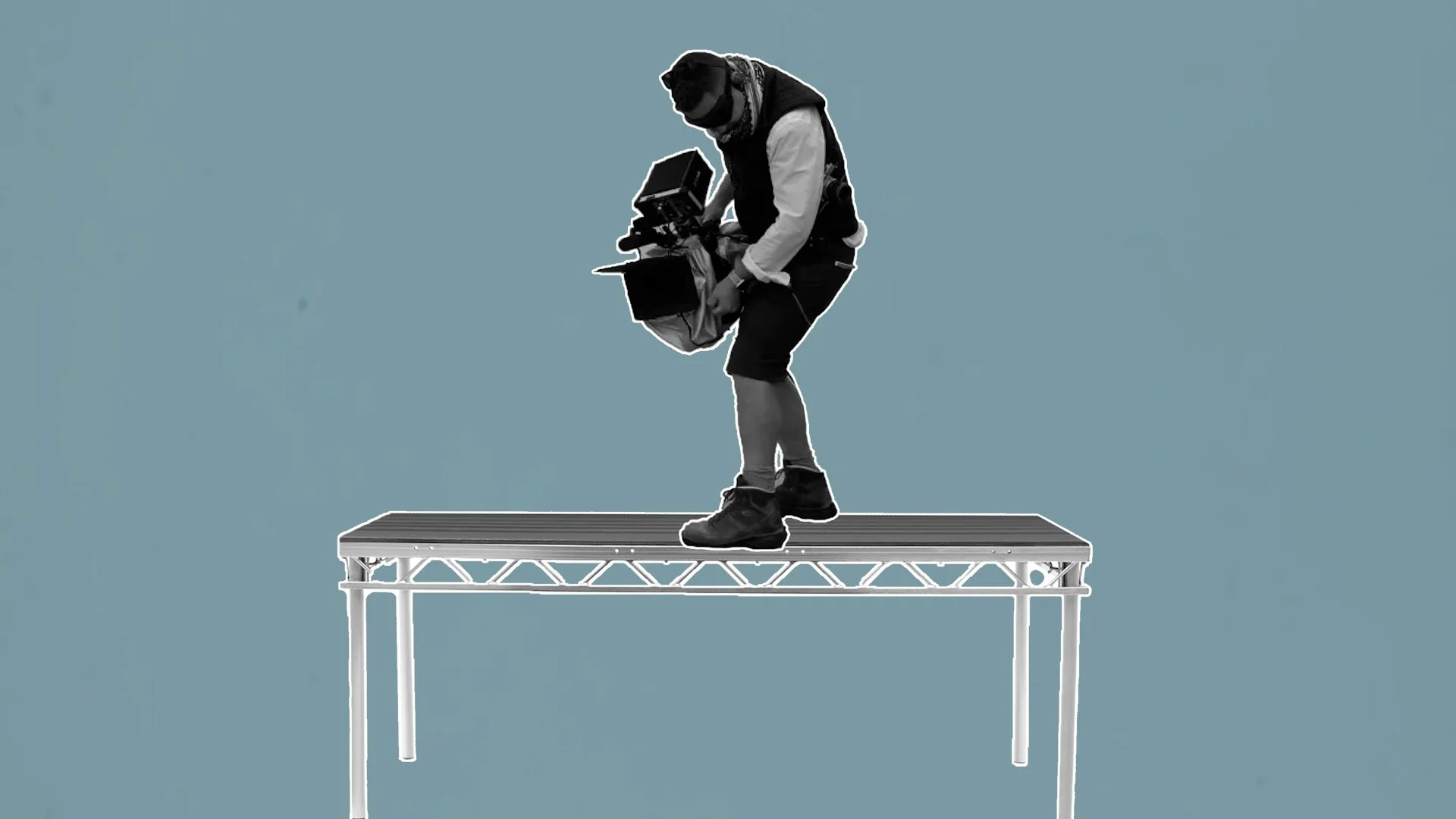
If you need to raise an operator or grip gear higher than an apple box, an option to do so is with what we call a jonzy deck, a raised platform that usually comes in 4x4 or 8x4 foot sizes.
Grips can also provide a base jack, or a polecat. This is a pole that can be fastened between two walls which can be used for rigging overhead lights.
DAILY GEAR
Finally, let's go over a few niche grip toys that industry DPs may call upon as daily items on certain jobs. We have the mo kit or car rigging kit. This is specifically designed to rig the camera body onto various parts of the car - from a bonnet mount to a side mount.
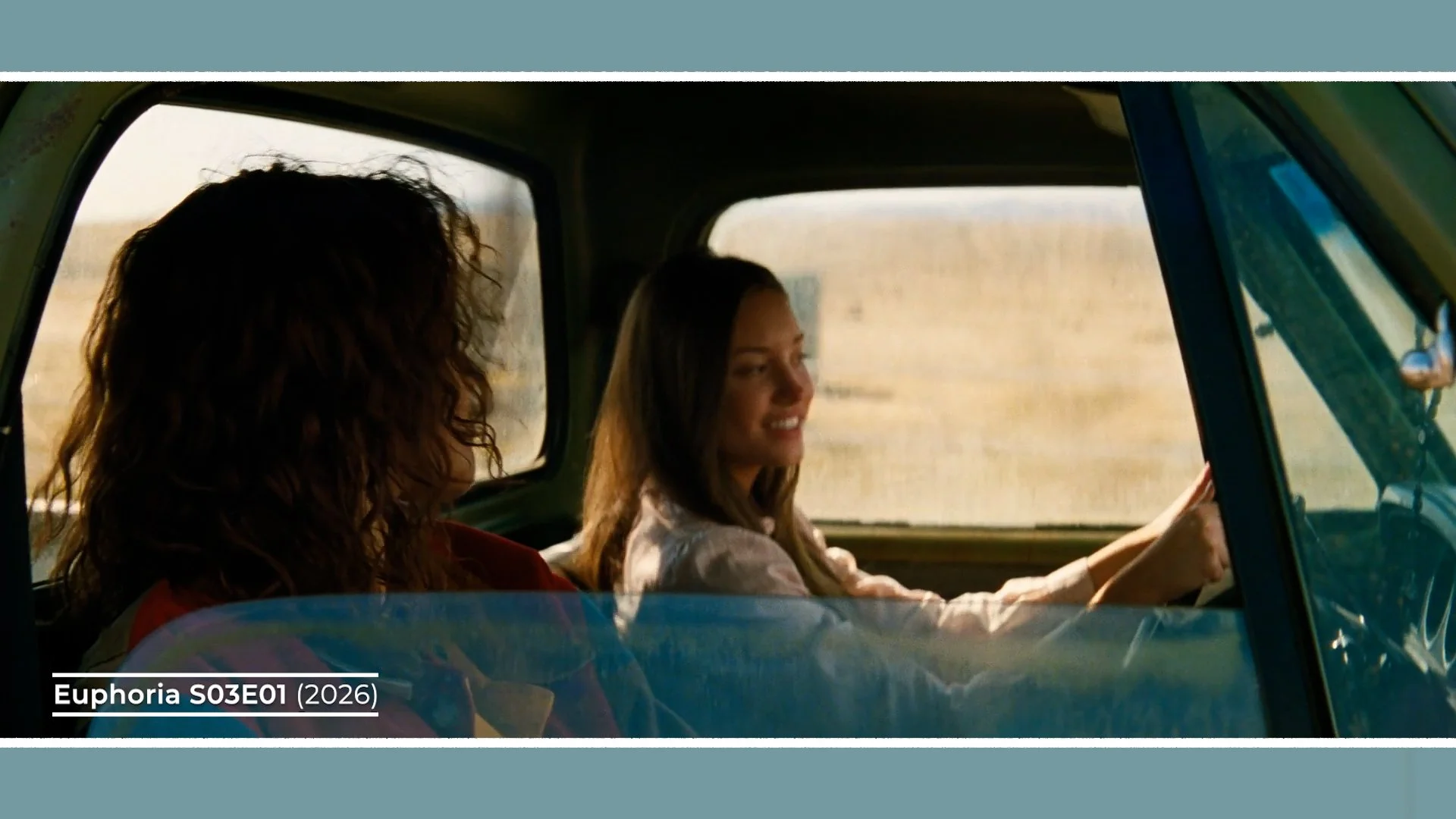
Then there’s a ladderpod - which is basically just a really tall tripod, made of three ladders, with a tripod base at the top, which is used for high angle shots.
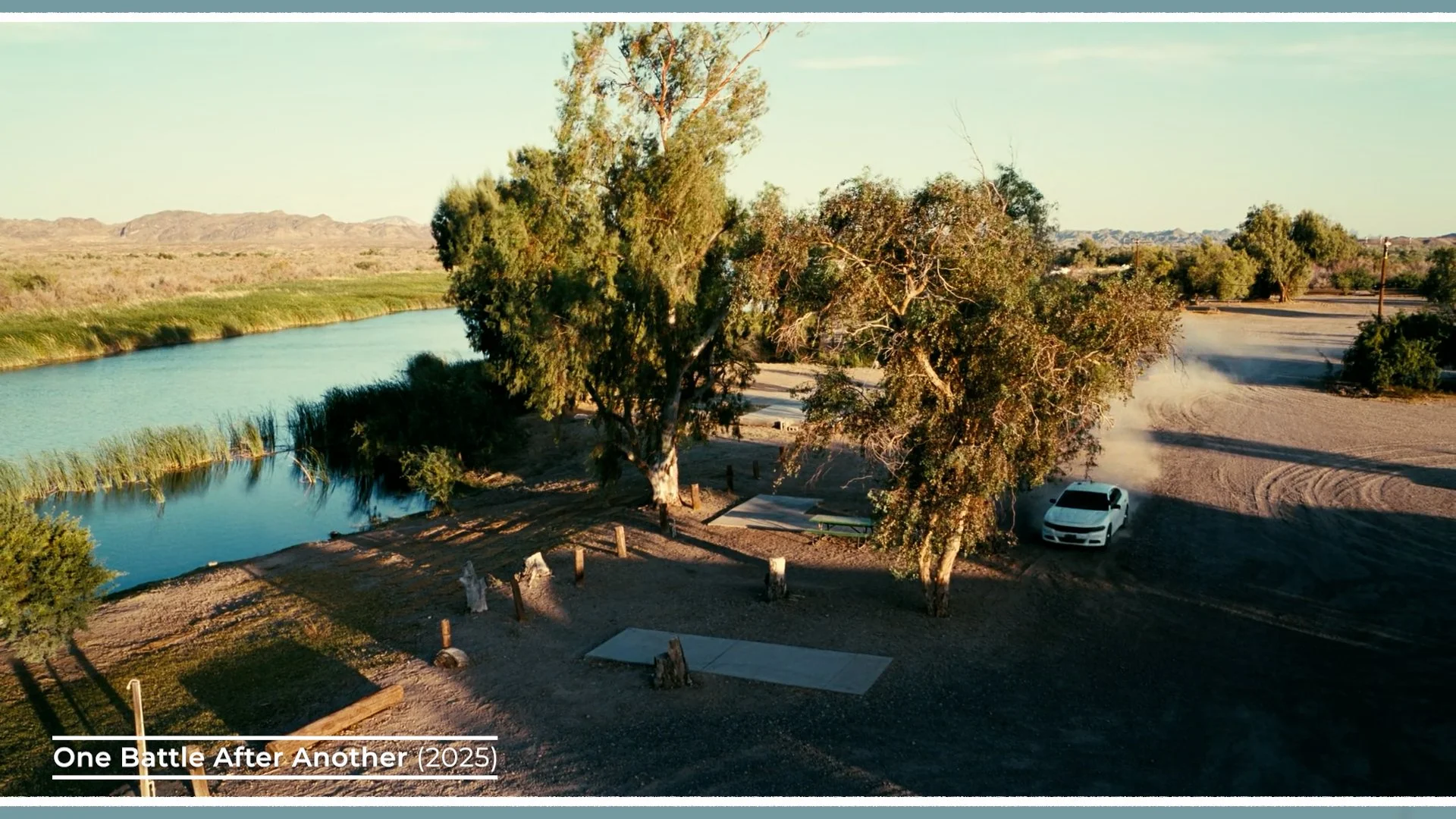
A rickshaw is a type of dolly constructed with two front leading wheels and a rear steering wheel, which the operator can sit on. It’s most commonly used for walk and talk scenes where the camera needs to track backwards over uneven terrain as the actor walks towards them.

There are many different sizes and types of jib arms which can be rented, depending on your use case. Usually this is used for up and down motion, or for floating the camera along any movement axis. These will have to be paired with some kind of remote head, whether that’s a gimbal, like we discussed earlier, or a two or three-axis remote head like a Libra head.
Smaller jib arms can be placed on tripod legs, while larger jibs may need a heavier, more solid dolly base.
Next we have the Giraffe crane. This is a much larger crane setup, which comes with a wheeled base or with tracks, which takes a team of grips to assemble and operate. It has weights on the back which can be adjusted to the weight of the payload so that the arm can be raised and operated with minimal force.

It can be used with a remote head, with a platform for Steadicam operators to stand on and get off, or as a ride-on crane, where a person can sit and operate a fluid tripod head as they are hoisted into the air.
Finally we have telescoping cranes - like a Technocrane. These have the same capabilities as modular cranes, but with the added advantage of an arm which can telescope or extend. This is a high budget tool which requires specialist crew members to operate.