
Why the New IMAX Camera Matters for Filmmakers
INTRODUCTION
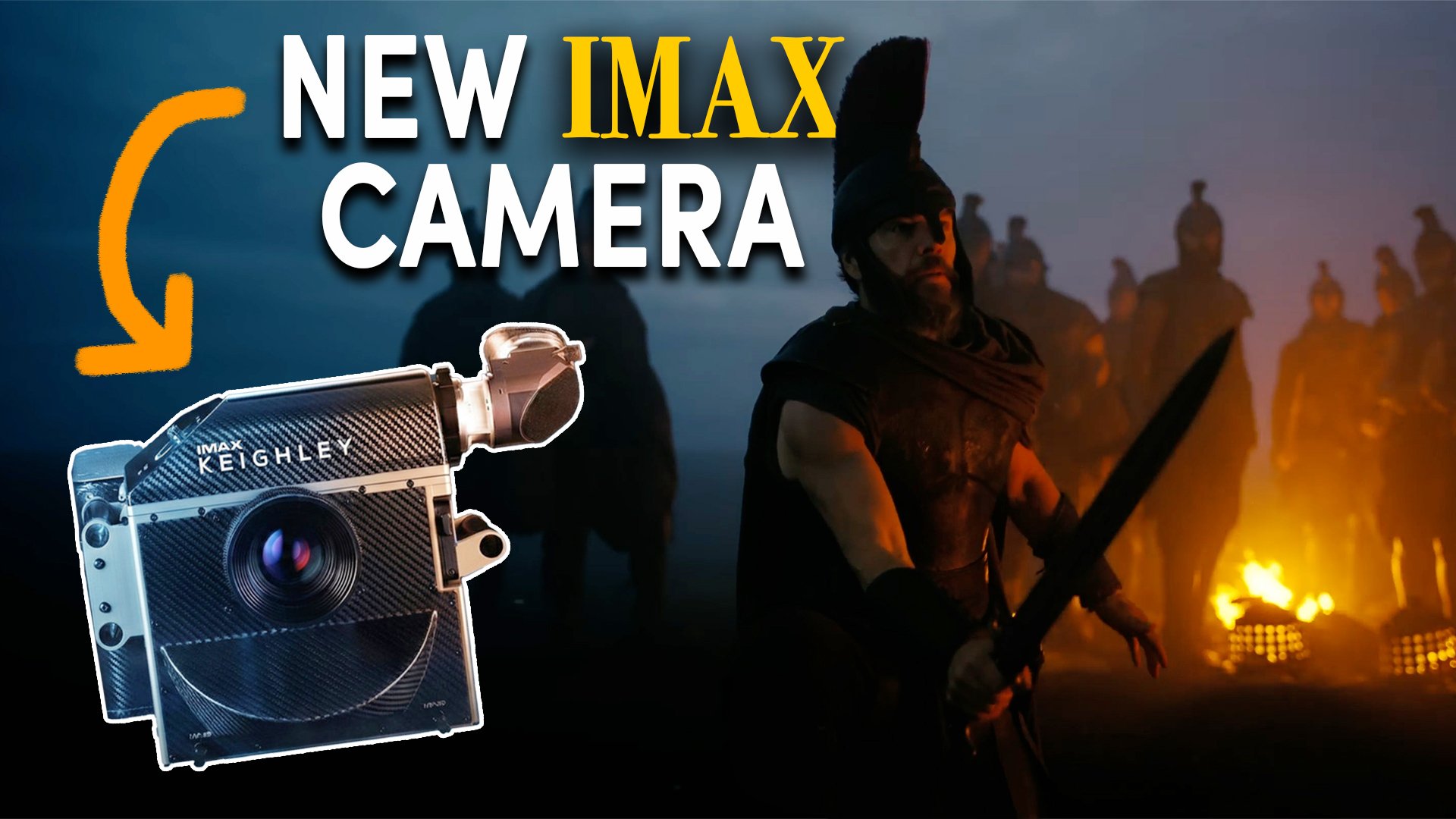
When you hear the word IMAX, one filmmaker almost inevitably comes to mind: Christopher Nolan. For close to two decades, Nolan has pushed IMAX further than anyone else - championing it as the premium format for capturing blockbuster spectacles. With the upcoming release of The Odyssey, that relationship deepens once again, driven by the arrival of the first newly designed IMAX camera in decades - since the late 90s.
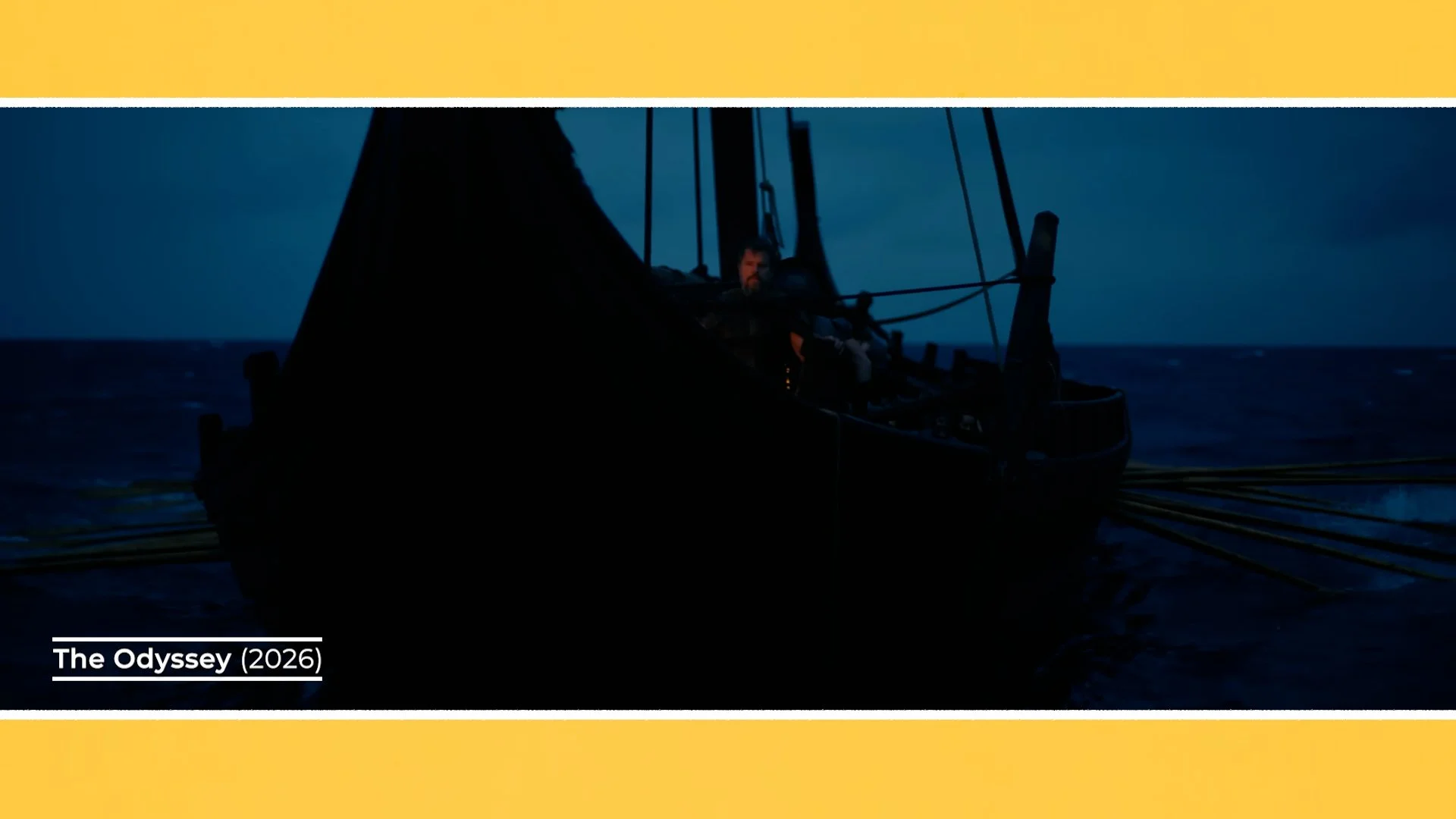
On paper, it’s another technical leap forward which unlocks not only hardware changes but, more importantly, an entirely new way of using this epic film format. In this video, we’ll break down how the camera body has changed, why it matters for the future of large-format filmmaking, and how an innovation designed to silence a camera may quietly unlock the most significant creative shift IMAX has ever seen.
IMAX KEIGHLEY
This new camera is named the Keighley in honour of Imax Chief Quality Officers David and Patricia Keighley, whose decades-long commitment to technical excellence, exhibition integrity, and uncompromising quality standards helped define IMAX as a cinematic format rather than just a screen size.
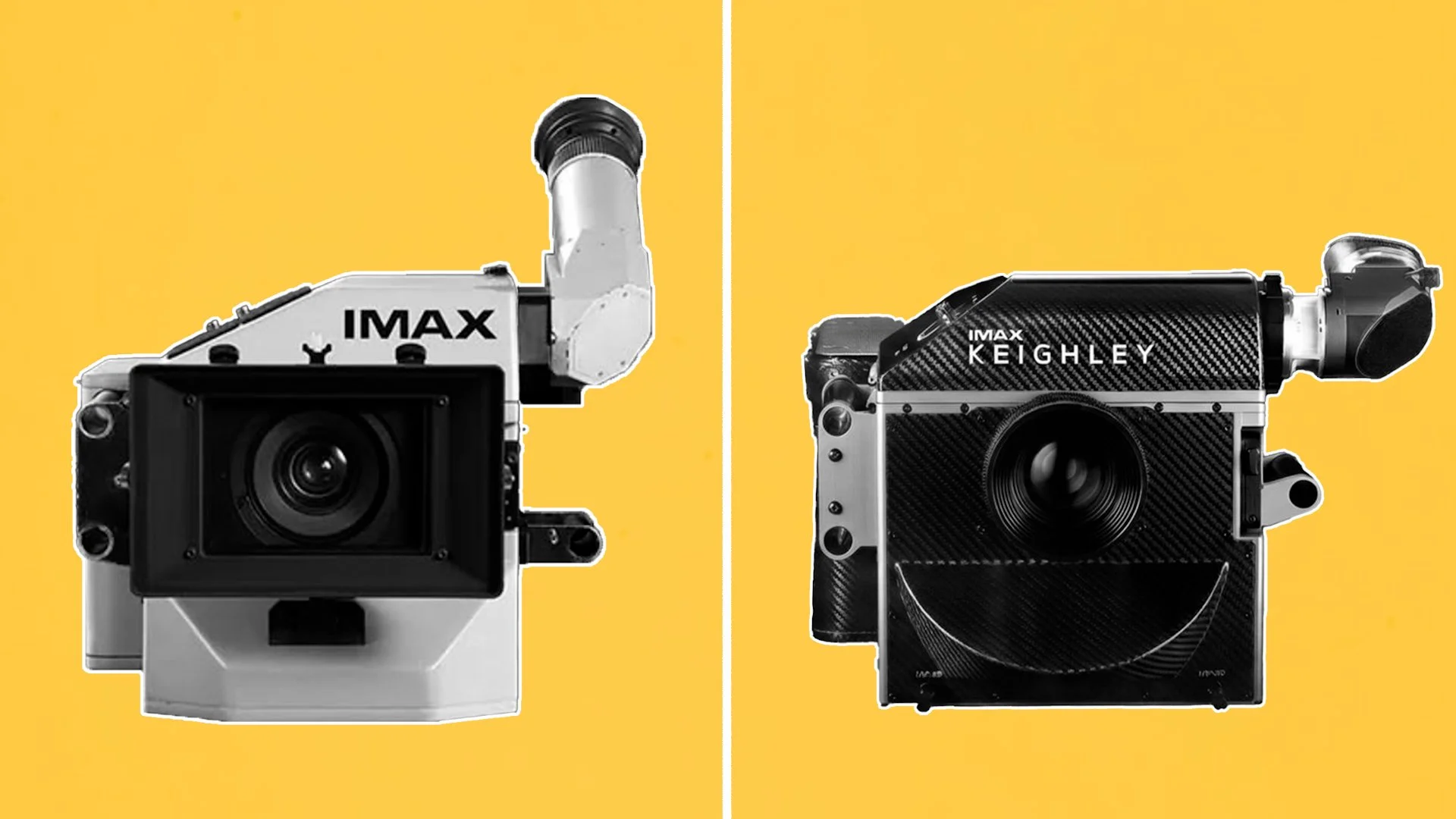
When we talk about camera upgrades, image quality is usually the first thing that comes to mind. But with IMAX, the footage itself is already defined by the format: massive 15-perforation, 65mm film.
Because of that, changes to the camera body don’t meaningfully alter image quality as the look is dictated entirely by the Kodak film stock running through it. Although they do mention that film exposure on the new camera should be a bit more even and stable.
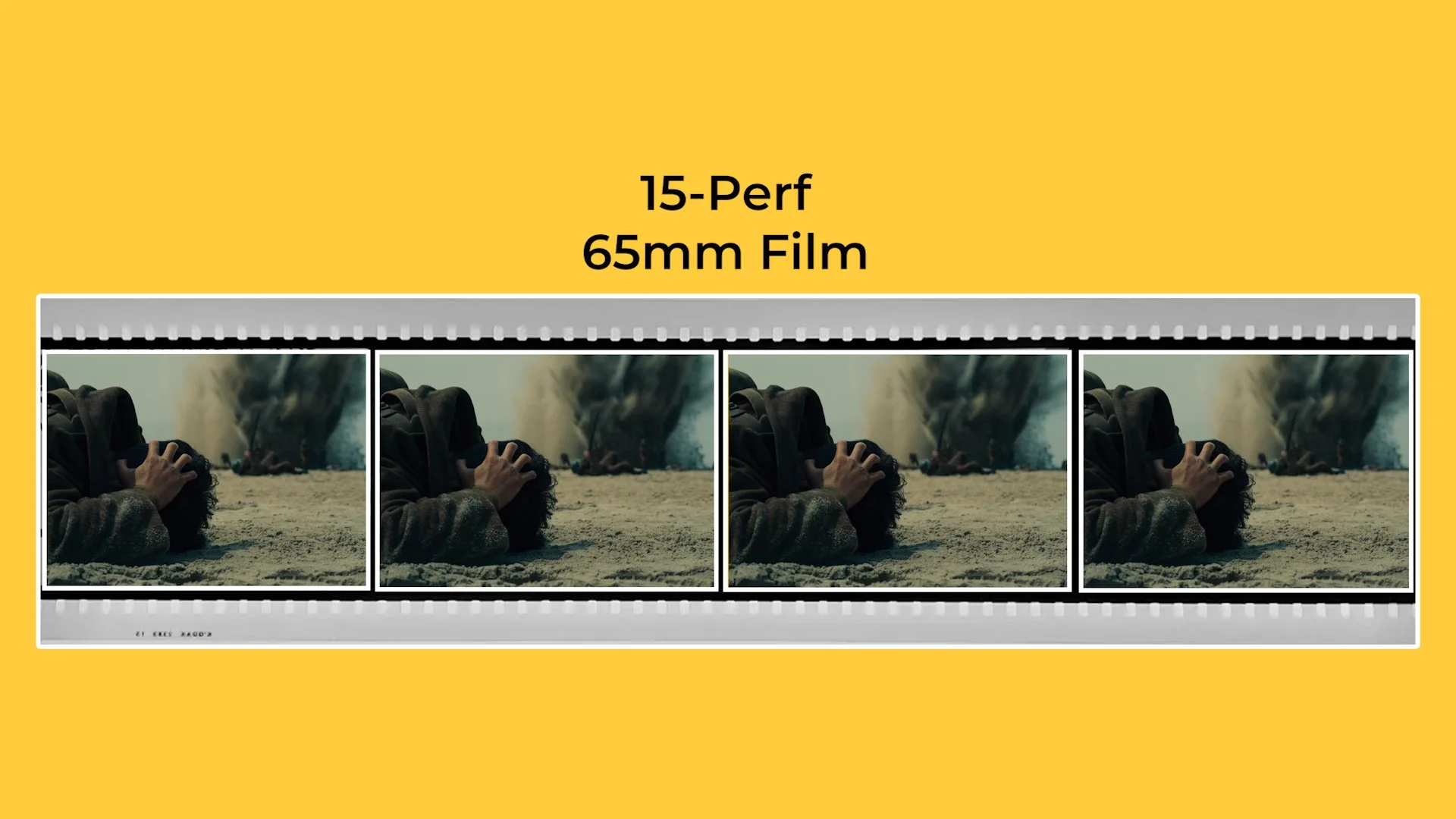
Almost all of the upgrades are either technical or ergonomic in nature, focused not on improving the image, but on expanding the way the IMAX camera is used and how easy it is to do so.
WEIGHT
At first glance it’s easy to see that Imax cameras are incredibly large, cumbersome and heavy - as I’m sure Hoyte van Hoytema, and his lower back, can both vouch for.
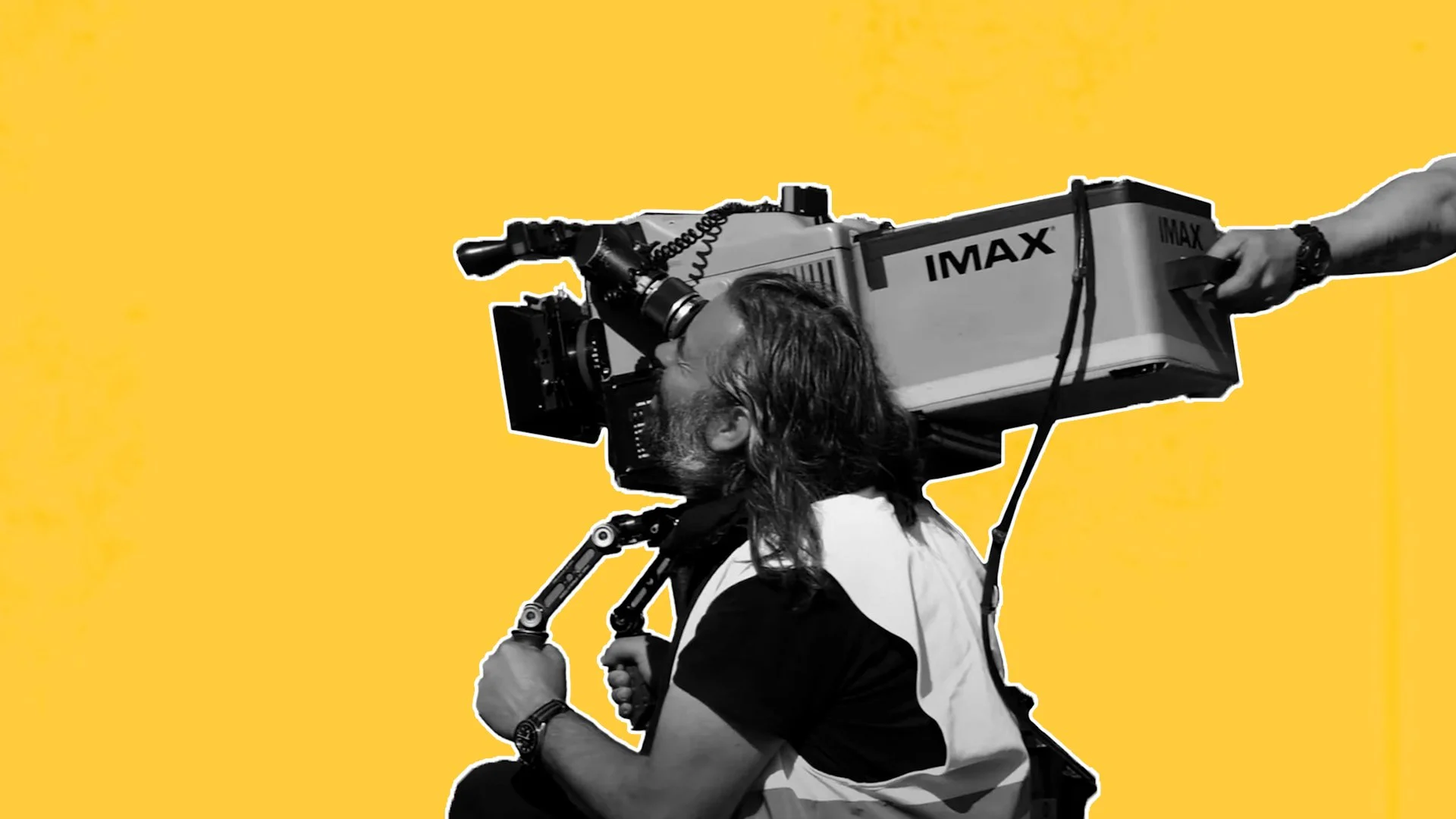
With all the camera accessories added and a 1,000 foot roll of film loaded, the camera weighs around 25 kgs or 55 lbs. The new Keighley camera body, although the form may look largely the same, tries to make this weight more bearable by using lighter weight carbon fibre.
“It’s made out of mostly composite materials. Carbon fibre honeycomb sandwich panels. The same stuff that Formula 1 is made out of, and titanium, the same stuff that jet fighters are actually made out of.”
- Milos Popovic, Imax Principal Engineer, The Wall Street Journal
VIDEO TAP
Another crucial upgrade is the new video tap. Unlike digital cameras, which provide an exact live preview of what the sensor is capturing, film cameras don’t have a native way to show the recorded image. They expose light onto film, which then has to be sent to a lab and processed before it can be viewed.
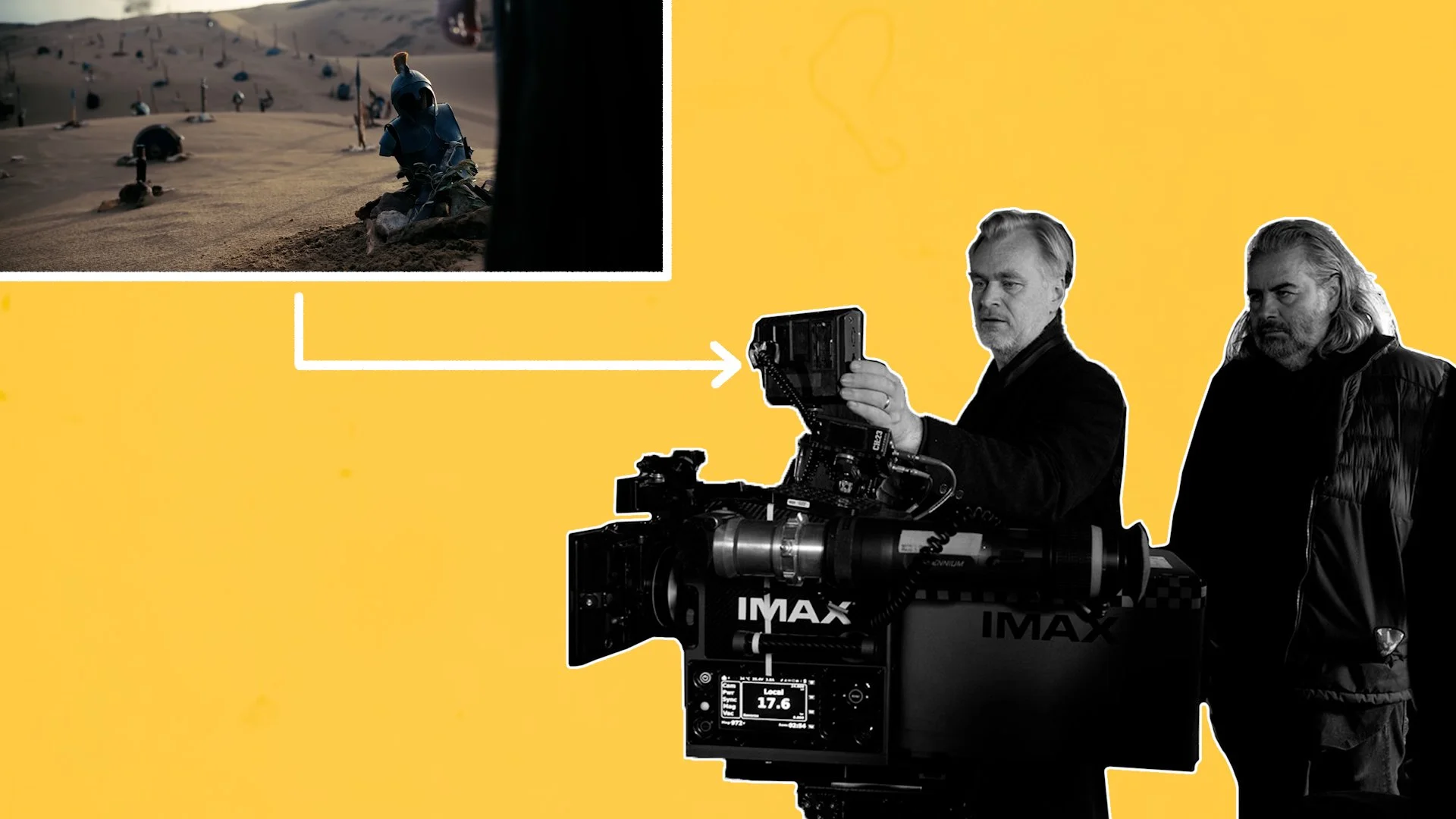
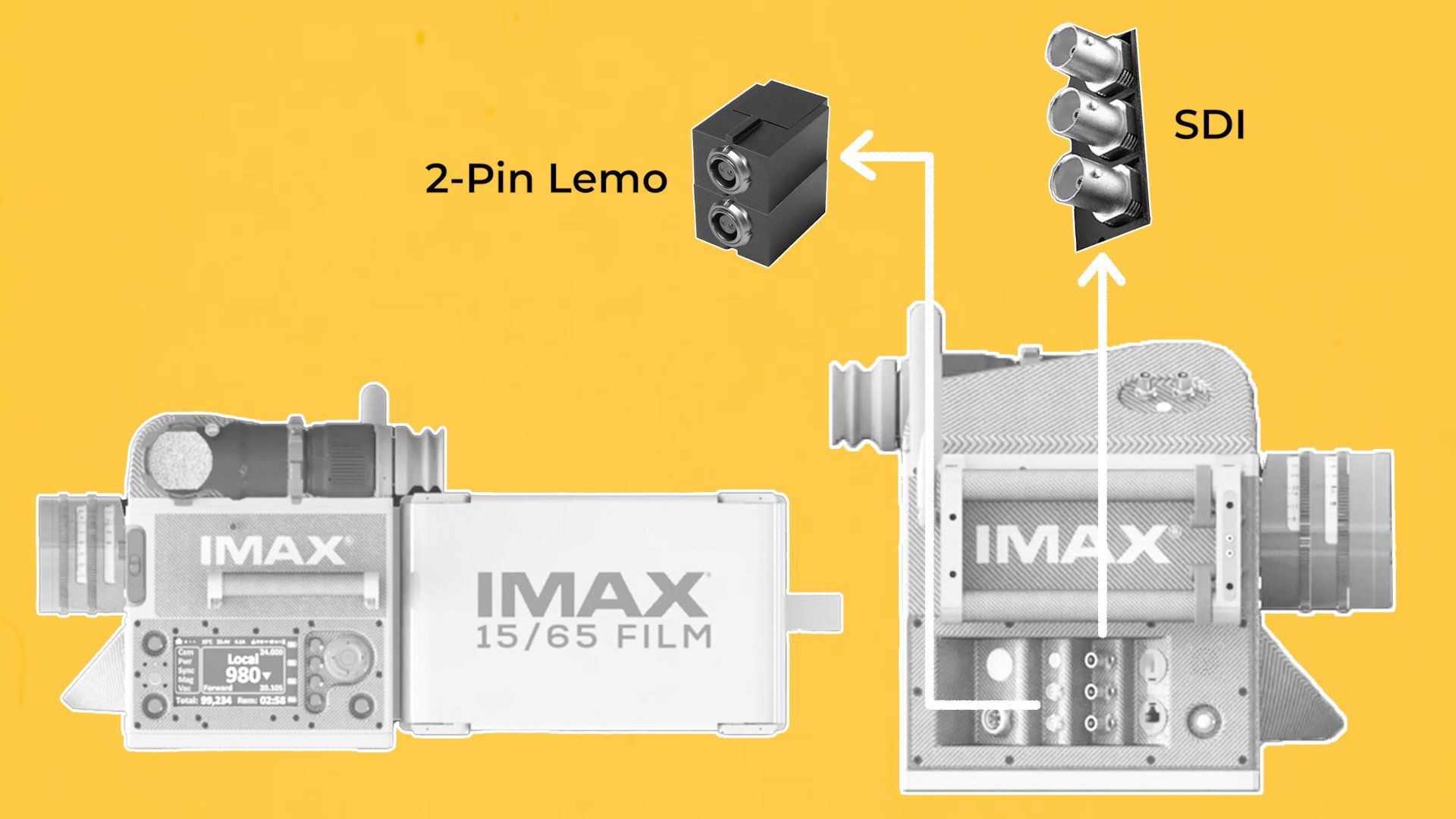
To bridge that gap, film cameras rely on a video tap - a system that offers an approximation of the final image. On the new IMAX camera, this takes the form of a small 4K UHD sensor built into the optical viewfinder, sending a signal out through an SDI port. External monitors or wireless transmitters can then be connected, giving the crew a clean, detailed live image of what the camera is seeing.
“There are attachments to the camera that can now take the 4K UHD tap out of the viewfinder and go into the cloud so people can see stuff either on set or on their iPads instantaneously and at a much higher quality than ever before. Film cameras never had that capability.” - Bruce Markoe, Imax Senior Vice President, SMPTE
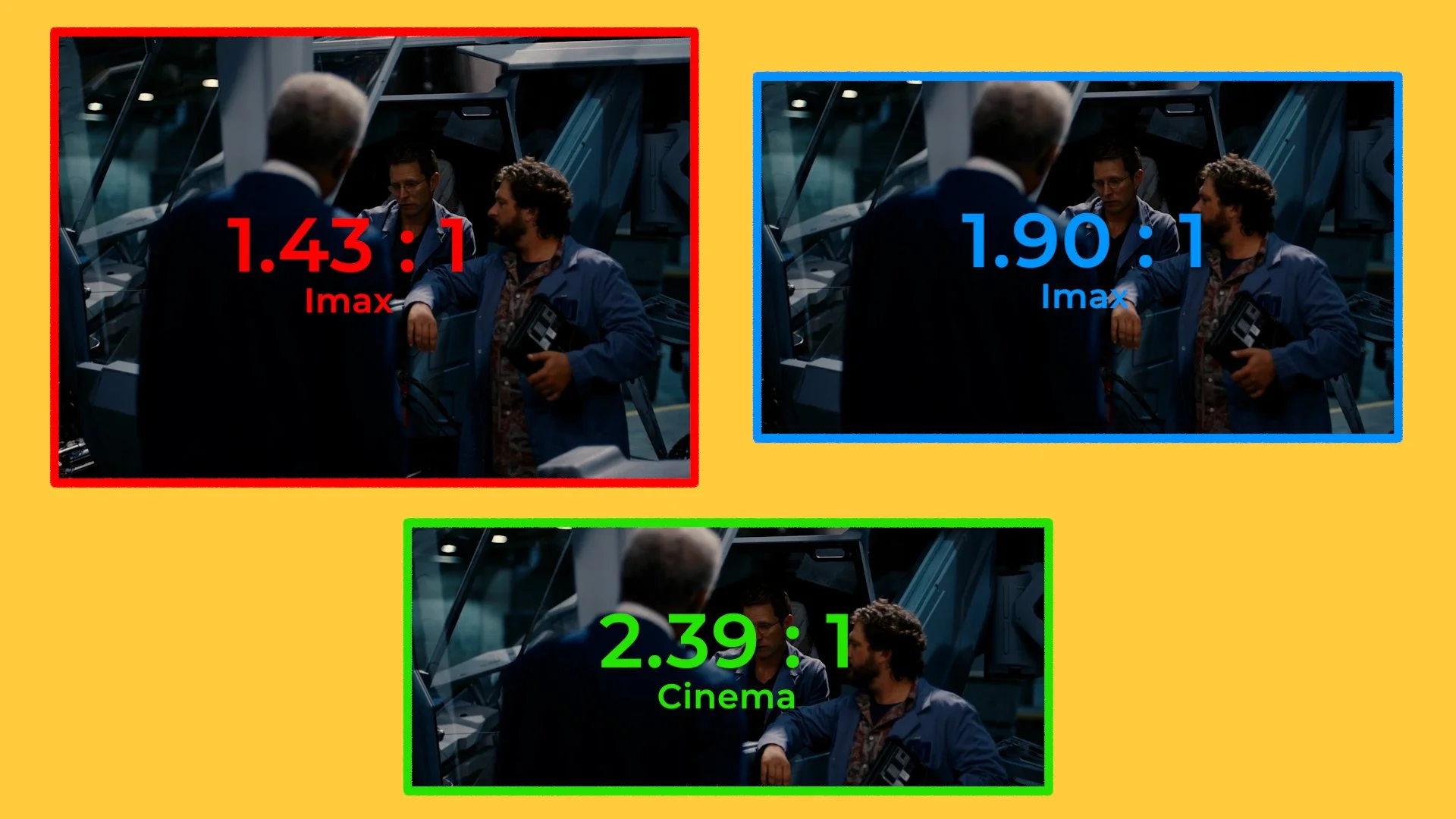
Visual frame-line guides can now be overlaid on the SDI output as well, helping crews accurately compose for different or multiple aspect ratios and exhibition formats. Such as the native 1.43:1 or 1.90:1 that will be seen in Imax cinemas, as well as a widescreen 2.40:1 frame that may be displayed in regular cinemas or on streaming services.
This 4K feed can also be recorded and reviewed as dailies, allowing filmmakers to watch back takes without waiting for the film to be developed and scanned at the lab.
The Keighley update also introduces metadata capture, meaning camera information can be displayed and passed along for both on-set monitoring and editorial workflows - bringing IMAX film production closer to the experience of modern digital cinema cameras.
This is a major leap forward from the original 1990s-era IMAX cameras, whose low-resolution video taps could only suggest basic framing, offering little clarity when it came to focus, exposure, or colour.
On Oppenheimer and other previous Nolan Imax productions, cinematographer Hoyte Van Hoytema often refrained from using Steadicam or cranes with remote heads for just this reason, the eyepiece was far superior to the old video tap system. With a 4K video tap this issue is now fixed.
“I love looking through the viewfinder. That’s one of the reasons why we wouldn’t go necessarily on a Steadicam or on a stabilised head because the moment you do that you prohibit yourself from looking through a viewfinder, you’re reliant on a video system. When you shoot a format like Imax it’s very important that you keep checking through a viewfinder because the video quality is very low-fi and very low res.” - Hoyte van Hoytema, Director of Photography, Variety
VIEWFINDER
The Keighley IMAX also features a newly designed optical viewfinder developed with Panavision. When shooting on film, a bright eyepiece is essential, and this new finder delivers a noticeably clearer, more comfortable viewing experience.
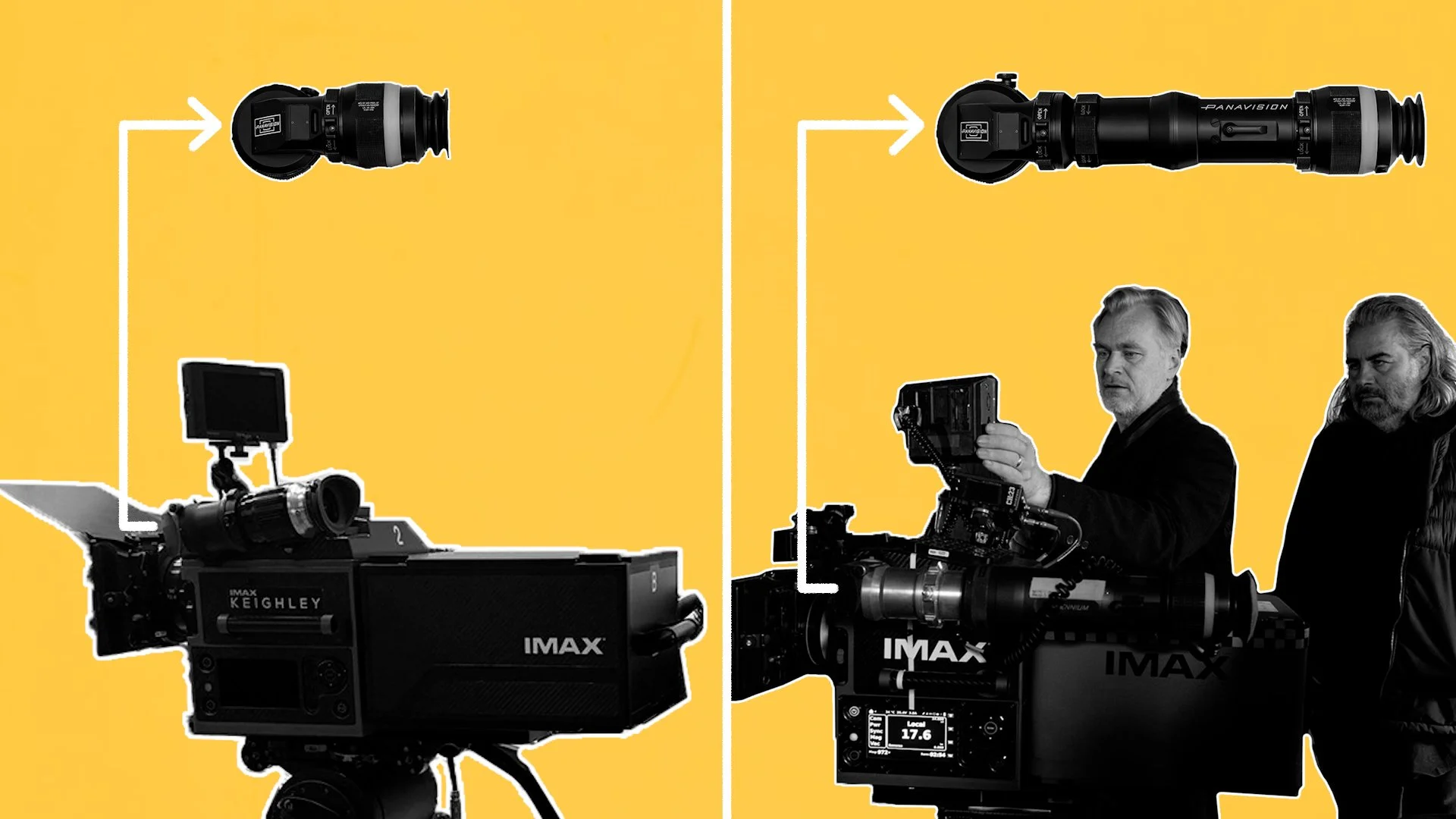
Behind-the-scenes images reveal two configurations: a shorter eyepiece for handheld, where the operator is close to the camera body, and an extended eyepiece intended for studio setups, where the camera is mounted on a dolly and the cinematographer is positioned on a seat with the camera lower and further away.
PORTS
Prototype images of the camera body show what appear to be three SDI video ports, two 2-pin power ports - for use with accessories like focus motors or transmitters, and a dedicated power input for a block battery, signalling a far more flexible and production-ready hardware design.
MENU DISPLAY
The redesign also comes with an updated digital menu and 5-inch display. Rather than a minimal, purely mechanical readout, like the older models, the display presents clear, production-relevant information at a glance. Along the top of the menu, battery voltage is shown which lets ACs know when a battery change is needed. In the top right, the frame rate is clearly displayed - in this case, 24 FPS.
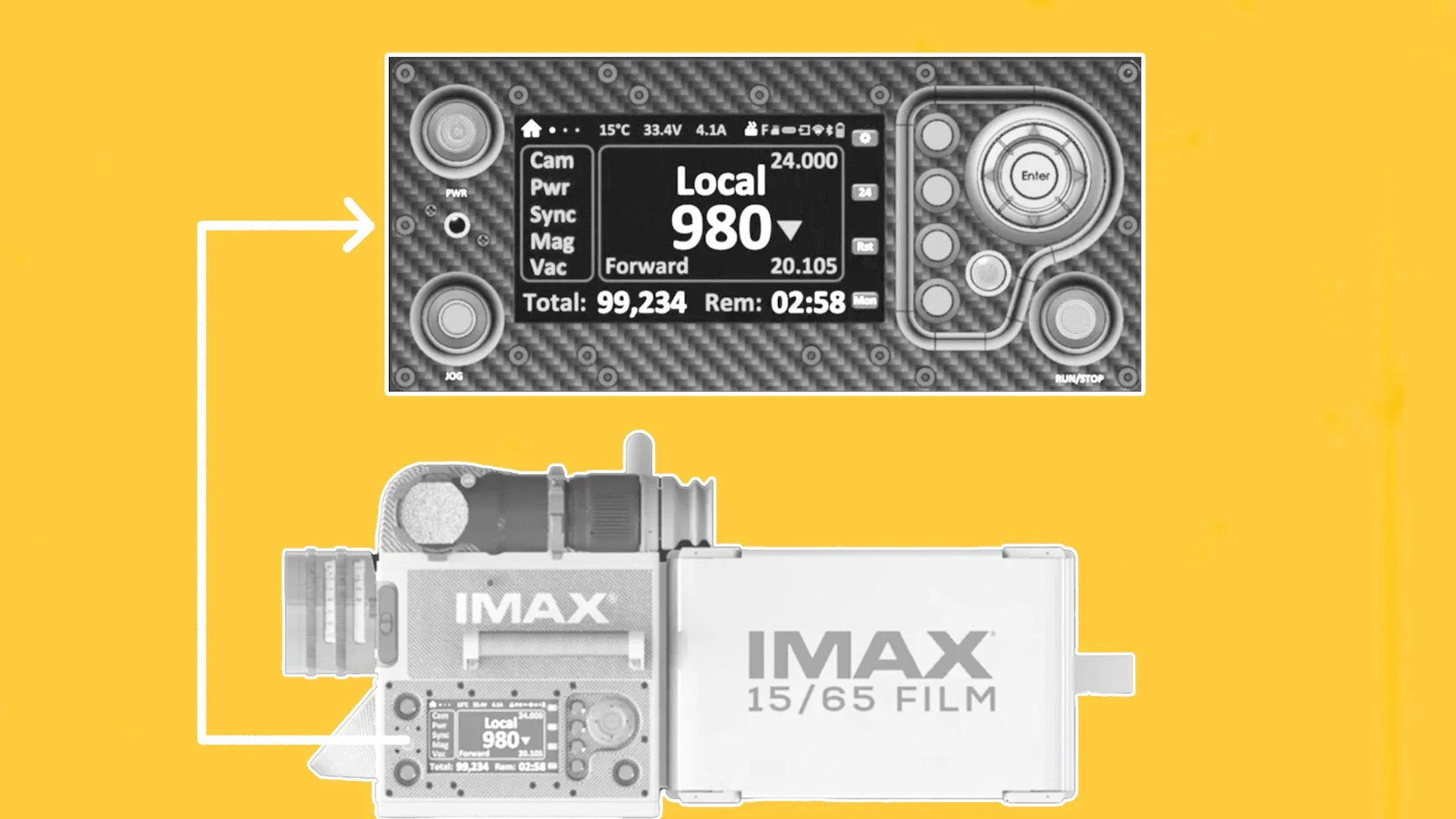
The menu has a comprehensive film management readout. “Local” appears to indicate how much film remains in the magazine yet to be shot. Shown here as 980 feet out of a 1,000-foot roll.
“Forward” likely displays how much film has already been exposed from that roll - in this case 20 feet, which is probably the leader of unusable film which is exposed when loaded into the magazine.
The system also tracks the total footage in feet shot across the entire project. Perhaps the most useful addition is the estimated remaining run time of the current magazine before the unexposed film runs out and the camera needs to be reloaded with a new one. Here it sits at 2 minutes, 58 seconds, roughly the recording time per 1,000-foot roll.
For camera assistants, this is a super useful feature, allowing them to anticipate reloads with precision rather than instinct.
SYNC SOUND
But the most significant breakthrough doesn’t come from the image at all - it comes from sound. Historically, the greatest limitation of IMAX cameras has been their noise: the deafening whirr of 15-perf 65mm film racing through the camera body made recording usable sync dialogue on location nearly impossible. As a result, IMAX was traditionally reserved for action, spectacle, or wide shots where dialogue could be avoided or replaced later.
The new Keighley IMAX reportedly reduces camera noise by roughly 30%. It is also compatible with a purpose-built blimp system - a large acoustic housing that dramatically dampens the sound of the camera movement.
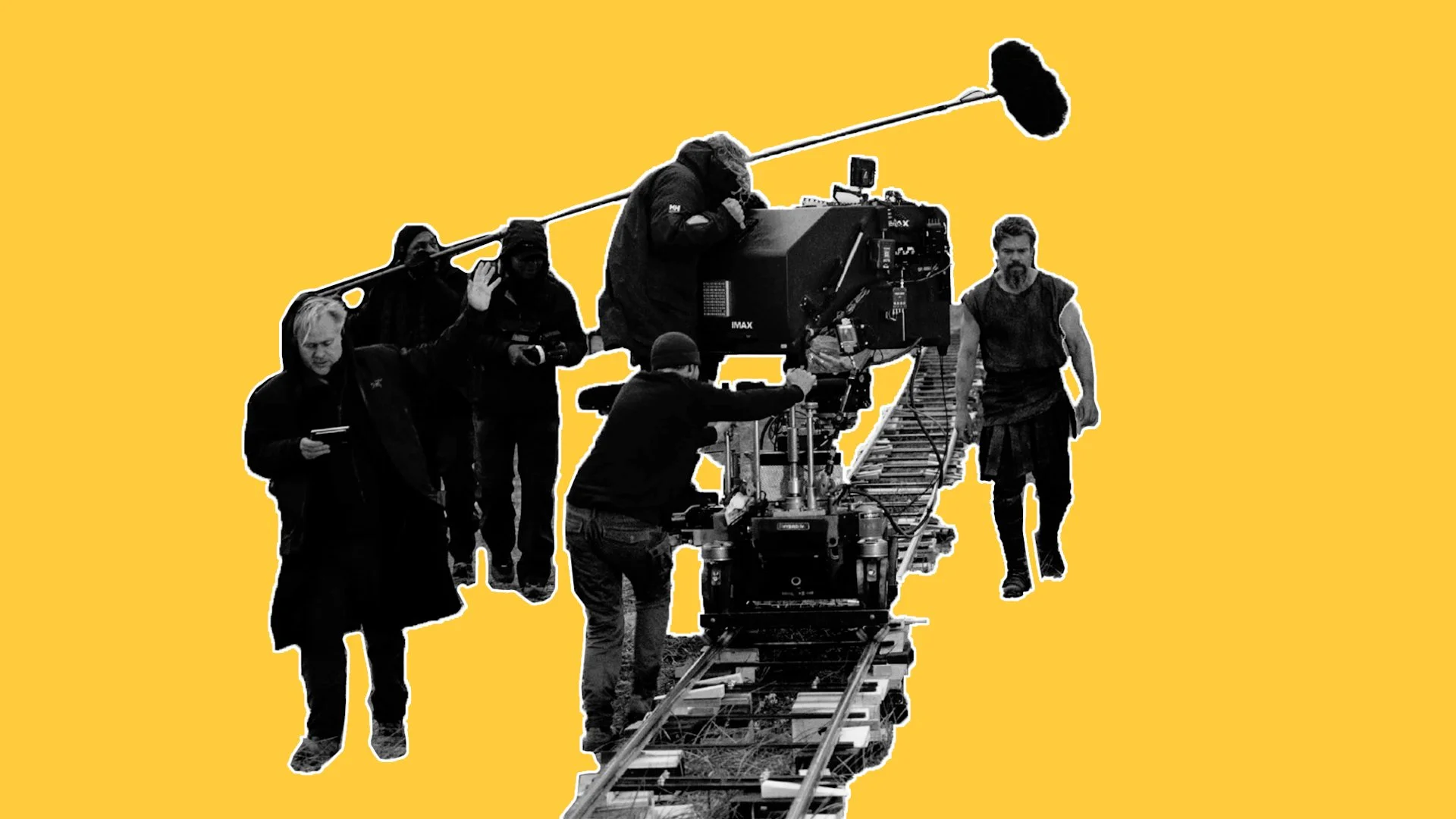
Together, these changes allow the notoriously loud IMAX camera to capture clean, synchronised dialogue on set. This is why The Odyssey will become the first ever feature shot entirely on 15-perf IMAX, including all dialogue scenes.
The trade-off, however, is an ergonomic one. Once blimped, the camera becomes enormous - closer to the hulking Technicolor cameras of early cinema - practical only on a dolly and exceptionally difficult to transport to remote exterior locations - of which The Odyssey had many.
CONCLUSION
The Keighley IMAX doesn’t reinvent the format’s image - it removes the barriers around how that image can be captured. By addressing weight, usability, monitoring, and most critically sound, IMAX has quietly transformed a specialised spectacle camera into a far more flexible storytelling tool for making A-tier blockbusters.
With it now being possible to use them for capturing everything from the largest of set pieces to capturing intimate moments of dialogue.