
INTRODUCTION
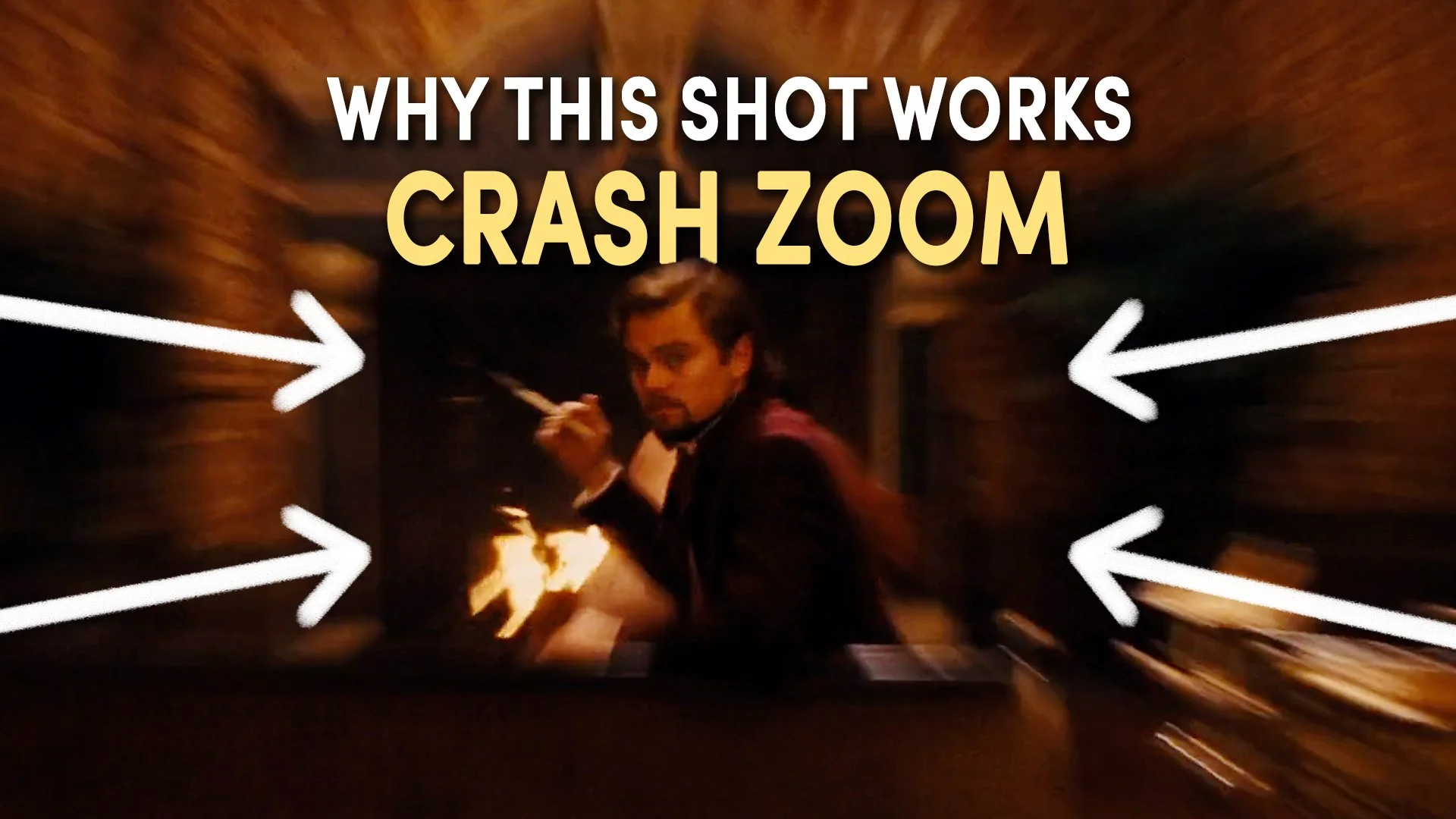
Without warning, the entire frame violently punches inward, snatching your focus and locking it onto a single, isolated detail.
While conventional cinematography usually tries to hide the presence of the camera, this move does the exact opposite. It throws subtle storytelling out the window in favor of pure, unadulterated visual impact. We call this sudden, aggressive optical shift the crash zoom.
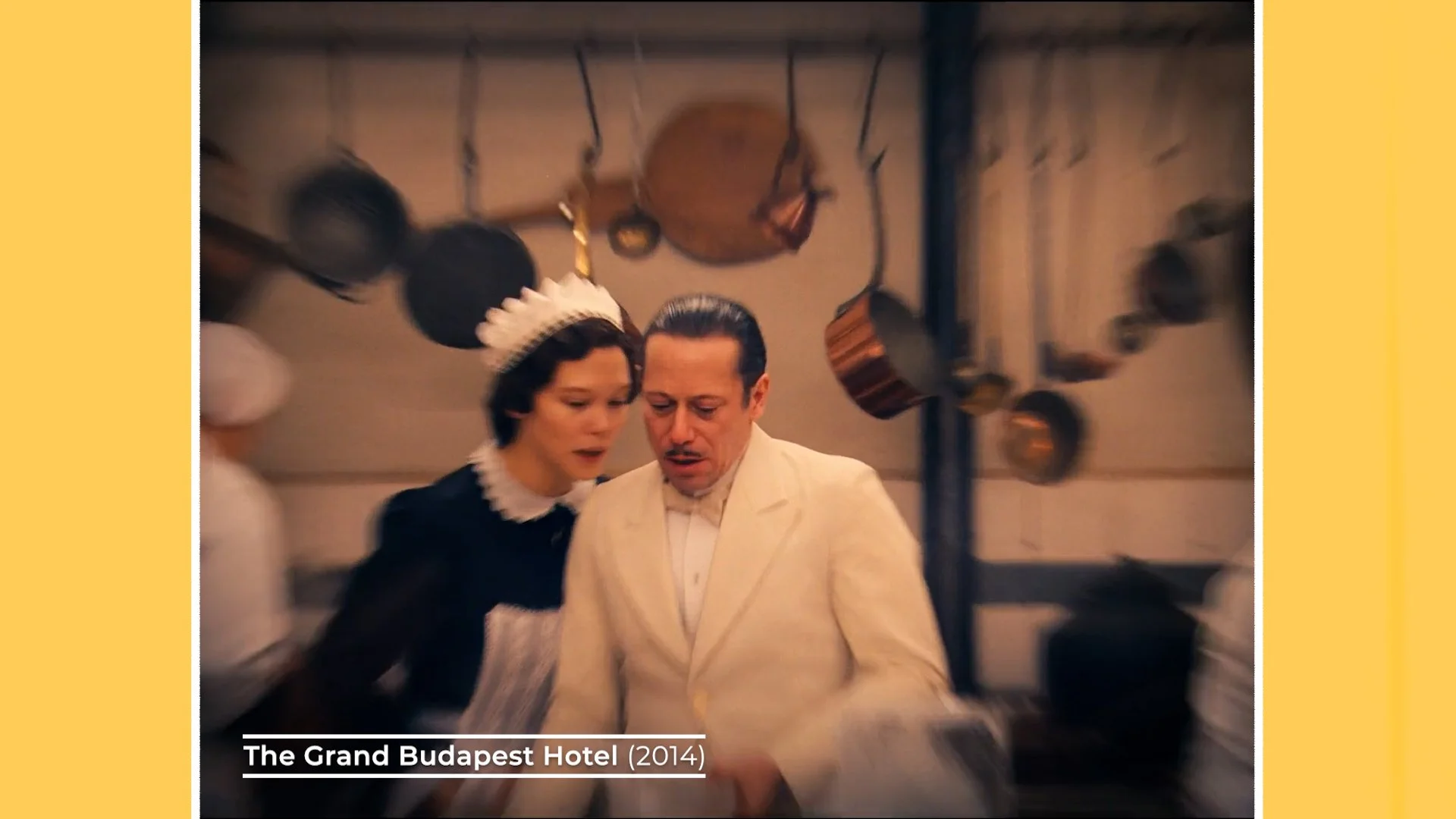
In this installment of How This Shot Works, we’re going to deconstruct the mechanics behind the crash zoom, examine how it manipulates spatial perspective, and look at how directors use it to shock, energize, or amuse an audience.
WHAT IS THE SHOT?
Film students are often taught that the most traditionally cinematic way to change the frame is by moving the camera itself, usually through a smooth tracking movement done with a dolly or a slider.
However, that’s not the only way. It’s possible for the frame to change, while the camera remains locked in position, by using a zoom lens that lets the glass inside the lens do all the heavy lifting.
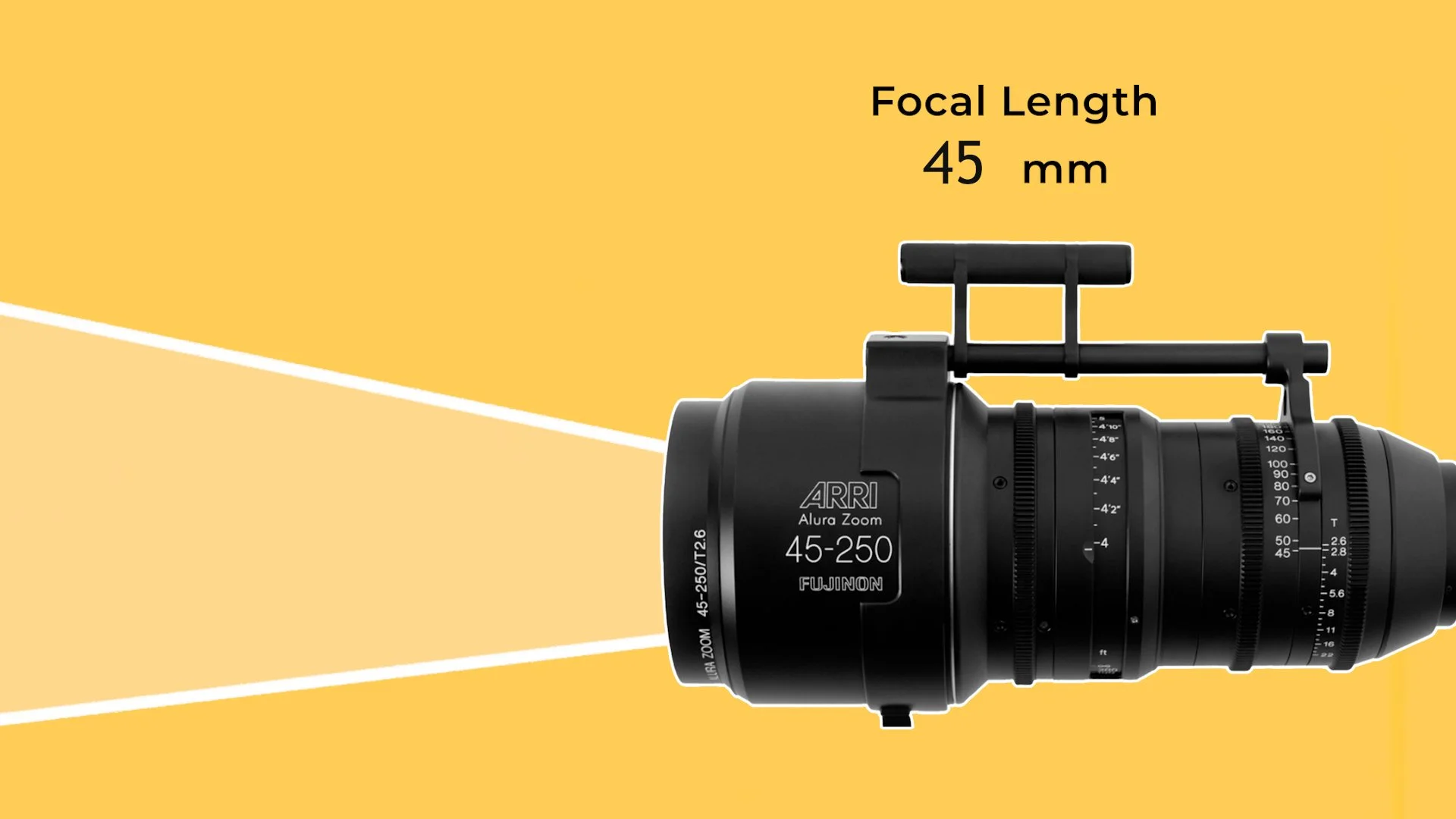
When you zoom the lens quickly from a tight shot to a wide shot or a wide shot to a tight shot, what you are doing is changing the lens’ focal length.
Operators will usually start at one of the extreme ends of a zoom, such as a wide angle focal length of 25mm, and then zoom rapidly into a telephoto focal length, such as 200mm. A crash zoom can also punch out from a tight focal length to a wide. Zooming out can be used to reveal context, while zooming in provides emphasis.
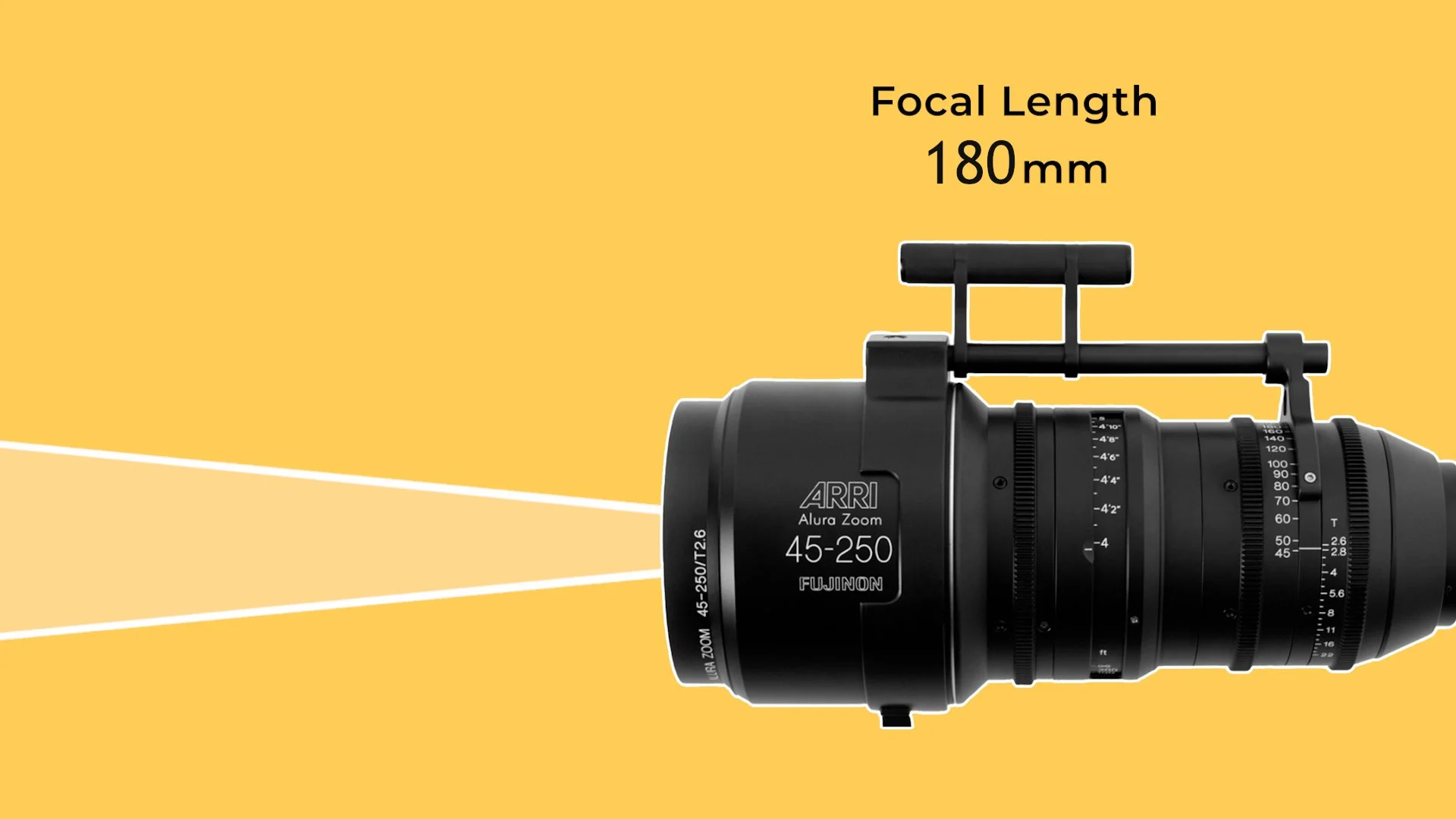
Normally, a camera operator adjusts a zoom ring slowly to reframe a scene seamlessly. A crash zoom turns that smooth adjustment into an aggressive physical snap.
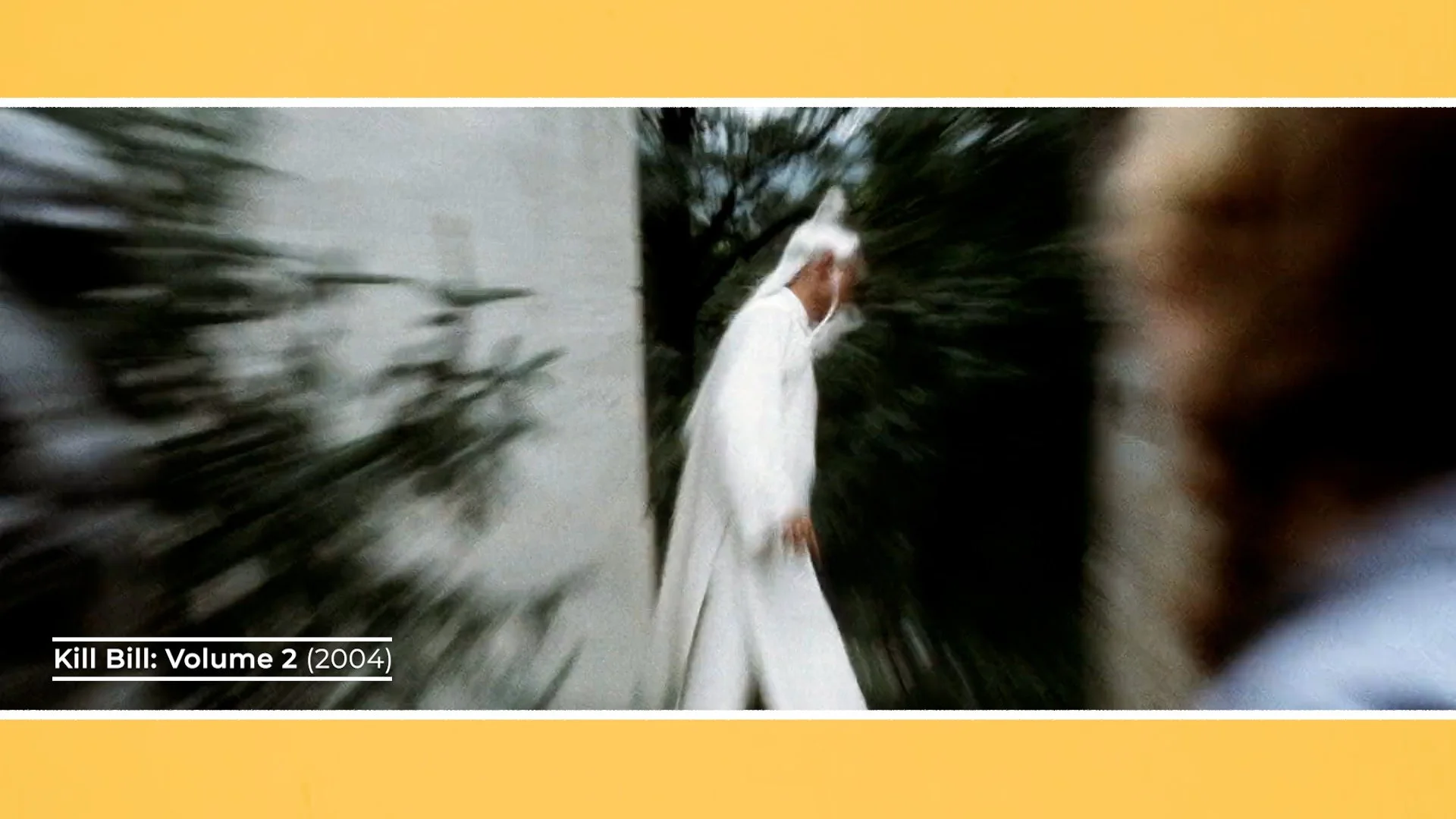
This produces a sudden wave of radial motion blur that snaps the image forward and instantly anchors the audience’s gaze. Because the physical camera position remains mostly fixed, this sudden change in magnification breaks natural human perception, delivering a distinctly stylized visual punch.
REQUIRED GEAR
Executing a crash zoom starts with selecting the right optics: specifically, a lens with a significant zoom ratio. The zoom ratio represents the difference between the shortest and longest focal lengths on a single lens, and it directly dictates how extreme your visual snap will look.
It’s calculated by dividing the maximum focal length by the minimum focal length. So a 200-400mm zoom lens has a 2x zoom ratio. Whereas a 45-250mm zoom has a greater 5.5x ratio.
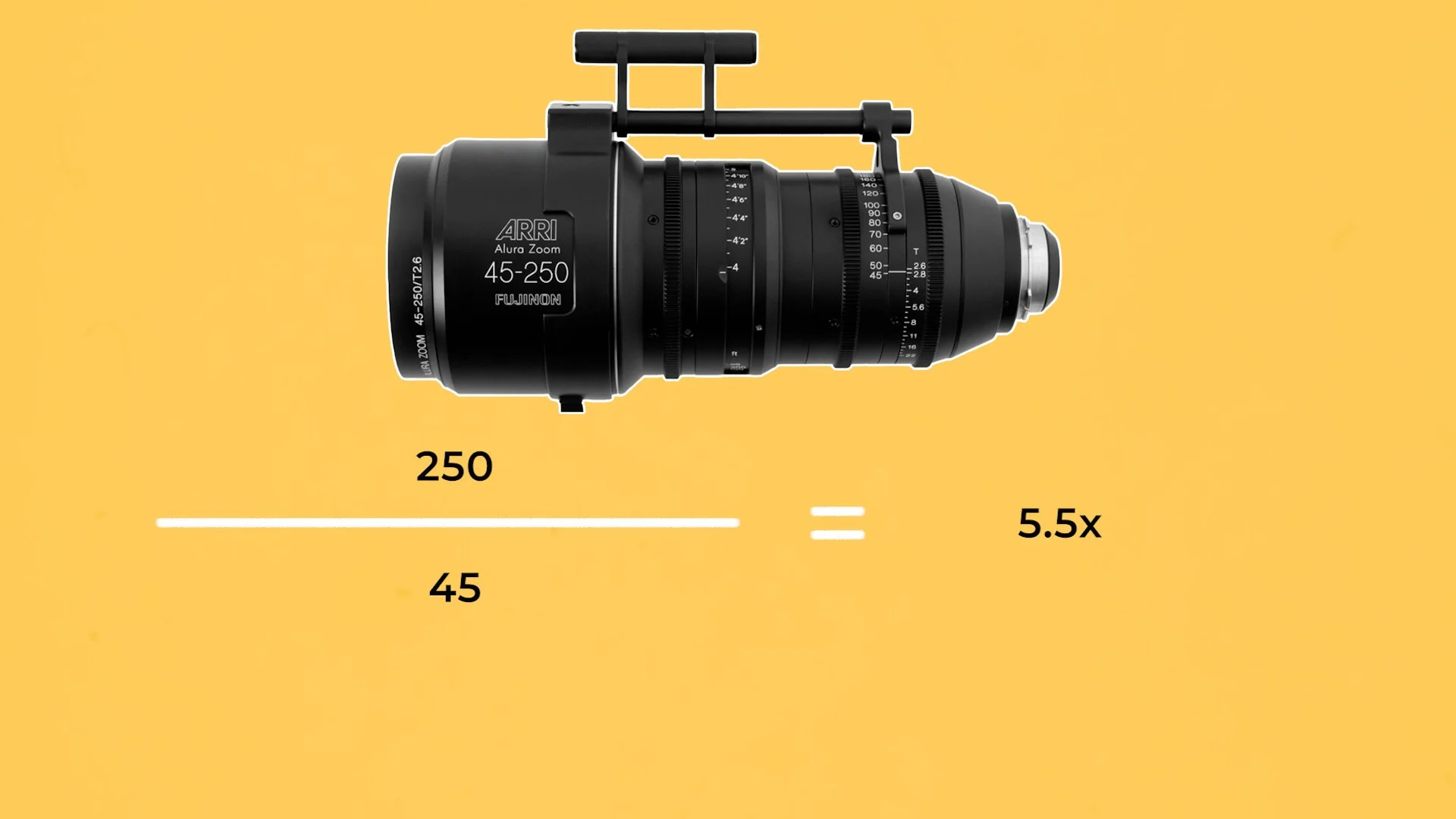
Opting for a high-ratio zoom, like an Angenieux 24-290mm, which features a 12x zoom range, allows you to transition from an ultra-wide establishing frame straight into an extreme close-up, maximizing the effect. Conversely, a lower-ratio lens, such as an Angenieux 16-40mm with a 2.5x ratio, will deliver a shorter punch that may feel more restrained and subtle.
It helps to use a parfocal cinema zoom lens, rather than a zoom lens designed for photography - as the subject will then remain sharply in focus in both the wide frame and the tight frame - without a focus puller needing to predict the zoom and instantly adjust focus - which is not ideal.
When it comes to performing the move itself, camera operators generally rely on one of two techniques: manual zooms or motorized control.
The most common approach for maximum zoom speed is doing it by hand. The operator directly rotates the lens barrel, either by gripping the zoom ring or utilizing a zoom bar - a small pin attached to the barrel that provides extra leverage.
For high-velocity moves where you need an instantaneous whip-zoom, manual control is often preferred because human reflexes can react and zoom faster.
However, because it’s operated by a human and the move is so quick, there is more room for error - by overshooting or undershooting the final focal length mark.
The second method utilizes an electronic zoom control system, such as a Preston Micro Force. In this setup, a lens motor engages with the zoom teeth on the barrel and plugs into a hand unit. By adjusting the speed dial on the bottom of the Micro Force to its maximum setting, the operator can trigger a swift, uniform zoom at the press of a button.
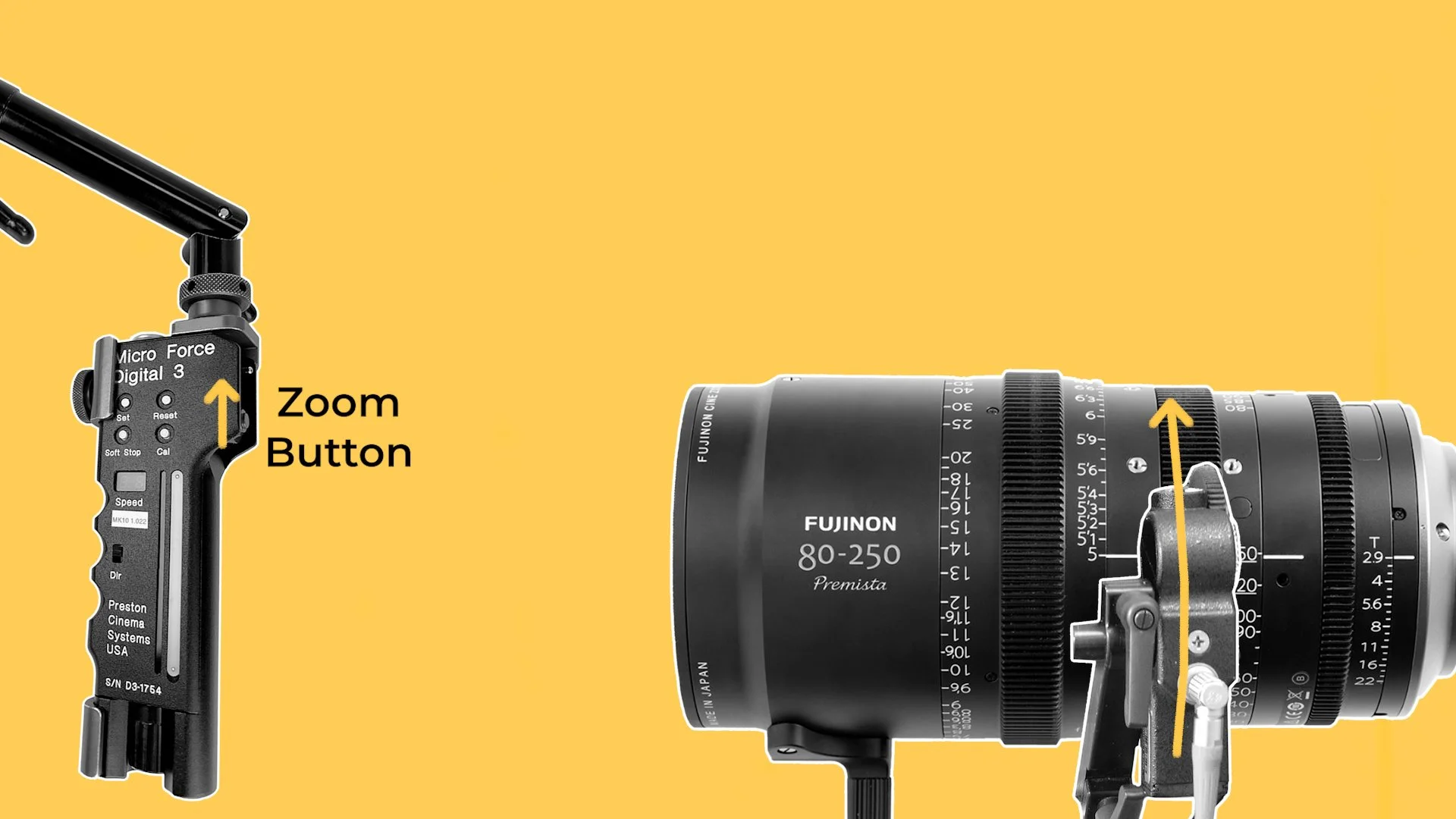
The major advantage of an electronic unit is consistency: it allows you to set precise focal length limits for your start and end marks, guaranteeing you hit the exact desired frame on every single take. However, it’s less good for accurately hitting improvised punch ins.
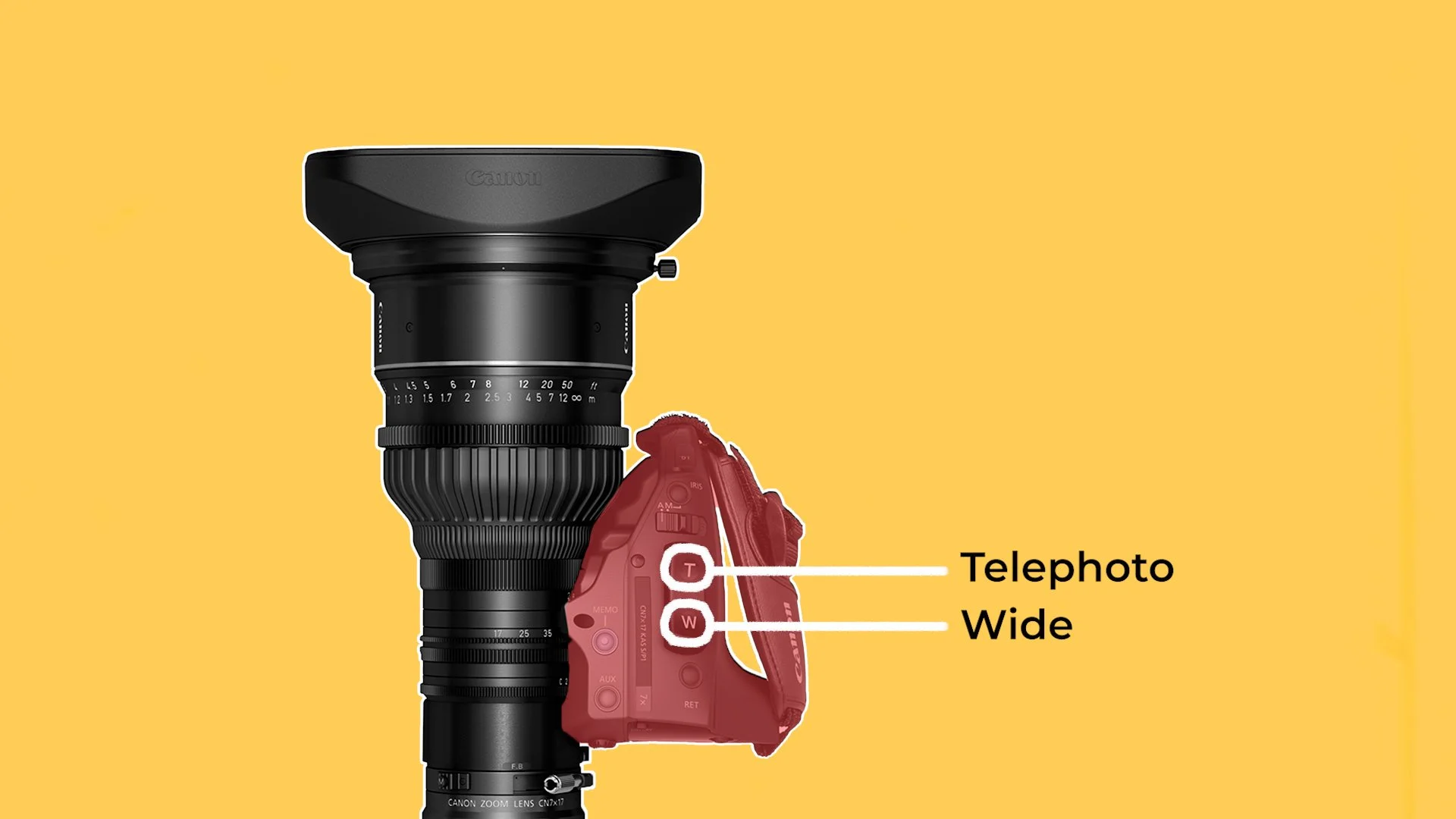
Another motorized control option is using an ENG-style servo zoom lens. These were traditionally used more often for broadcast TV or documentary work, but can of course be used for any filming application. There are a few cine servo options like the Fujinon 19-90mm or Canon CN7. These lenses come with a built-in motorised handgrip that can zoom the lens either wider or tighter by rocking a button forwards or backwards.
WHEN TO USE IT?
Think of the crash zoom as an exclamation mark in your visual grammar. It excels at breaking up a quiet scene with an abrupt jolt of adrenaline, making it a go-to choice when a story suddenly demands heightened intensity, alarm, or dramatic emphasis.
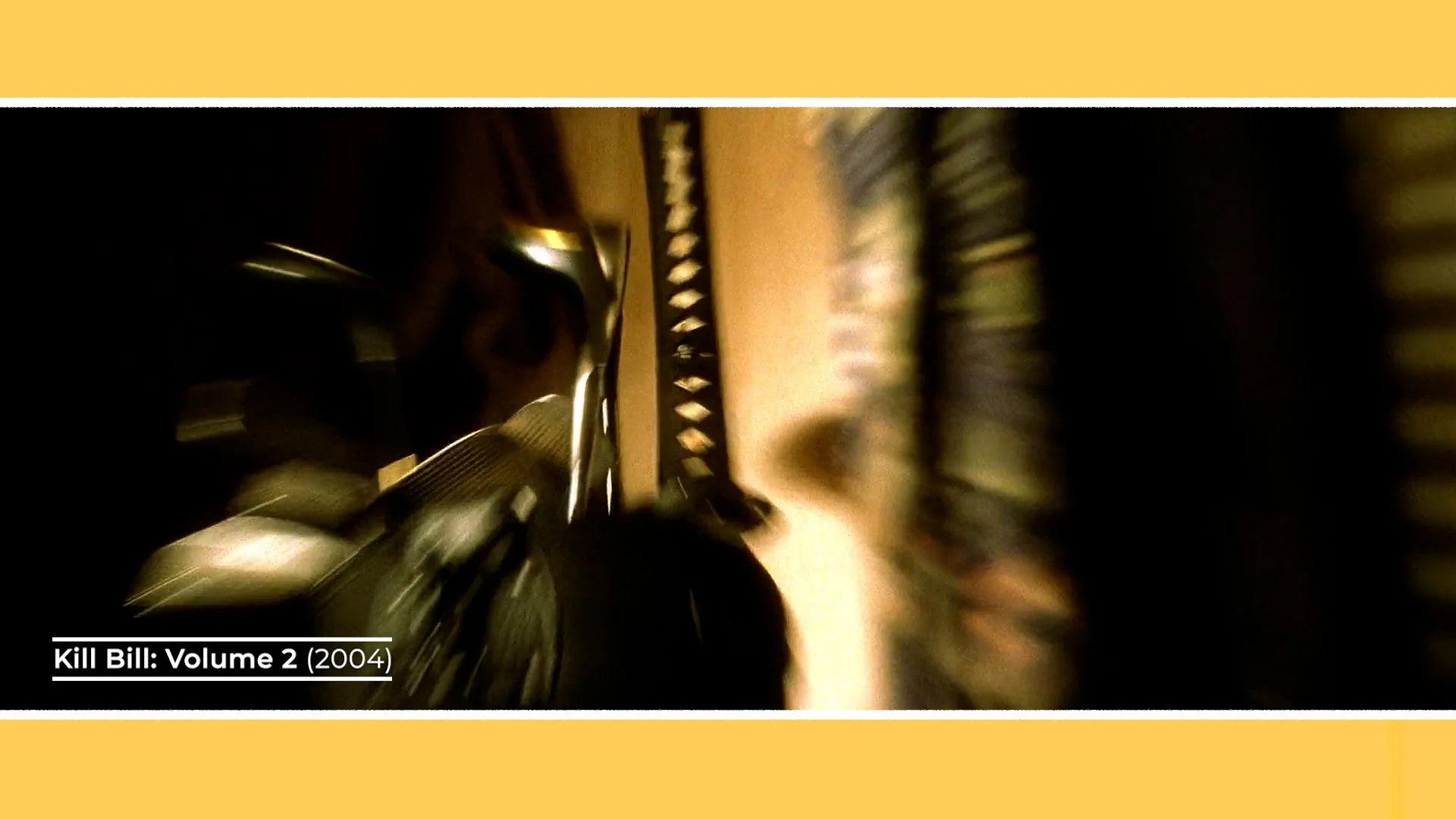
It’s especially effective during moments of direct confrontation or surprise. Action and genre directors, like Quentin Tarantino, frequently deploy rapid zooms to evoke the aesthetic of 1970s martial arts cinema and classic Spaghetti Westerns.
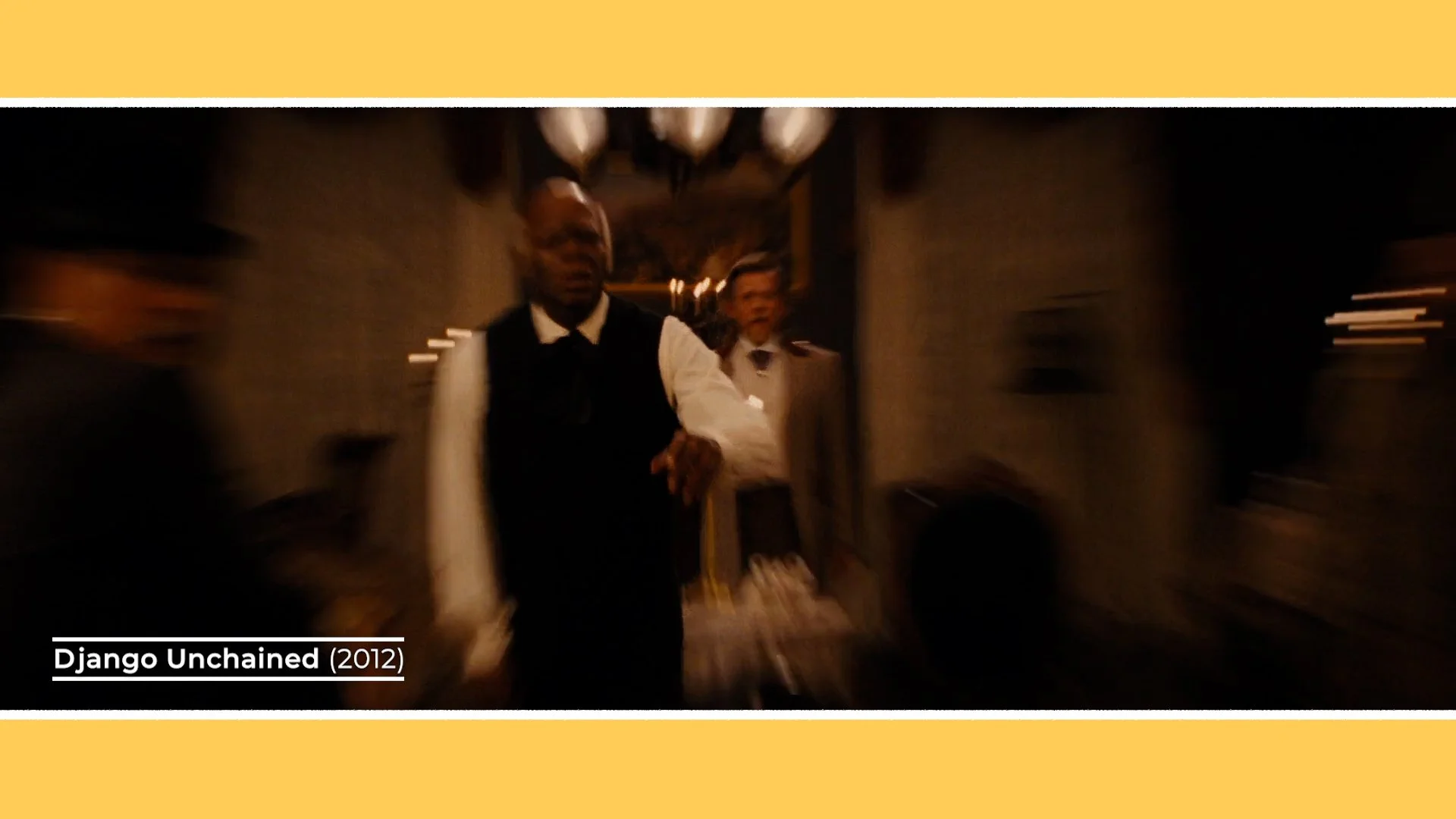
Slamming the frame tight onto a character’s eyes or a twitching trigger finger during a standoff instantly cranks up the tension and establishes a tense, rhythmic momentum between opponents.
Other directors, like Kathryn Bigelow and Paul Greengrass have often used much shorter, more punchy crash zooms in their visual language. These remnants of documentary camera operating, are used together with handheld and fast paced cutting to add an intensity and breathless energy to scenes.
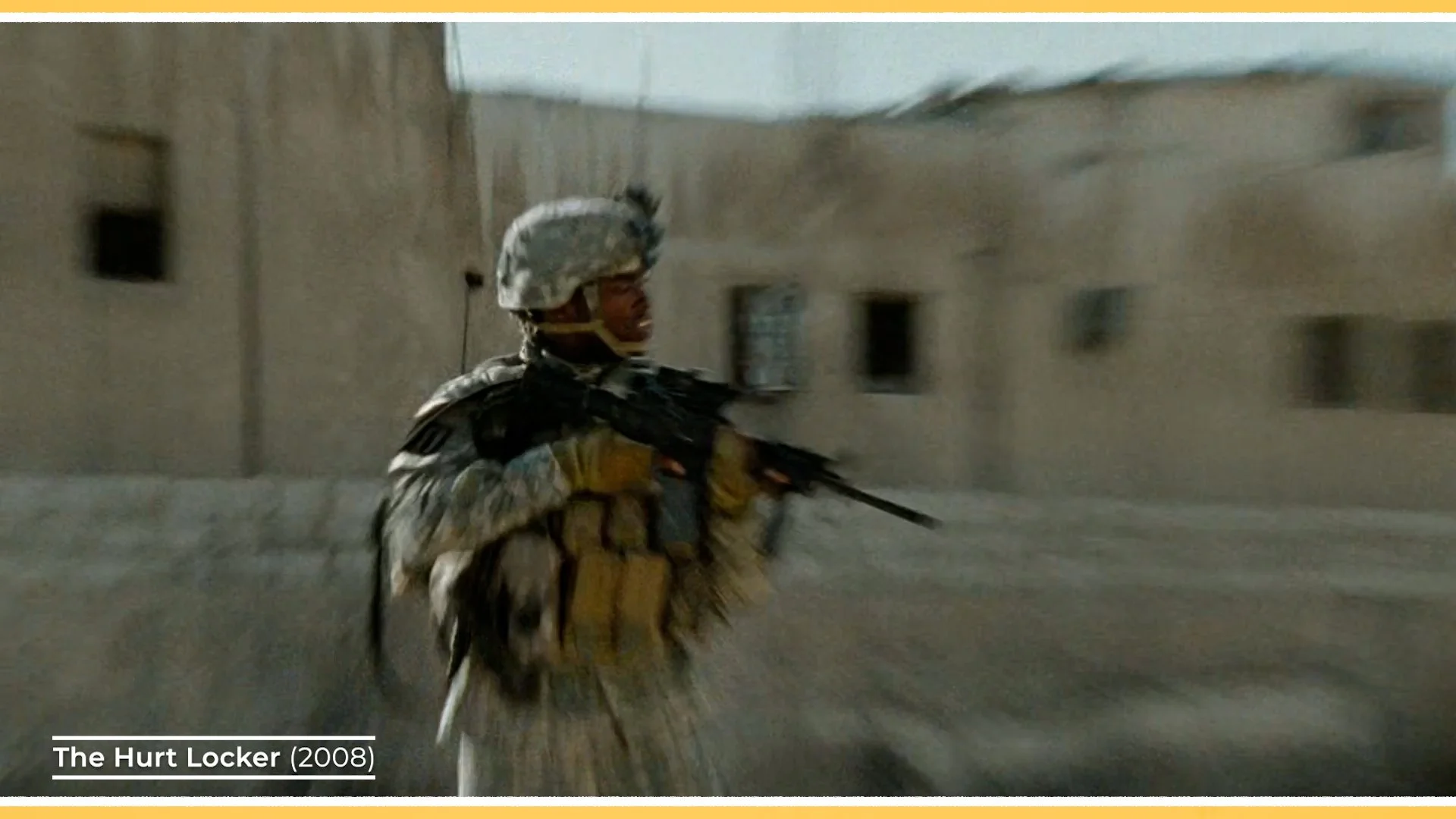
These quick zooms can also be used in fast paced commercial, or music video work to add vibrant, up tempo, kinetic motion to the cut.
Crash zooms can also narrow a character’s focus on an object. Crashing directly into a crucial piece of evidence, an incoming threat, or a ticking countdown timer forces the audience to share in that immediate realisation. It ratches the audience's eyes onto a specific piece of important information.
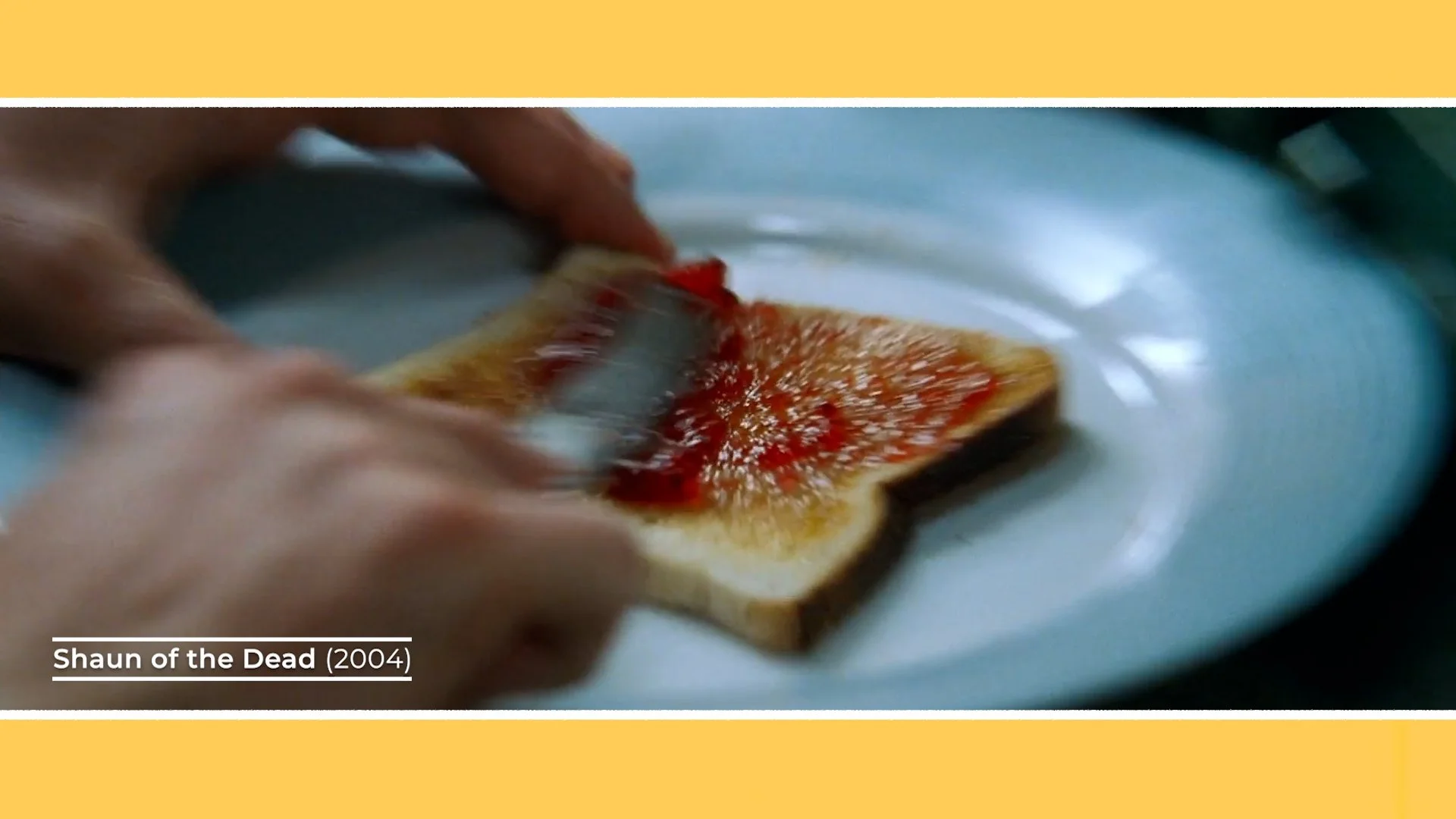
Beyond action and drama, it’s often used for visual comedy. Directors like Edgar Wright leverage the crash zoom to turn mundane beats into rapid-fire humor. Snapping in close on an everyday object gives ordinary actions a theatrical, absurd energy when paired with crisp sound design and tight editing.
A tight to wide crash zoom can also be used for humorous reveals - showing the audience more context. Because of how overly dramatic this camera move is, it can effortlessly make heightened moments funny in the context of a comedy.
Because a crash zoom blatantly draws attention to the camera itself, it shatters the invisible wall between the viewer and the screen. If you throw it into every scene, much like an exclamation mark, it loses its punch and quickly feels gimmicky.
Its overuse as a camera genre trope means crash zooms can quickly make even dramatic moments become silly. But when saved for key beats of shock, confrontation, or comedic timing, it remains one of the most expressive ways to direct an audience's eyes.