
Understanding Anamorphic: 1.3x vs 1.5x vs 2x
INTRODUCTION
There’s something undeniably cinematic about anamorphic.
The flares, the oval bokeh, the expansive, panoramic frame. It’s a look that has become synonymous with big-screen storytelling - from classic Hollywood epics to modern blockbusters.
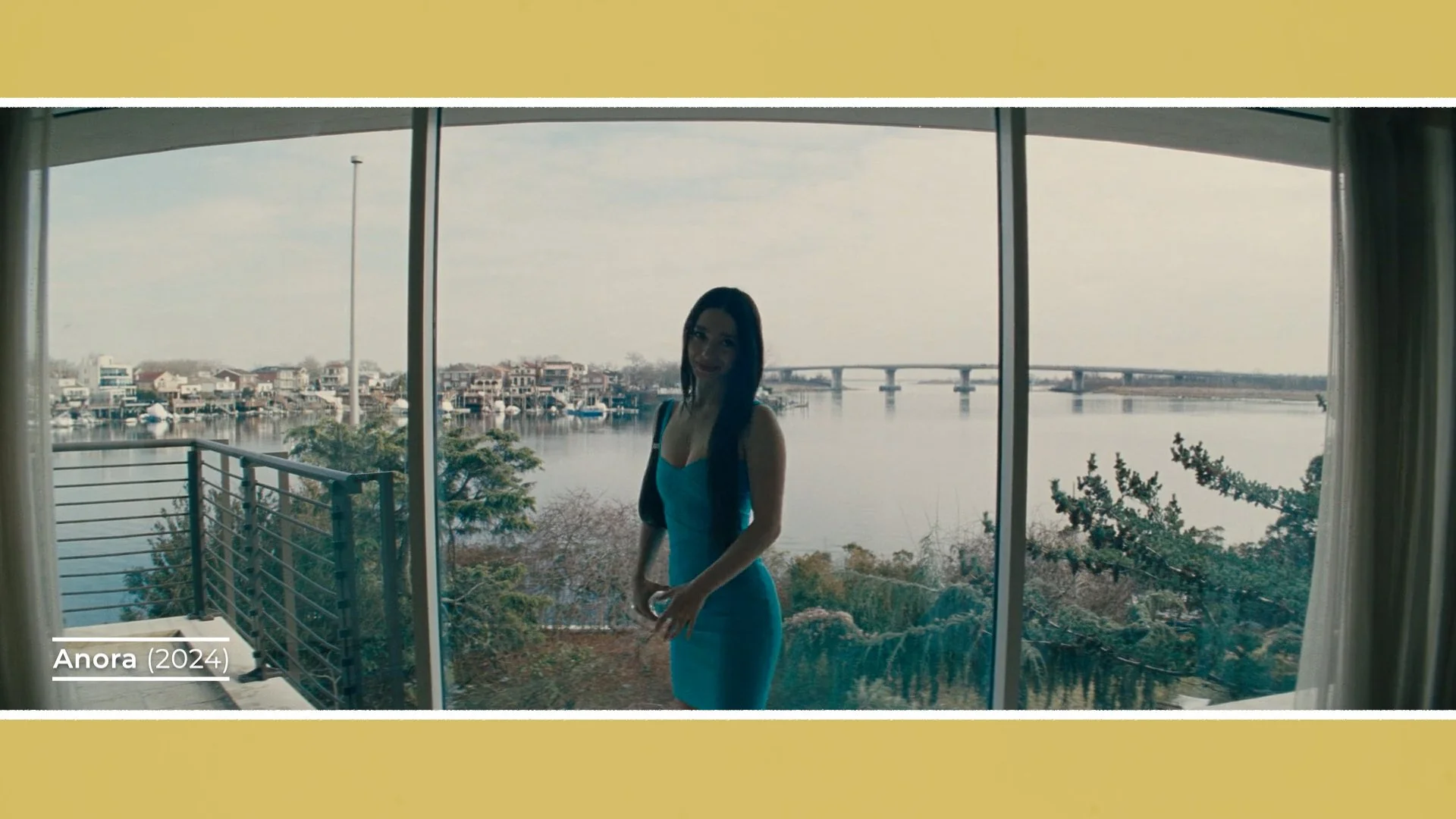
But beneath the aesthetic lies a practical optical mechanism that quite literally reshapes the way the camera sees.
To understand anamorphic properly, we need to look beyond the flares and into something more fundamental: field of view and squeeze factor.
WHAT ARE ANAMORPHIC LENSES
At their core, anamorphic lenses bend light in a very specific way.
Unlike normal spherical lenses, which render an image evenly at 1:1 across both axes, anamorphic lenses compress, or squeeze, the horizontal width of an image so that it can be recorded onto a narrower sensor or, originally, a frame of 35mm film.

After this squeezed image has been shot it is then desqueezed in post-production, restoring it to its correctly intended proportions - typically resulting in an expansive native aspect ratio such as 2.39:1 - which is what we call a widescreen or anamorphic aspect ratio.

Optically, anamorphic lenses are constructed from a base lens, like a 50mm, which is then paired with cylindrical anamorphic elements - positioned at either the front or rear.
Front-mounted anamorphics are usually more desirable as the cylindrical components exaggerate the classic anamorphic character and look. Whereas rear-mounted anamorphics often take an existing spherical lens and ‘anamorphise’ it, with an adapter at the rear, which stretches the image vertically, rather than squeezing it.
This typically gets rid of the kind of bokeh and flares that anamorphic is known for, reduces the aperture and increases the effective focal length, like a teleconverter. For this reason rear anamorphics have mainly been used on long zoom lenses when filmmakers need a stretched widescreen image and a longer focal length than can be found in front anamorphic prime sets.

There is a key difference in how anamorphic lenses affect field of view.
An anamorphic lens maintains the same vertical field of view of its stated focal length but expands the horizontal field of view due to its squeeze factor.
For example, a 50mm 2x anamorphic lens gives you the same vertical field of view of a 50mm spherical lens, but a wider horizontal field of view roughly equivalent to a 25mm spherical lens.
So instead of using a wider lens and cropping the top and bottom to create a widescreen aspect ratio, as is done with spherical lenses, anamorphic expands the frame sideways, while maintaining a longer focal length.
Anamorphic focal lengths therefore tend not to go as wide as spherical primes. While spherical sets will often include 18mm lenses, anamorphic primes typically start around 28mm or 35mm.
This is why anamorphic works so well for landscapes, group compositions, or scenes that benefit from using the entire width of the frame.

However, it also changes how we frame people. Because it’s so wide, close-ups often contain more negative space on either side of the subject, with less headroom because adding more vertical space only exaggerates the horizontal emptiness.
The width doesn’t come from shorter focal lengths - it comes from the squeeze.
ANAMORPHIC FEATURES
Anamorphic lenses were originally developed for a technical reason: resolution.
In the era of 35mm film, widescreen images captured with spherical lenses required cropping the top and bottom of the frame to achieve a 2.39:1 aspect ratio - meaning only around 50% of the negative area was actually being used.

Anamorphic lenses solved this by optically squeezing a wide image horizontally so that it filled the entire 4:3 film frame. When projected and desqueezed, 100% of the negative contributed to the final widescreen image.
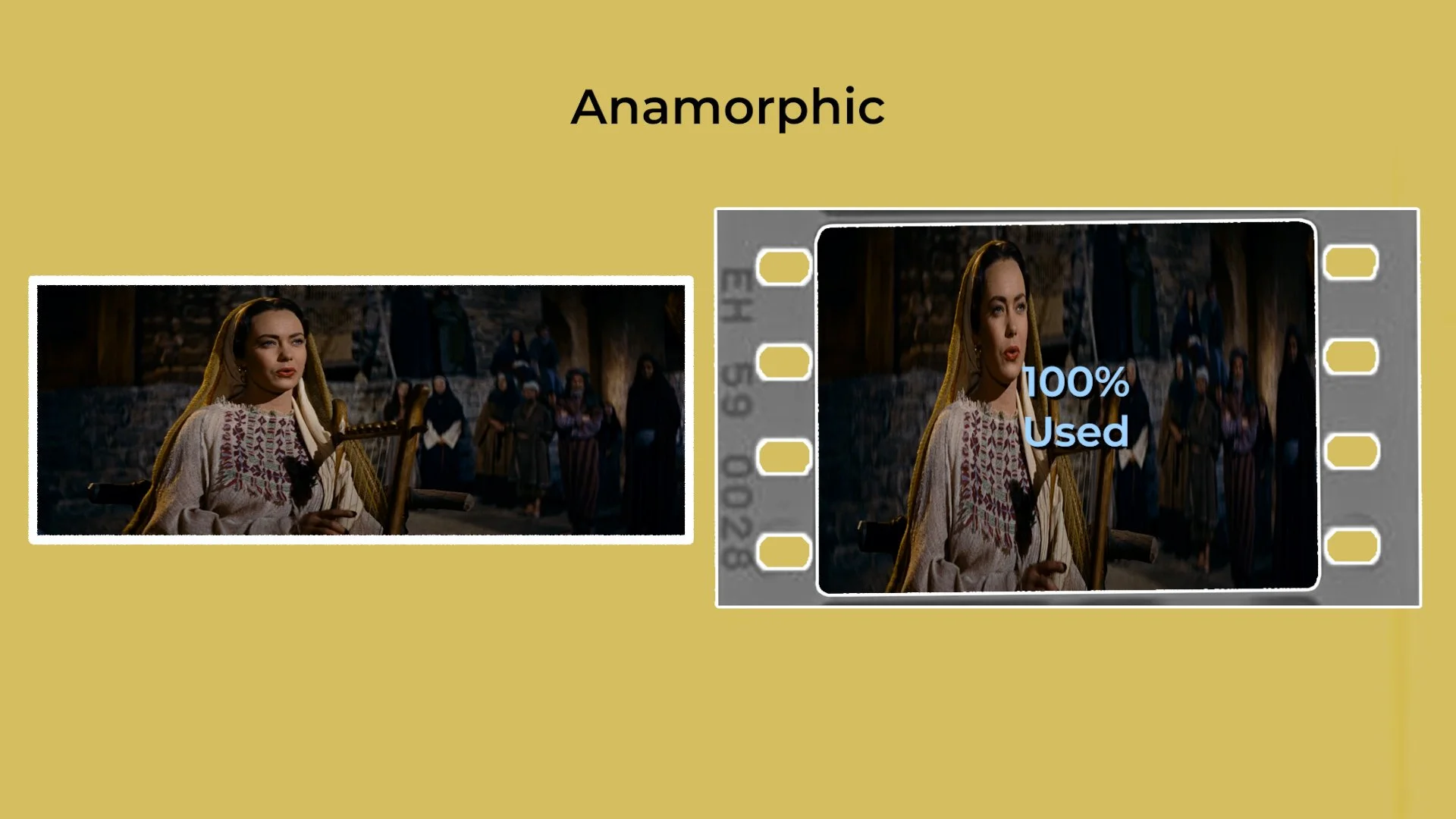
The result was improved image quality, greater vertical resolution and reduced film grain.
However, in the digital era, resolution is determined by pixel count and sensor design. Since many modern digital sensors are wider in shape than 4:3, spherical lenses capturing in native widescreen formats may actually use more total pixels than an anamorphic image that is later desqueezed with the sides cropped off.
Such as the Red Raptor’s 8K sensor. Which records a 2.40:1 ratio from spherical lenses and uses 8192x3456 pixels, whereas anamorphic lenses that record a 6:5 area of the sensor to get the same aspect ratio yields 5184x4320 native pixels.

On top of that, anamorphic lenses contain additional cylindrical glass elements, which often reduce the overall sharpness compared to high-performance spherical lenses.
So today, the reason for wanting to shoot with anamorphic lenses is usually not about wanting the most highly resolved image at all, it’s more about embracing the optical imperfections, look and character of anamorphic.
Such as, oval bokeh, created by the horizontal compression of out-of-focus highlights. Horizontal lens flares, that stretch the streaks of light.

Edge and barrel distortion, that bends the outsides of the image, especially on wider focal lengths. And focus falloff where sharpness gently degrades away from the centre of the frame.
Much of this optical personality and how pronounced these traits look is directly influenced by one key variable: squeeze factor.
SQUEEZE FACTORS
The squeeze factor determines how much the image is compressed horizontally.
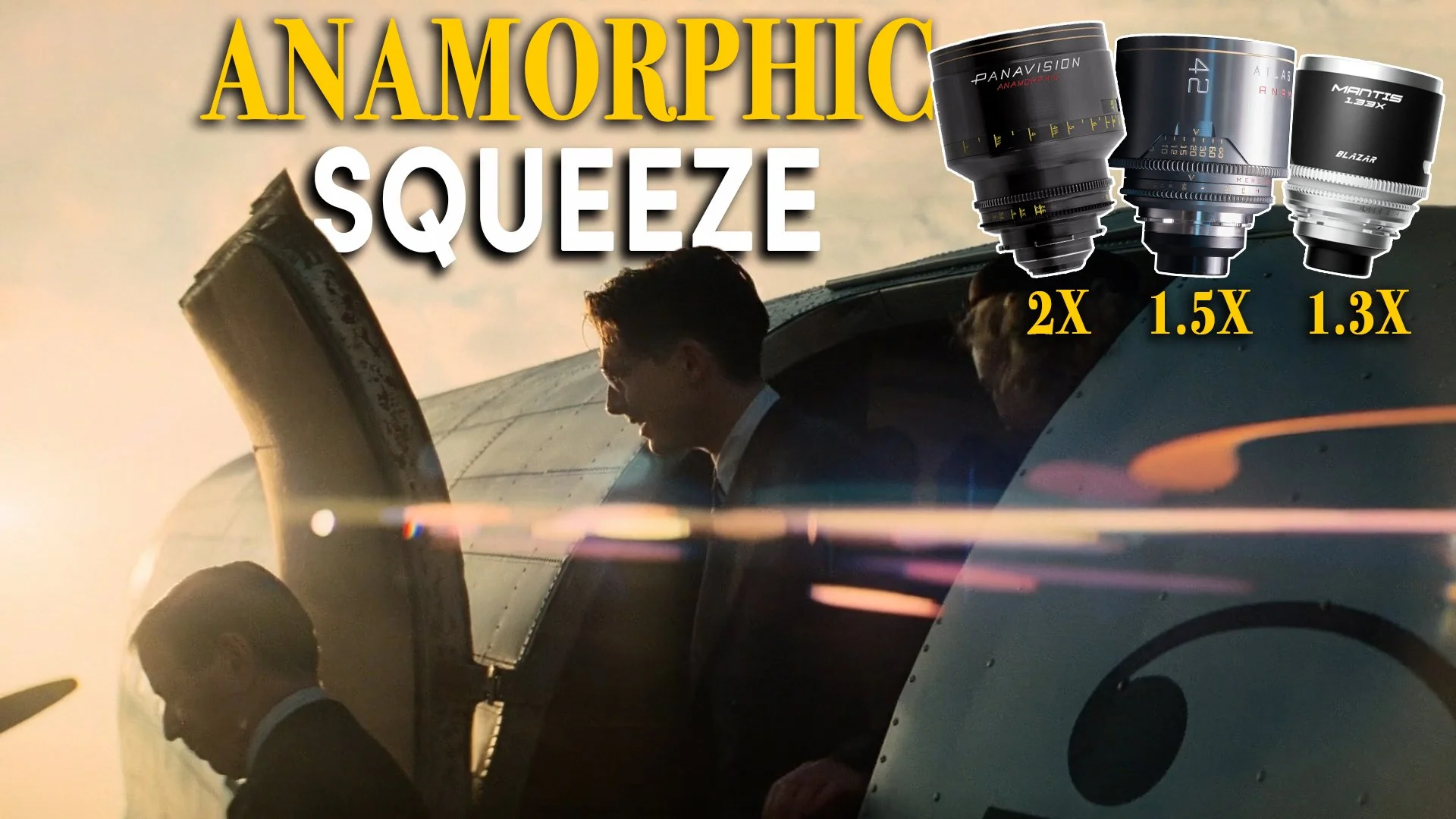
Common anamorphic squeeze factors include 1.3x, 1.5x and 2x.
Whatever squeeze you shoot with must be matched by an equivalent desqueeze, both for on-set monitoring and in post-production. So, a 1.5x anamorphic lens requires a 1.5x desqueeze in post to bring the image back to its correct proportions.
2X
The 2x squeeze is the traditional, classic anamorphic format.

Because 2x squeeze is the professional benchmark, every pro digital cinema camera should be able to desqueeze this image in camera for purposes of correctly monitoring the footage on set.
2x lenses compress the image more aggressively. They produce the most pronounced anamorphic characteristics with stronger oval bokeh, horizontal flares and greater edge distortion.
Straight lines near the edges of the frame shot on these lenses can visibly warp or bend.
On productions involving visual effects, this distortion becomes a technical consideration. VFX supervisors will often request distortion charts be shot at a gear check for every focal length used. These grid patterns allow software to measure how much each lens bends the image so that any CGI elements can be distorted the same amount to match seamlessly.
Examples of 2x anamorphic lenses include Cooke Anamorphics, Hawk V-Lites, Kowas, Panavision’s G-, C- and E-Series, Arri/Zeiss Master Anamorphics, and Atlas Orion lenses.
This is the boldest, most recognisable anamorphic look.
1.5X
The 1.5x squeeze factor is a more recent development - mainly designed around modern 16:9 digital sensors.

Rather than adapting a 4:3 or 5:6 capture area, these lenses expand a 16:9 image to roughly 2.66:1 when fully desqueezed - which may require slight cropping on the sides to reach the standard 2.39:1 delivery ratio.
Because the squeeze is less extreme, the optical artefacts are also more subtle.
Slightly rounder bokeh and slightly less distortion.
These 1.5x lenses are often aimed at owner-operators or smaller productions rather than large rental houses. Due to this, some professional cinema cameras may not be able to do a 1.5x squeeze for monitoring, instead requiring you to use a specific monitor that can desqueeze the output by 1.5x.
These 1.5x lenses usually offer a much more cost effective option than the more expensive 2x glass. And are a great way of still getting an anamorphic look on an indie budget.
Examples include the Blazar Remus, Laowa Nanomorphs, Technovision 1.5x lenses, and Atlas Mercury anamorphics.
Panavision also has a very niche set of 1.44x Auto Panatar Anamorphics, which can be used to convert the native 1.66:1 aspect ratio of 16mm film into a 2.39:1 aspect ratio once desqueezed - such as was done on Red Rocket.
In a similar range to 1.5x, Panavision also has the new Ultra Vista anamorphics, with their 1.6x squeeze factor. These are specifically designed to cover modern, full-frame digital sensors, such as the Arri Alexa LF, and extract a native widescreen aspect ratio without needing to do too much side cropping and therefore losing resolution.
They offer a balance - retaining anamorphic width and covering more of 16:9 digital sensors - while softening some of the more aggressive characteristics of 2x glass.
1.3X
The 1.3x squeeze factor was famously used back in the day for the very specific and niche Ultra Panavision 70 large format. When applied to a 5-perf 65mm negative, it produced an excessively wide projected aspect ratio of 2.76:1.

In the digital era, 1.3x lenses, like 1.5x, are often designed specifically for 16:9 or 17:9 sensors - producing a 2.39:1 image with minimal cropping.
Because the squeeze is mild, the look is even more subtle. The image retains much of a spherical cleanliness, with a touch of anamorphic character and an added horizontal breadth.
Examples include Ultra Panavision 70, Panavision Ultra Panatar I & II lenses, and the full-frame Blazar Mantis.
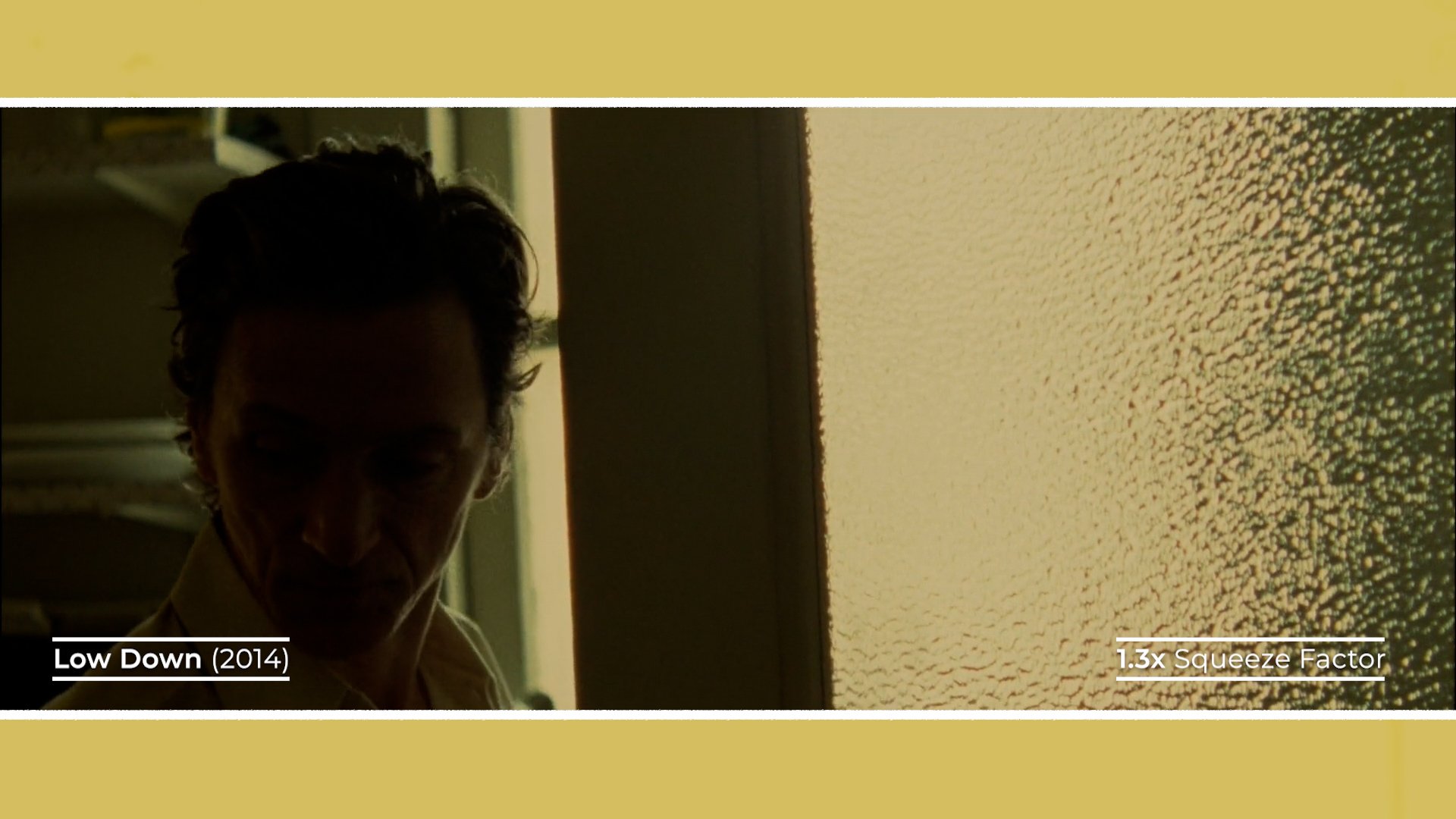
Like the 16mm Auto Panatars, Hawk also makes S16 V-Lites with a 1.3x squeeze factor which extract a widescreen ratio from 16mm film, to create a more textured and tactile anamorphic look.
CONCLUSION
Anamorphic isn’t just about flares or nostalgia. It’s about how the lens reshapes space.
By compressing and then expanding the image, anamorphic lenses alter horizontal field of view, optical character, and composition itself.
And whether you choose 2x for bold distortion, 1.5x for balance, or 1.3x for subtlety - the squeeze factor ultimately determines how distorted and how much of a larger than life look and dimensionality you want to achieve.